
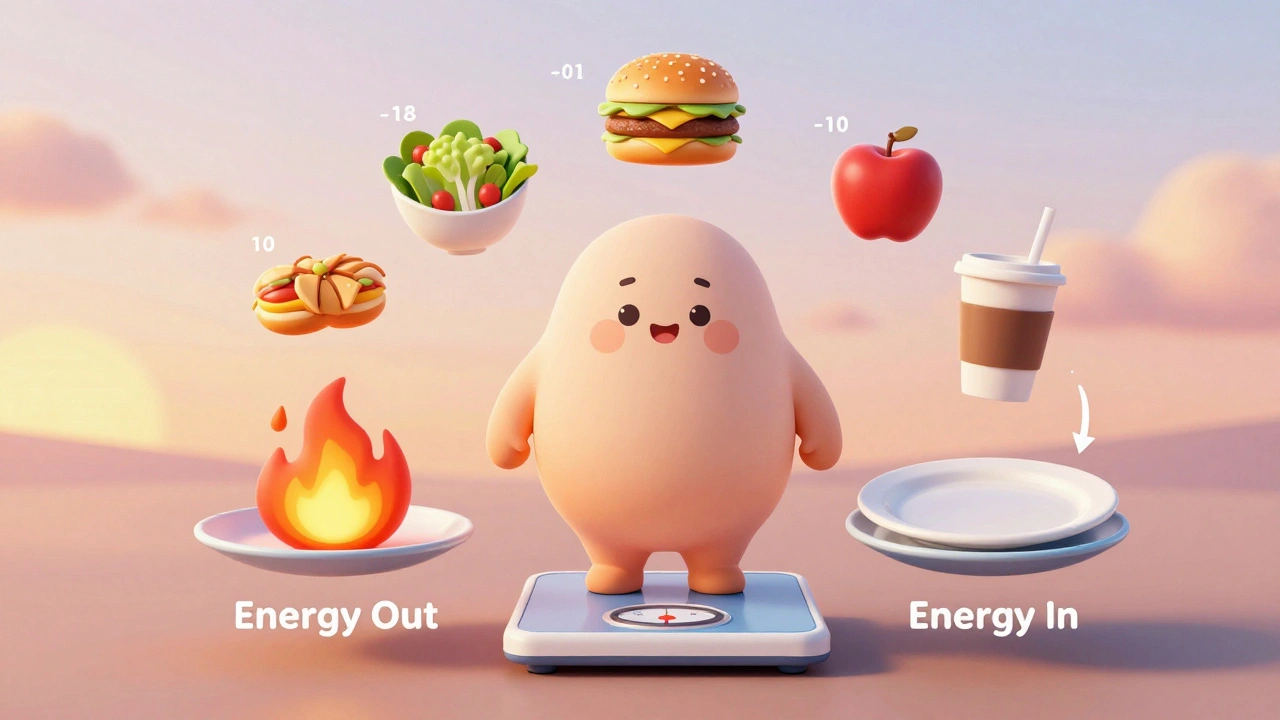
Want to lose weight? You’ve probably heard the same thing over and over: caloric deficit is the key. But if you’ve ever stuck to a strict diet, lost a few pounds, then hit a wall-no matter how little you ate-you know there’s more to it than just eating less. The truth is, your body isn’t a simple calculator. It fights back. And understanding why makes all the difference.
What a Caloric Deficit Actually Means
A caloric deficit happens when you burn more energy than you take in. Simple, right? But here’s the catch: it’s not just about cutting calories. It’s about your body’s response to that cut. Every calorie you eat is energy. Your body uses that energy to keep your heart beating, your lungs breathing, your brain thinking, and your muscles moving. When you eat less than you burn, your body taps into stored fat for fuel. That’s weight loss. The classic rule-3,500 calories equals one pound of fat-sounds clean. But it’s outdated. That math assumes your metabolism stays the same as you lose weight. It doesn’t. Your body adapts. And that’s where most plans fail.Why Your Metabolism Slows Down (It’s Not Your Fault)
When you drop calories, your body doesn’t just sit there and burn fat. It thinks you’re starving. So it lowers your energy use to survive. This isn’t laziness. It’s biology. Research from the National Institutes of Health shows that after losing 10% of your body weight, your body burns about 200 fewer calories per day than expected-just from the weight loss itself. Add in hormonal shifts, and that number climbs even higher. Leptin, the hormone that tells your brain you’re full, plummets by 50-70%. Ghrelin, the hunger hormone, spikes. You’re not weak. You’re wired to survive. A 2023 study from the University of Sydney found that after prolonged calorie restriction, your body doesn’t just slow down-it reprograms how it stores fat. Cortisol levels rise, and your body starts holding onto fat more tightly, especially around the belly. This isn’t about willpower. It’s about evolution.The Real Math Behind Weight Loss
Forget the 3,500-calorie myth. A 2018 study in the journal Obesity found that people who followed a 500-calorie daily deficit lost only about half of what the old model predicted after 12 months. Why? Because as you lose weight, your body needs fewer calories to move around. A 200-pound person burns more calories walking than a 150-pound person. So as you get lighter, your daily burn drops. Here’s what actually works: a moderate deficit of 15-25% below your maintenance calories. For most people, that’s 300-500 calories less than you normally eat. That leads to about 0.5-1 pound of weight loss per week. Slow? Yes. But sustainable. Big cuts-like dropping 1,000+ calories a day-sound tempting. But they backfire. Studies show they increase muscle loss by 20-30%, make hunger unbearable, and trigger stronger metabolic slowdown. The Cleveland Clinic recommends avoiding deficits over 1,000 calories per day for this exact reason.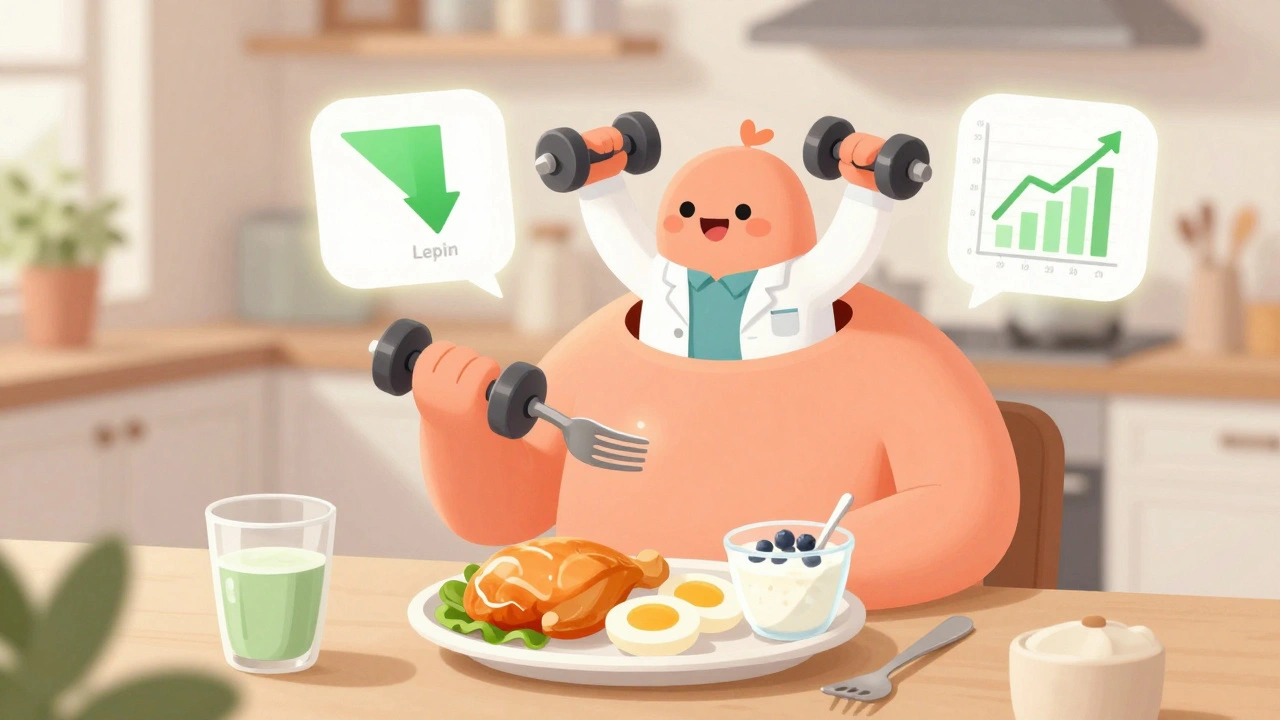
Protein Is Your Secret Weapon
If you’re cutting calories, you’re risking muscle loss. And losing muscle makes your metabolism slower-because muscle burns more calories at rest than fat. To protect your muscle, you need protein. Research from a 2021 meta-analysis in the Journal of the International Society of Sports Nutrition shows that consuming 1.6 to 2.2 grams of protein per kilogram of body weight helps preserve muscle during weight loss. For a 70kg person, that’s 112-154 grams of protein a day. That’s about 3-4 palm-sized portions of chicken, fish, eggs, tofu, or Greek yogurt. Don’t just eat protein. Spread it out. Aim for 25-30 grams per meal. That keeps your body in muscle-building mode all day long.Diet Breaks: The Hidden Trick Successful People Use
Ever heard of a diet break? It’s not cheating. It’s science. After 8-12 weeks of a calorie deficit, your metabolism has slowed. Your hunger is high. Your energy is low. That’s not a sign you’re failing. It’s your body asking for a reset. Take 1-2 weeks at your maintenance calories-no deficit, no restriction. Eat enough to feel satisfied. You’ll notice your energy bounce back. Your hunger drops. Your metabolism resets slightly. Then go back to your deficit. This isn’t giving up. It’s strategy. People who use diet breaks lose weight just as fast long-term, but they stick with it longer. And that’s what matters.Why Tracking Food Matters (Even If It’s a Pain)
Most people underestimate how much they eat. Studies show beginners misjudge portion sizes by 25-30%. That 500-calorie deficit? You’re actually only cutting 200. No wonder you’re not losing weight. Weighing your food for 2-4 weeks is the fastest way to learn what real portions look like. Use a kitchen scale. Log your meals in an app like MyFitnessPal. Don’t guess. Measure. After a month, you’ll eyeball portions accurately. And don’t forget drinks. Soda, juice, coffee with cream and sugar-those add up fast. A 16-ounce latte with whole milk and syrup? That’s 250 calories. Without realizing it, you’ve blown your daily deficit.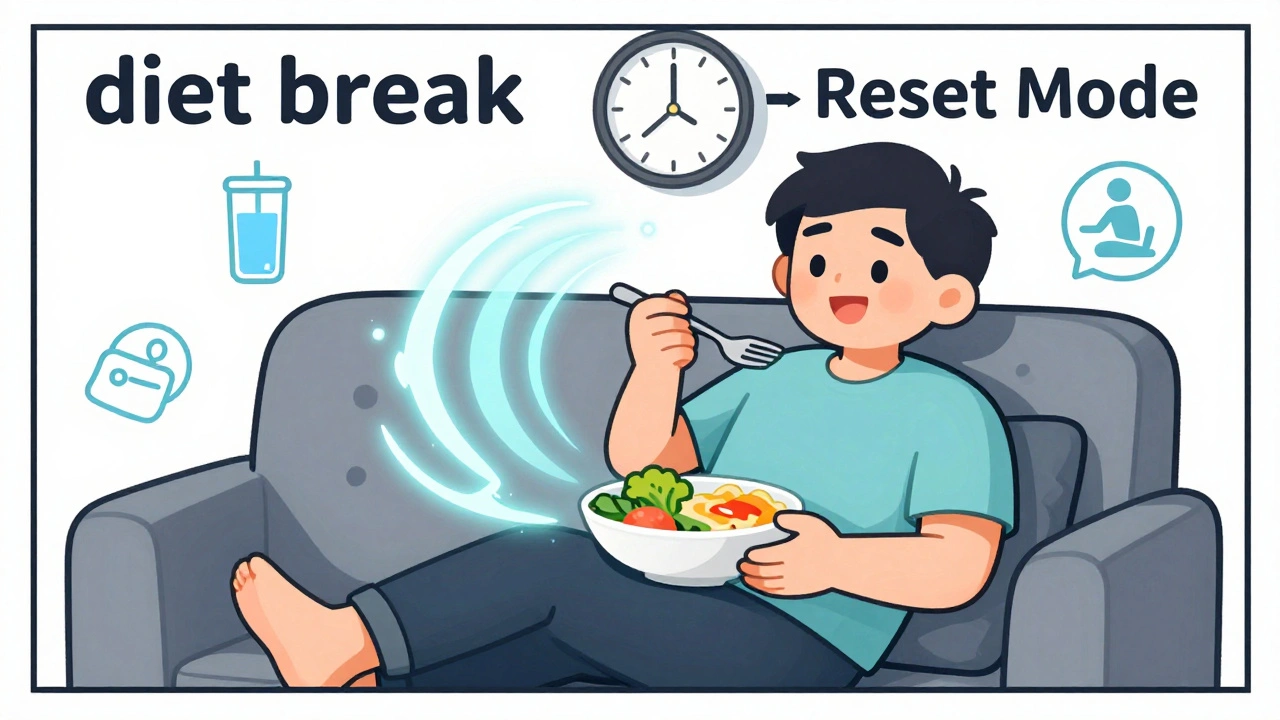






Comments(11)