
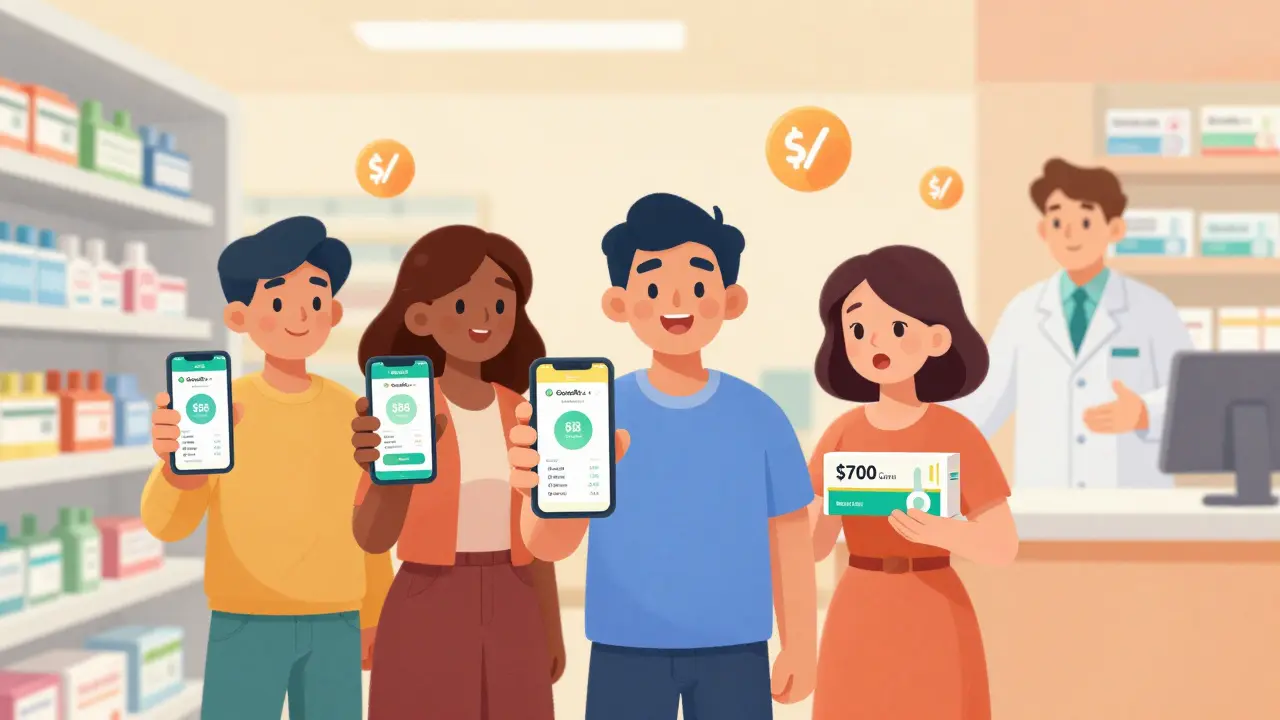
Every month, millions of Americans face a hard choice: pay their insurance copay for a prescription, or use a discount card and pay cash. For many, the cash price is lower - even if they have insurance. That’s where services like GoodRx come in. They don’t replace insurance, but they often beat it. And if you’re paying out of pocket, they can save you hundreds - sometimes thousands - on medications you need.
How GoodRx Actually Works
GoodRx isn’t insurance. It doesn’t cover you. It doesn’t bill your plan. Instead, it acts like a price comparison tool for pharmacy drugs - but with real, negotiated discounts baked in.
Here’s how it works behind the scenes: GoodRx partners with Pharmacy Benefit Managers (PBMs) like Express Scripts and OptumRx. These PBMs already have deals with pharmacies to offer lower prices to insured patients. GoodRx accesses those same negotiated rates and gives you the discount directly. You don’t need to be insured. You don’t need to sign up for anything. Just open the app, type in your drug, and see what pharmacies nearby are charging.
For example, the brand-name diabetes drug Jardiance costs $700 with Medicare Part D coverage. But with GoodRx, you can get it for $578 - cash. That’s not a typo. Sometimes, the cash price beats your insurance copay, especially if you haven’t met your deductible, or if the drug isn’t on your plan’s formulary.
GoodRx shows you prices at over 70,000 U.S. pharmacies - including CVS, Walgreens, Walmart, and even small local shops. You can print a coupon, show the barcode on your phone, or use the GoodRx app to pay directly. No enrollment. No monthly fee. Just savings.
GoodRx vs. Insurance: When Cash Wins
Most people assume insurance always saves money. But that’s not true. Insurance works best when you’re paying a fixed copay after your deductible. But if you’re early in the year and haven’t met your deductible, you’re paying full retail price - until your plan kicks in.
That’s where GoodRx shines. Let’s say you need a 30-day supply of generic imatinib, a cancer drug. The retail price? Over $7,600. With GoodRx? $88.74. That’s a 99% discount. Even if your insurance says your copay is $150, GoodRx wins.
Same goes for GLP-1 weight loss drugs like Ozempic and Wegovy. Insurance often requires prior authorization, step therapy, or won’t cover them at all. But with GoodRx, you can get a 30-day supply for around $500 - compared to $1,000+ with insurance. On Reddit, users report saving over $400 per month just by switching to GoodRx.
Even for people with Medicare, GoodRx can help. Medicare Part D has a coverage gap - the “donut hole.” Once you hit it, your copays jump. GoodRx offers prices that are often lower than what you’d pay during this gap. And if your drug isn’t on your plan’s formulary, GoodRx gives you a way to get it without paying full price.
GoodRx Gold: Is the Subscription Worth It?
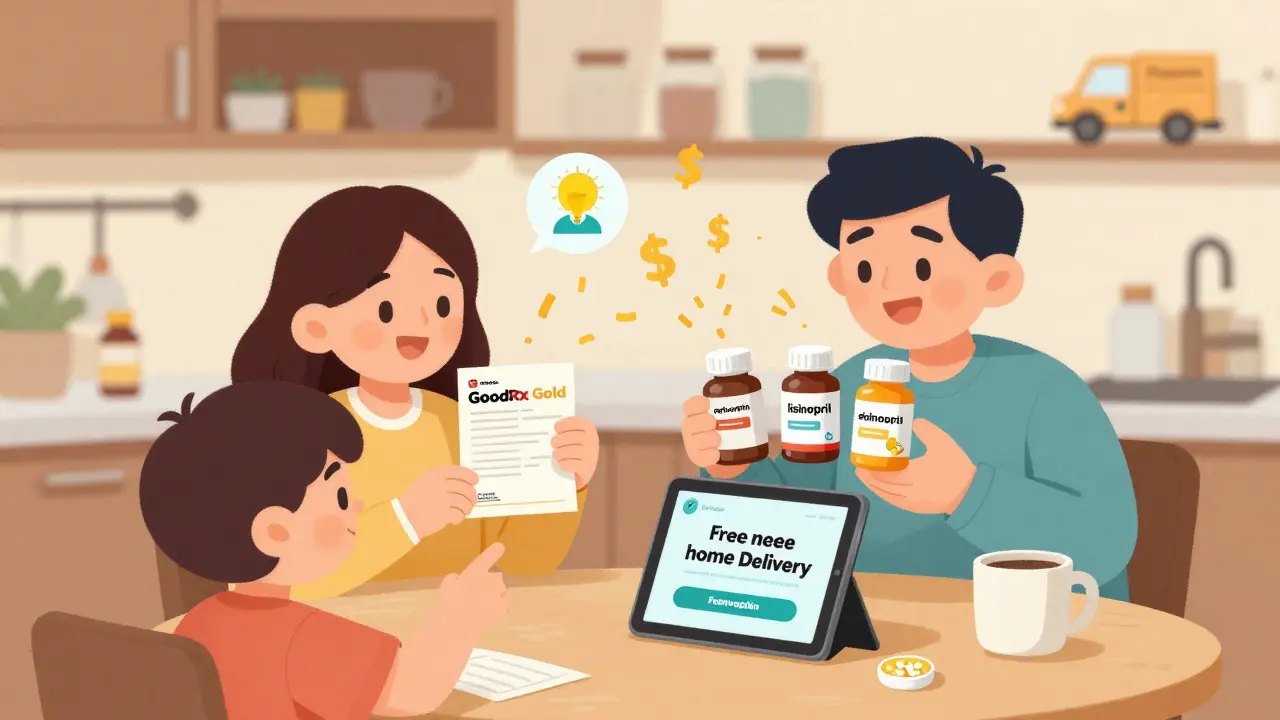
GoodRx isn’t just free. It also has a paid version: GoodRx Gold. For $9.99 a month (or $19.99 for a family plan), you get deeper discounts - up to 90% off - and free home delivery on over 38,000 medications.
Is it worth it? If you take multiple prescriptions every month, yes. For example, a person taking three generic drugs - say, metformin, lisinopril, and atorvastatin - might save $15-$30 per month on each. That’s $45-$90 saved monthly. The subscription pays for itself in one or two refills.
But if you only take one or two meds a year? Stick with the free version. The gold plan also includes telehealth visits for $19 each - useful if you need a quick prescription renewal without seeing your doctor in person.
Other Services: SingleCare, RxSaver, and More
GoodRx isn’t the only player. SingleCare, RxSaver, and others offer similar services. But they don’t all do the same thing.
SingleCare has slightly fewer pharmacies - about 60% of what GoodRx covers - but it integrates telehealth and has a simpler interface. RxSaver focuses on generics and offers fixed low prices for common drugs like insulin ($112 for a vial) and antibiotics. But neither matches GoodRx’s real-time price updates across 200+ pharmacies per search.
Amazon Pharmacy is another option. It’s growing fast and often undercuts GoodRx by 8-12% on generics. But it only works if you’re willing to order online and wait for delivery. If you need your med right now, GoodRx still wins.
Bottom line: Always check multiple services. A drug that’s $50 on GoodRx might be $42 on SingleCare. It takes 90 seconds to compare.
Where GoodRx Falls Short
GoodRx isn’t magic. There are big limits.
First, it doesn’t work with Medicare or Medicaid. Federal law bans pharmacies from accepting third-party coupons if you’re on those programs. If you try to use GoodRx with your Medicare card, you could get flagged for fraud. The Medicare Rights Center reports that 18% of users who mix the two get their coverage reviewed - or worse, suspended.
Second, not all pharmacies accept it. About 35% of independent pharmacies don’t participate. You might drive to three stores before finding one that takes the coupon. CVS and Walmart are reliable. Small-town pharmacies? Not always.
Third, it doesn’t help with your deductible. If you’re trying to meet your annual deductible to unlock better insurance coverage, using GoodRx means your payments don’t count. That could cost you more long-term if you need expensive care later in the year.
And for specialty drugs - like those for multiple sclerosis or rare diseases - GoodRx often doesn’t offer discounts at all. Those drugs are priced through manufacturer coupons, not PBM networks. You’ll need to go directly to the drugmaker’s patient assistance program.
How to Use GoodRx the Right Way
Don’t just grab the first discount you see. Here’s how to use it smartly:
- Check your insurance EOB first. Look at your last explanation of benefits. What did you actually pay? Compare that to the GoodRx price.
- Call the pharmacy. Don’t assume the app price is final. Ask: “Can you honor the GoodRx coupon?” Some staff aren’t trained to process them.
- Use it before you meet your deductible. If you’re early in the year and haven’t paid $2,000 out of pocket, skip the insurance copay. Pay cash with GoodRx.
- Use it for non-formulary drugs. If your plan doesn’t cover your med, GoodRx is your only affordable option.
- Don’t combine it with Medicare. If you’re on Medicare, use GoodRx only if you’re paying cash - not using your Part D card.
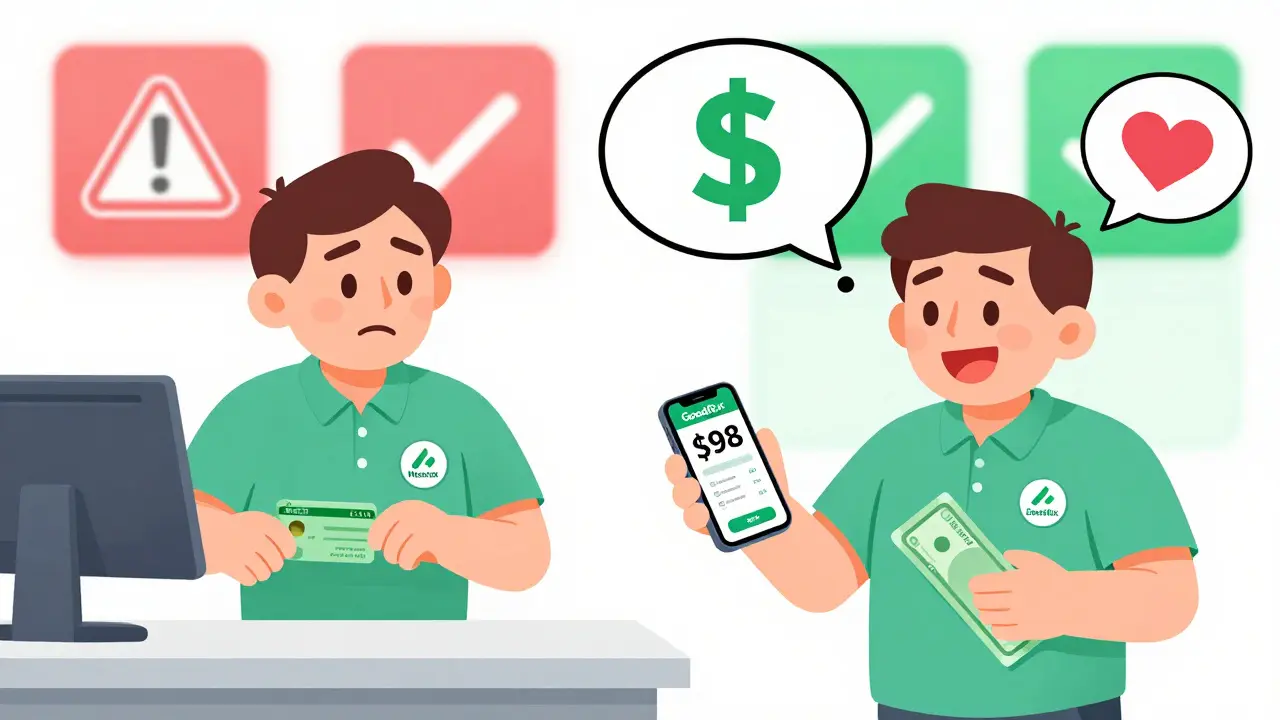
Pro tip: Always ask for the “cash price” at the counter - even if you hand them your insurance card. Pharmacists are required to tell you if a lower cash price exists. In 92% of cases, they’ll say yes.
What Happens When You Use GoodRx?
When you use GoodRx, you’re not paying the pharmacy’s listed price. You’re paying a discounted rate that’s negotiated between GoodRx and the PBM. The pharmacy still gets paid - but less than retail. GoodRx takes a small cut from the PBM, not from you.
Some critics say this distorts drug pricing. By pushing down cash prices, PBMs may raise list prices to make up lost rebates. One Harvard study found that drugs with heavy GoodRx usage saw their list prices rise by 15-20% over three years. That’s a hidden cost - it affects everyone, even people who don’t use the app.
But for the person standing in line with $80 in their wallet and a $500 prescription? That’s not their problem. They need the drug. And GoodRx gives them a way to get it.
Real Stories: What Users Are Saying
On Reddit, users share wins and frustrations:
- “Saved $412 on Ozempic. Insurance wanted $935. GoodRx gave me $523. I used it for 6 months. Now I’m on Medicare - and I can’t use GoodRx anymore. I’m stuck paying $700.” - u/PharmTech2020
- “Tried GoodRx at Rite Aid. Staff said ‘we don’t take third-party coupons.’ Called corporate. They apologized. Next time, it worked.” - u/InsuredButBroke
- “Used GoodRx for my dad’s insulin. Went from $336 to $98. He’s 78. No insurance. This kept him alive.” - u/GrandmaHelper2023
Trustpilot reviews are mostly positive (4.3/5), with 78% of happy users citing GLP-1 drug savings. But 32% of complaints are about pharmacy staff not knowing how to process the coupon. That’s changing - but slowly.
Final Advice: Always Compare
There’s no one-size-fits-all answer. Insurance isn’t always better. Cash isn’t always cheaper. The only way to know is to compare.
Before you fill any prescription - whether you have insurance or not - check GoodRx. Then check SingleCare. Then call your pharmacy and ask for the cash price. Take the lowest.
You’re not breaking any rules. You’re not cheating the system. You’re using a legal, widely accepted tool to pay less for medicine. And in a country where drug prices are out of control, that’s not just smart - it’s necessary.
Medications aren’t optional. Neither are the savings. Use them.
Can I use GoodRx if I have Medicare?
You can use GoodRx only if you’re paying cash - not using your Medicare Part D card. If you present both your Medicare card and a GoodRx coupon, you risk violating federal rules. The Medicare Rights Center warns that 18% of such cases trigger coverage reviews. If you’re in the Medicare donut hole, check if manufacturer coupons offer better savings.
Does GoodRx work with Medicaid?
No. Federal anti-kickback laws prohibit pharmacies from accepting third-party coupons for Medicaid patients. Even if the GoodRx price is lower, you cannot use it with Medicaid. Your only options are the Medicaid formulary or the drugmaker’s patient assistance program.
Why is GoodRx cheaper than my insurance copay?
Insurance copays are based on negotiated rates between your plan and the PBM. But GoodRx accesses the same PBM discounts - and sometimes those discounts are lower than your plan’s copay, especially if you haven’t met your deductible or the drug isn’t on your formulary. GoodRx doesn’t add administrative fees, so the savings pass straight to you.
Can I use GoodRx for controlled substances like Adderall?
No. GoodRx does not offer discounts on controlled substances like Adderall, oxycodone, or other DEA-regulated drugs. This is due to federal regulations that prevent discount programs from being applied to these medications. You’ll need to pay the pharmacy’s cash price or use insurance.
Is GoodRx Gold worth the monthly fee?
If you take three or more monthly prescriptions, yes. For example, a person on metformin, lisinopril, and atorvastatin could save $45-$90 per month with Gold. At $9.99/month, it pays for itself quickly. If you only take one or two meds a year, stick with the free version. Gold also includes telehealth visits and free home delivery - useful if you’re homebound or travel often.
Do all pharmacies accept GoodRx?
No. About 65% of pharmacies accept GoodRx, mostly large chains like CVS, Walgreens, and Walmart. Independent pharmacies are less likely to participate. Always call ahead or check the app’s pharmacy map. Some require you to show the coupon on your phone - not print it. Kroger, for example, only accepts mobile coupons.
Does using GoodRx affect my insurance deductible?
No. Payments made with GoodRx do not count toward your insurance deductible or out-of-pocket maximum. If you’re trying to meet your deductible to unlock better coverage later in the year, using GoodRx will delay that. Only payments made through your insurance plan count.
What’s the difference between GoodRx and SingleCare?
GoodRx has broader pharmacy coverage (70,000+ vs. SingleCare’s 42,000) and updates prices in real time. SingleCare has fewer participating pharmacies but offers telehealth services and a simpler interface. GoodRx tends to offer deeper discounts on brand-name drugs; SingleCare sometimes has better prices on generics. Always compare both for your specific medication.




Comments(13)