
Storing controlled substances properly isn’t just about following rules-it’s about saving lives. Every year, thousands of prescription opioids, sedatives, and painkillers go missing from hospitals, clinics, and pharmacies. Some end up in the wrong hands. Others are stolen by staff. And every stolen pill carries a risk: overdose, addiction, or even death. The good news? Most of these incidents are preventable. With the right storage practices, you can cut diversion risk by more than 80%.
Why Controlled Substance Storage Matters
Controlled substances-like oxycodone, fentanyl, midazolam, and Adderall-are tightly regulated because they’re powerful and addictive. Under the U.S. Controlled Substances Act (CSA), any facility handling these drugs must have security measures in place. But compliance isn’t just about avoiding fines. The DEA fined facilities an average of $187,500 in 2022 for poor storage. And if a diverted drug causes patient harm, legal costs can hit $287,000 per incident.
Diversion doesn’t always look like theft. Sometimes it’s a nurse flushing a vial of fentanyl and replacing it with saline. Sometimes it’s a pharmacist taking extra doses during a night shift. These aren’t rare. Between 2019 and 2022, the DEA found that 68% of major diversion cases happened during manual transfers-like moving drugs from the pharmacy vault to a floor stock cart.
Physical Storage Requirements
Storage isn’t just a locked cabinet. It’s about layers of control.
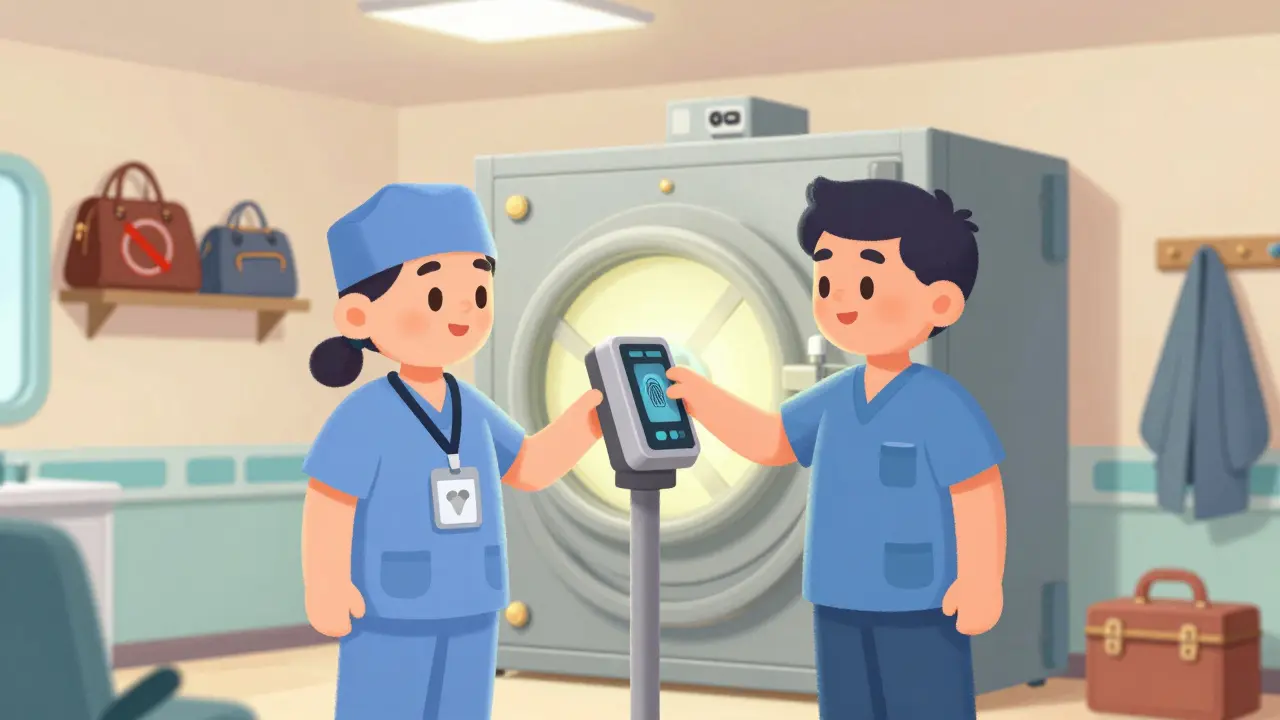
- Locked, secure containers: All Schedule II-V drugs must be stored in a locked, substantially constructed cabinet or vault. A standard file cabinet won’t cut it. The container must resist forced entry and be anchored to the floor or wall.
- Access limited to two people: UCLA’s safety guidelines recommend limiting access to no more than one or two trusted staff members. More people = more risk. Even in small clinics, don’t let everyone with a key in.
- No personal items nearby: Bags, purses, coats, and backpacks are banned in medication storage areas. In 31% of diversion cases, staff used personal items to conceal stolen drugs. That’s not speculation-it’s DEA data.
- Visibility matters: Lockers should not be hidden behind doors or in corners. Cameras should cover storage areas. If someone can’t be seen accessing the drugs, they’re more likely to try something.
For small clinics without a dedicated pharmacy, the NIH recommends storing even Schedule III-V drugs in locked containers-even if state law doesn’t require it. Why? Because it’s the right thing to do. And it’s easier to prove you’re trying to prevent diversion if you’ve already taken extra steps.
Manual vs. Automated Storage Systems
There are two main ways to store controlled substances: manually or with technology.
| Feature | Manual Storage | Automated Dispensing Cabinets (ADCs) |
|---|---|---|
| Diversion risk | 4.2x higher than ADCs | 73% reduction in incidents |
| Access control | Key or combination lock | Dual authentication (badge + biometric) |
| Audit trail | Paper logs, prone to errors | Electronic logs with timestamps and user IDs |
| Cost | Low upfront cost | $45,000-$75,000 per unit |
| Best for | Facilities under 100 beds | Hospitals with 200+ beds |
ADCs are the gold standard. They require two forms of authentication-like a badge and a fingerprint-to open. Every pill taken is logged with who took it, when, and why. That’s why facilities using ADCs have 73% fewer diversion incidents.
But ADCs aren’t for everyone. A small rural clinic can’t afford $75,000 for one cabinet. For those places, dual-control protocols work. That means two people must be present every time a controlled substance is accessed. One opens the lock. The other watches. Both sign the log. It’s slower. It’s more work. But it’s proven to cut risk dramatically.

High-Risk Moments to Watch For
Diversion doesn’t happen randomly. It happens at predictable points in the process.
- Compounding drugs: When a pharmacist mixes a dose from a bulk container, there’s no electronic record. That’s a red flag. Always have two people witness compounding.
- Transferring to floor stock: Moving drugs from the pharmacy to a nurse station? That’s when 68% of large cases occur. Use a locked cart with a log sheet. No exceptions.
- Waste disposal: A nurse flushes a vial? They must have a witness. The witness must sign off. And the waste must be documented-down to the serial number of the vial.
- Returning unused drugs: Never let a patient or family member return pills. Always have a pharmacist receive and document returns.
One hospital in Ohio found that 80% of diversion attempts happened during night shifts. Why? Fewer staff. Less supervision. That’s why many facilities now require a second person to be on-site during all controlled substance transactions after 10 p.m.
Staff Training and Culture
Technology helps-but people stop diversion.
When a hospital in Texas implemented dual authentication and banned personal bags, diversion dropped by 74%. But staff hated it at first. They complained about delays. They called it "paranoia." It took three mandatory training sessions-and a real case of a coworker being arrested-for everyone to take it seriously.
Training isn’t a one-time event. It needs to be repeated every six months. And it needs to include real examples: "Here’s how a nurse replaced fentanyl with saline. Here’s how we caught it. Here’s what happened to them."
Surveillance isn’t just cameras. It’s culture. Staff should feel safe reporting suspicious behavior. Anonymous hotlines work. So do peer-to-peer reminders. A simple sign in the pharmacy that says, "If you see something, say something," changes behavior.
Documentation and Auditing
Every controlled substance transaction must be documented. Period.
Electronic records are better. They’re searchable. They’re timestamped. They can’t be easily altered. But if you’re still using paper logs, you need extra controls:
- Logbooks must be bound and numbered.
- Entries must be made immediately after the transaction.
- Each entry must include: drug name, dose, quantity, date, time, and two signatures.
- Pharmacists must review logs daily for outliers-a spike in fentanyl use? A nurse taking 10 doses in one shift? That’s a red flag.
Starting January 1, 2025, the DEA requires real-time inventory tracking for any facility handling more than 10kg of Schedule II drugs annually. That means your system must update automatically as drugs are dispensed. Paper logs won’t meet this standard.
What Happens If You Get Caught?
The DEA doesn’t just show up to check paperwork. They show up because someone reported you.
During inspections, they examine:
- Storage areas for physical security
- Logbooks for missing entries
- Staff interviews for inconsistencies
- Surveillance footage
If they find a problem, penalties start at $187,500. Repeat offenses can mean losing your DEA registration-meaning you can’t legally prescribe or dispense controlled substances. That’s the end of your practice.
And it’s not just the facility. Individuals face criminal charges. In 2023, a nurse in Florida was sentenced to 18 months in federal prison for stealing fentanyl. Her license was revoked. Her name is on a national database.
What’s Next? Emerging Trends
The field is changing fast.
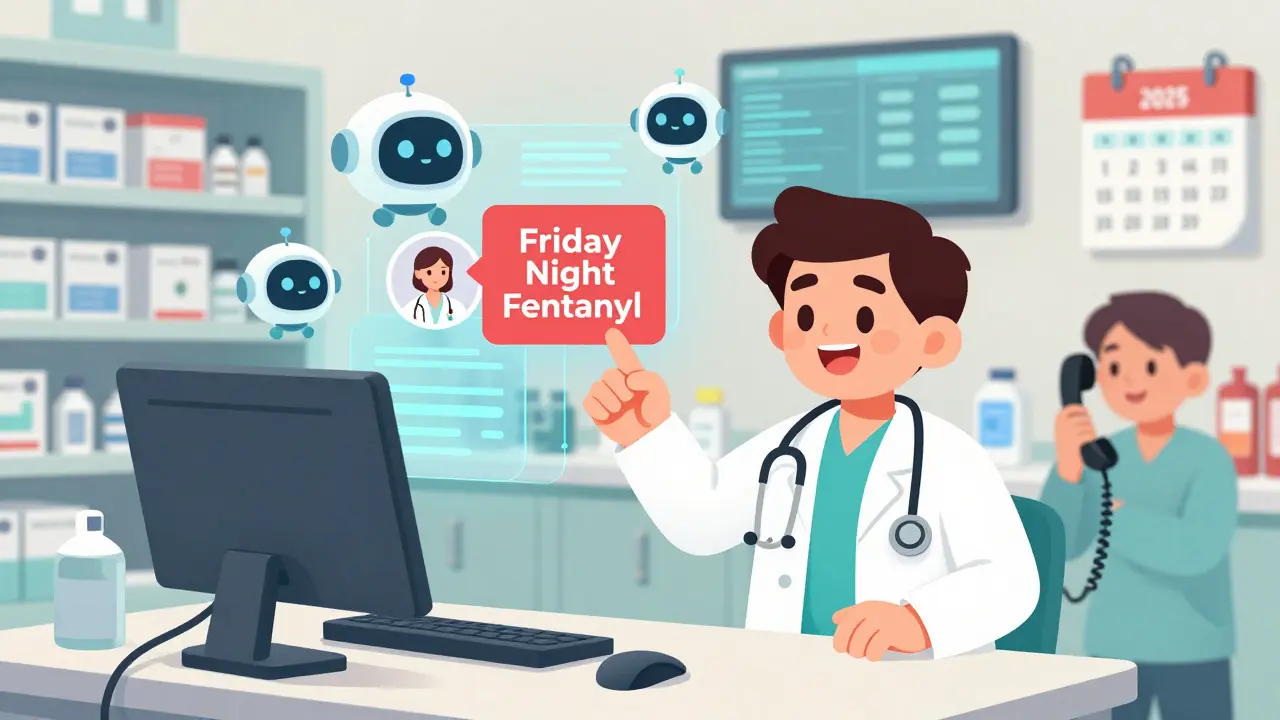
- AI-powered monitoring: Hospitals like Mayo Clinic and Johns Hopkins are using AI to spot patterns. If a nurse always takes pain meds right before lunch, or if a vial disappears every Friday night, the system flags it. Pilot programs cut false alarms by 63% and caught 92% of incidents within 48 hours.
- Real-time tracking: New ADCs now sync with pharmacy systems so inventory updates live. No more waiting for weekly counts.
- Waste tracking: New protocols require barcode scanning of every vial flushed. No more "I threw it away" without proof.
By 2026, the global market for diversion prevention tech will hit $1.2 billion. Facilities that wait for the next regulation will be behind. And behind means at risk.
Final Checklist: Are You Protected?
Use this simple checklist to audit your storage setup:
- Are all controlled substances stored in a locked, anchored cabinet or vault?
- Is access limited to no more than two staff members?
- Are personal bags, coats, and purses banned from storage areas?
- Do you use dual authentication (two forms of ID) to access drugs?
- Are all transactions logged electronically-with timestamps and user IDs?
- Is a pharmacist reviewing daily dispensing logs for unusual patterns?
- Are staff trained every six months with real diversion case studies?
- Is there an anonymous way for staff to report concerns?
- Are waste and returns witnessed and documented with serial numbers?
- Is your system ready for real-time inventory tracking by January 1, 2025?
If you answered "no" to any of these, you’re not just non-compliant-you’re vulnerable. Diversion doesn’t wait for perfect conditions. It happens when someone thinks they won’t get caught. Don’t give them that chance.
What’s the difference between Schedule II and Schedule V drugs in terms of storage?
All controlled substances, from Schedule II to V, must be stored securely. But Schedule II drugs-like oxycodone and fentanyl-are higher risk and require the strictest controls: dual authentication, real-time tracking, and daily audits. Schedule III-V drugs, like codeine or benzodiazepines, still need locked storage, but some states allow less stringent rules. However, the NIH and ASHP recommend treating all controlled substances with the same level of security to close loopholes.
Can a single person access controlled substances in an emergency?
No. Even in emergencies, two-person access is required. There are no exceptions. If a patient needs immediate pain relief and no second person is available, the drug must be held until help arrives. Some facilities keep emergency kits with pre-dosed, locked medications for true emergencies-but those are still under dual control and logged immediately after use.
How often should controlled substance inventories be counted?
Daily counts are required for Schedule II drugs. For Schedule III-V, weekly counts are standard-but many facilities now do daily checks regardless. The key is consistency. If you count every day, you’ll catch discrepancies early. Waiting for monthly audits means you’re already too late.
What should I do if I suspect a coworker is diverting drugs?
Report it immediately through your facility’s anonymous hotline or to your supervisor. Don’t confront the person. Don’t investigate yourself. Diversion is a crime, and your safety comes first. Most facilities have protections for whistleblowers. Reporting could save a life-and prevent a colleague from losing everything.
Are there alternatives to expensive automated cabinets for small clinics?
Yes. Small clinics can use dual-control protocols: two staff members must be present for every access, and all transactions must be logged in a bound, numbered book with signatures. Add a lockbox with a time-delay lock (requires 15 minutes between openings) and install a camera pointed at the storage area. It’s not as high-tech, but it’s proven to reduce risk by up to 89% when combined with staff training.







Comments(15)