Bicarbonate Therapy: What It Is, When It’s Used, and What You Need to Know
When your blood gets too acidic, your body struggles to function. That’s where bicarbonate therapy, a medical treatment that adds sodium bicarbonate to the bloodstream to restore normal pH levels. Also known as alkaline therapy, it’s used in emergencies when acid levels spike dangerously high. This isn’t about drinking baking soda for heartburn—it’s a clinical intervention for life-threatening conditions like severe metabolic acidosis.
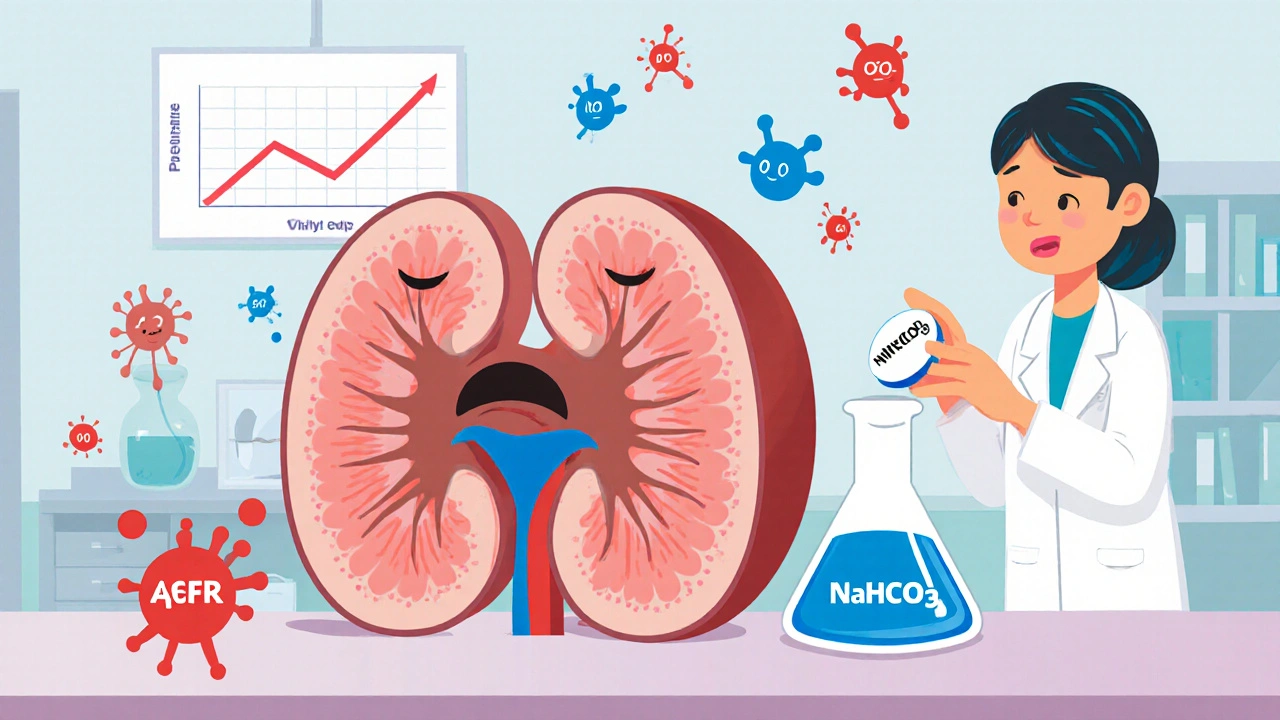
Bicarbonate therapy often comes into play with kidney disease, a condition where failing kidneys can’t remove enough acid from the blood. In advanced stages, doctors may use it to slow progression and reduce muscle loss. It’s also used in cases of drug overdose, especially with aspirin or methanol, where the body produces toxic acids that can shut down organs. But here’s the catch: it doesn’t always help. Studies show that for many types of acidosis, giving bicarbonate doesn’t improve survival—and can even cause fluid overload or low calcium levels.
It’s not a one-size-fits-all fix. The decision to use bicarbonate depends on the cause, how bad the acidosis is, and whether the patient is breathing properly. If your lungs are struggling to blow off CO2, bicarbonate might make things worse. And in chronic kidney disease, long-term use can raise blood pressure or worsen heart strain. That’s why it’s not routinely given—even if lab numbers look bad.
You’ll find posts here that dig into how bicarbonate interacts with other drugs, when it’s used in hospitals versus at home, and why some doctors avoid it altogether. You’ll also see how it ties into broader topics like electrolyte balance, kidney function, and medication safety. Some of the articles cover how sodium bicarbonate affects other treatments—like how it can change how your body handles certain antibiotics or heart medications. Others look at real-world cases where it helped, and where it didn’t. There’s no magic here. Just science, risks, and the hard choices doctors make when a patient’s blood is too acidic.