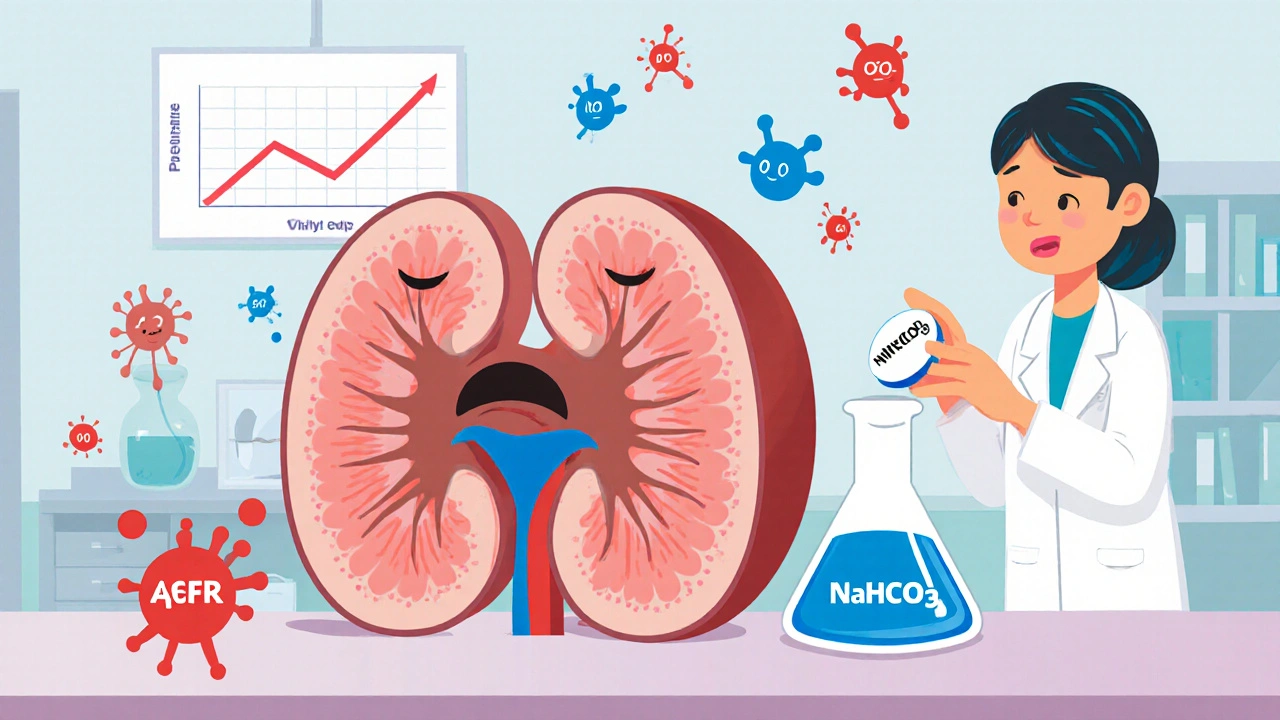
CKD: Understanding Chronic Kidney Disease and How Medications Affect It
When your kidneys don’t work right, everything changes—especially how your body deals with CKD, a long-term condition where kidney function slowly declines, often without early symptoms. Also known as chronic kidney disease, it’s not just about filtering waste. It affects how drugs are absorbed, processed, and cleared from your body. Many people with CKD take multiple meds for high blood pressure, diabetes, or pain, but what’s safe for someone with healthy kidneys can be risky here.
Medication safety, the practice of using drugs in a way that avoids harm, especially when organ function is impaired becomes critical. For example, NSAIDs like ibuprofen can drop kidney blood flow even further. Metformin, a common diabetes drug, may need to be stopped if kidney function falls too low. Even common antibiotics like ciprofloxacin or painkillers like acetaminophen need dose adjustments. Your kidneys don’t just filter toxins—they help activate or deactivate many drugs. When they slow down, those drugs build up, causing side effects like dizziness, confusion, or even heart rhythm problems.
Kidney function, measured by eGFR and creatinine levels, determines how your body handles every pill you take. Doctors don’t just guess—they use these numbers to decide if a drug is safe, how much to give, and how often. Some meds are outright avoided in late-stage CKD. Others, like certain blood pressure pills, become essential to slow damage. And it’s not just about the drugs you take—what you eat, what supplements you use, and even herbal remedies can interfere. CBD oil, for example, affects liver enzymes that also handle kidney-related drug metabolism. A drug interaction you didn’t know about could push your kidneys closer to failure.
You won’t find one-size-fits-all answers here. What works for one person with CKD might hurt another. That’s why the posts below cover real-world cases: how to restart meds safely after a break, why some antibiotics are riskier than others, how blood thinners need extra care, and what to watch for when you’re on multiple prescriptions. You’ll see how genetic differences, pharmacy practices, and even timing of doses play into this. Whether you’re managing CKD yourself or helping someone who is, this collection gives you the facts—not guesses—to make smarter choices. The goal isn’t just to avoid harm. It’s to live well, even with reduced kidney function.