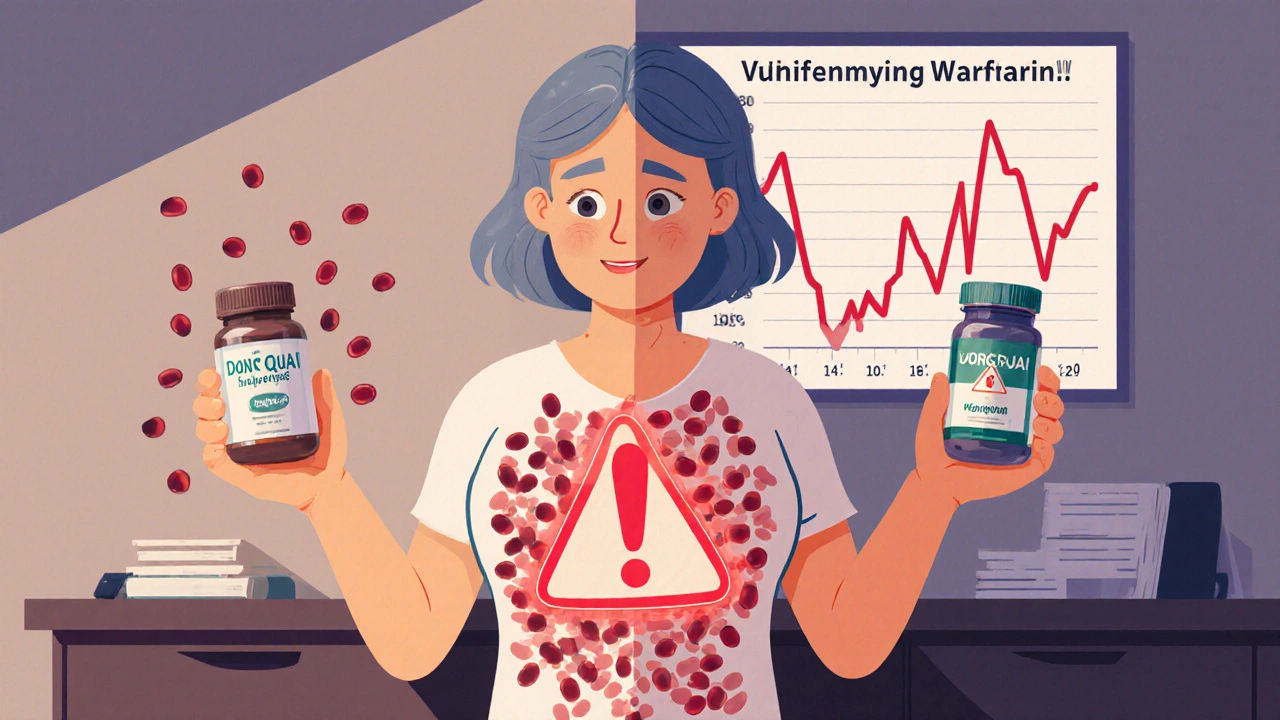
Dong Quai Bleeding Risk: What You Need to Know Before Taking It
When you hear Dong Quai, a traditional Chinese herb often used for menstrual and menopausal symptoms. Also known as Angelica sinensis, it’s been taken for centuries to balance hormones and ease cramps. But here’s the catch: Dong Quai can thin your blood—just like prescription anticoagulants. That’s not a minor side effect. It’s a real danger if you’re already on blood thinners, have a bleeding disorder, or are about to have surgery.
Many people assume herbal means safe, but that’s not true. Dong Quai contains compounds like coumarin and ligustilide that interfere with platelet function and slow down clotting. This isn’t theoretical. There are documented cases of people bruising easily, bleeding longer after dental work, or even having internal bleeding after taking Dong Quai alongside warfarin or aspirin. It doesn’t matter if you’re taking it as a tea, capsule, or tincture—your body still processes the active ingredients the same way. And if you’re on any medication that affects your blood, like clopidogrel, dabigatran, or even high-dose fish oil, the risk goes up fast. This isn’t a guess. It’s backed by clinical reports and pharmacology studies.
People often don’t realize Dong Quai is in their supplement blend. It hides in formulas labeled "women’s health," "hormone support," or "blood circulation." If you’re taking something for PMS, hot flashes, or fatigue and see "Angelica root" on the label, you’re getting Dong Quai. And if you’re scheduled for surgery—even a simple tooth extraction—your doctor needs to know. Stopping it a week before isn’t always enough; some effects linger. The same goes for childbirth or any procedure where bleeding control matters. This isn’t about fear—it’s about awareness. You wouldn’t ignore a warning on your prescription bottle. Don’t ignore it on your herbal bottle either.
There’s no magic dose that’s "safe" for everyone. A low dose might not cause issues in a healthy person who isn’t on meds, but if you have liver problems, low platelet counts, or a history of bleeding, even small amounts can tip the scale. And if you’re on anticoagulants, the interaction isn’t just possible—it’s predictable. That’s why many hospitals and pharmacists flag Dong Quai as a high-risk herb. It’s not banned. It’s just not harmless.
Below, you’ll find real-world examples of how Dong Quai interacts with other drugs, what signs to watch for, and what alternatives might work better without the bleeding risk. These aren’t theoretical discussions—they’re based on actual patient cases and clinical guidance. Whether you’re considering Dong Quai, already taking it, or just want to understand why your doctor warned you, the posts here give you the facts without the fluff.