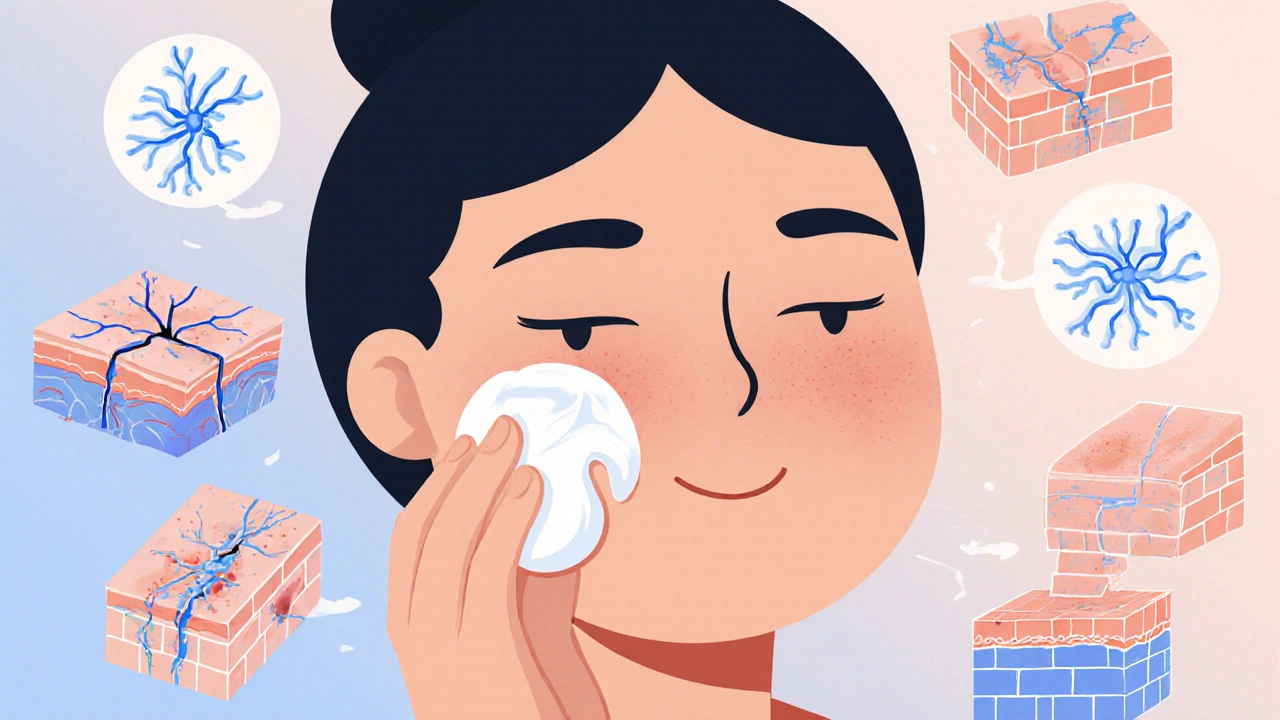
Topical Steroid Withdrawal: Symptoms, Recovery, and Safer Alternatives
When you stop using topical steroids after long-term use, your skin might react badly—red, burning, itchy, and flaring up worse than before. This is topical steroid withdrawal, a condition that occurs when the skin becomes dependent on corticosteroid creams and rebounds after discontinuation. Also known as red skin syndrome, it’s not an allergy or infection—it’s your skin’s nervous system overreacting after being suppressed for months or years.
People often turn to steroid creams for eczema, psoriasis, or rashes because they work fast. But over time, the skin loses its natural ability to regulate inflammation. When the cream stops, the immune system goes into overdrive. This isn’t rare—doctors in dermatology clinics see it more often now, especially in adults who’ve used strong steroids on their face, neck, or genitals for years. The same thing can happen with over-the-counter hydrocortisone if used daily for more than a few weeks. steroid-sparing therapy, a strategy that uses non-steroid treatments to control inflammation without triggering dependence, is the key to breaking the cycle. Treatments like calcineurin inhibitors (tacrolimus, pimecrolimus), phototherapy, or even targeted biologics help reduce flare-ups without the rebound effect.
Recovery takes time—weeks to months—and there’s no quick fix. Some people describe it as going through a firestorm: the skin gets worse before it gets better. But many do recover fully with patience and the right support. Avoiding triggers like hot showers, harsh soaps, and stress helps. Moisturizing with simple, fragrance-free creams supports healing. And if you’re stuck in a loop of applying cream to calm the itch, only to have it flare worse later, you’re not alone. You’re also not crazy. This is a documented medical issue, not a myth. The posts below cover real cases, treatment paths, and safer options—from how to wean off steroids safely to what alternatives actually work. You’ll find guides on managing symptoms, understanding why steroids stop working over time, and how to talk to your doctor about switching to non-steroid treatments. This isn’t about fear—it’s about knowledge. And you’re one step closer to getting your skin back.