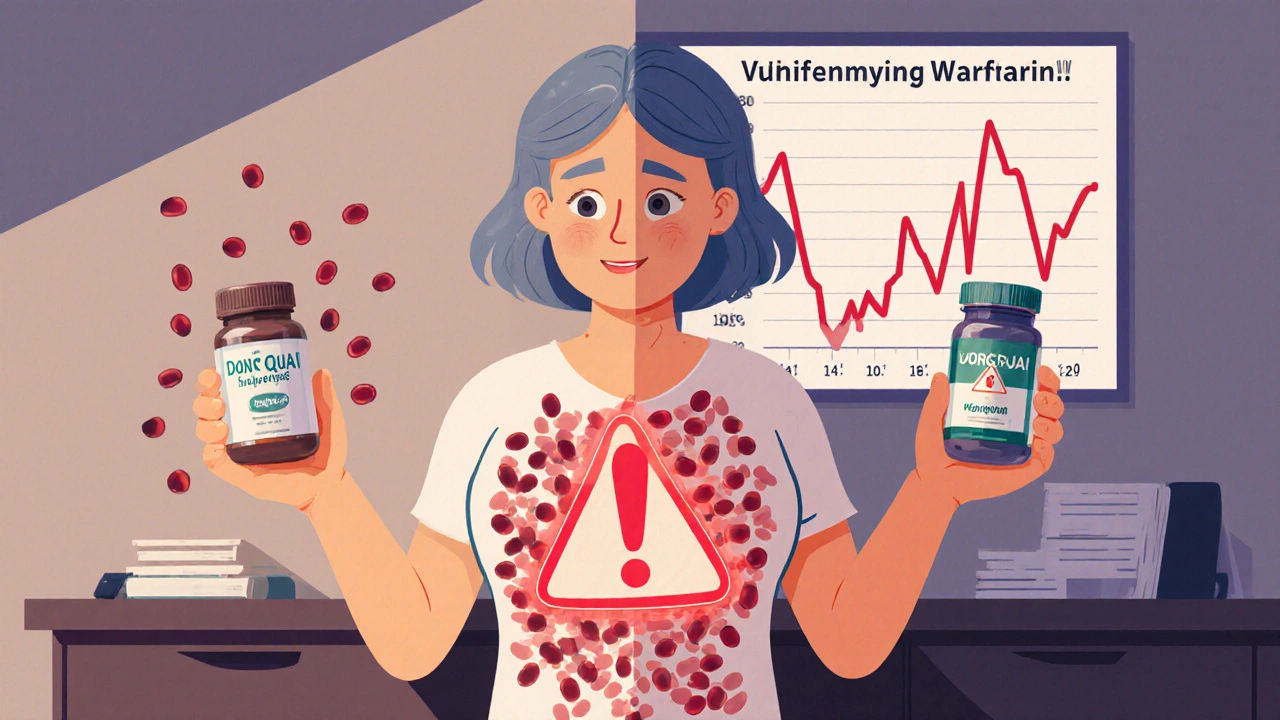
Warfarin Herb Interactions: What You Need to Know Before Taking Herbs with Blood Thinners
When you're on warfarin, a blood thinner used to prevent dangerous clots in people with atrial fibrillation, deep vein thrombosis, or artificial heart valves. Also known as Coumadin, it works by blocking vitamin K, which your body needs to make clotting factors. But if you start taking herbs, even ones labeled "natural" or "safe," you could be putting yourself at serious risk. Warfarin has a narrow safety window—too little and you risk a stroke or clot; too much and you could bleed internally. Many herbs interfere with how warfarin works, and most people don’t realize it until it’s too late.
Herbal supplements, plant-based products sold as vitamins or remedies. Also known as botanicals, they’re often taken without telling a doctor because people assume they’re harmless. But herbs like ginkgo, garlic, ginger, and green tea can all affect how warfarin is absorbed or broken down in your liver. Some increase bleeding risk by thinning blood further. Others, like vitamin K-rich herbs (kale, spinach, parsley), can cancel out warfarin’s effect. Even St. John’s wort, often used for mild depression, speeds up how fast your body clears warfarin, making it less effective. This isn’t theoretical—emergency rooms see cases every year where people on warfarin started a new herbal tea and ended up in the hospital with internal bleeding or a clot.
Anticoagulants, medications that prevent blood clots by targeting specific parts of the clotting process. Also known as blood thinners, they include warfarin, apixaban, rivaroxaban, and others. Warfarin is unique because it’s affected by diet, other drugs, and yes—herbs. Unlike newer anticoagulants, warfarin requires regular blood tests (INR) to check if it’s working right. But even if your INR is stable, adding an herb can throw it off in days. The interaction doesn’t always show up right away. It builds slowly. That’s why so many people don’t connect their nosebleeds, bruising, or dark stools to something they started taking weeks ago.
You don’t have to quit herbs cold turkey. But you need to talk to your doctor before starting anything new—even something as simple as turmeric or chamomile. Write down every supplement you take, including doses and how often. Bring that list to every appointment. If your provider says it’s okay, get your INR checked sooner than usual after starting the herb. And if you notice unusual bruising, blood in your urine or stool, or sudden headaches, don’t wait—get checked immediately.
Below are real cases and studies from people who’ve dealt with these interactions. Some thought they were being careful. Others didn’t know herbs could interfere. All of them learned the hard way. What you’ll find here isn’t theory—it’s what actually happens when warfarin meets herbal supplements, and how to avoid the same mistake.