
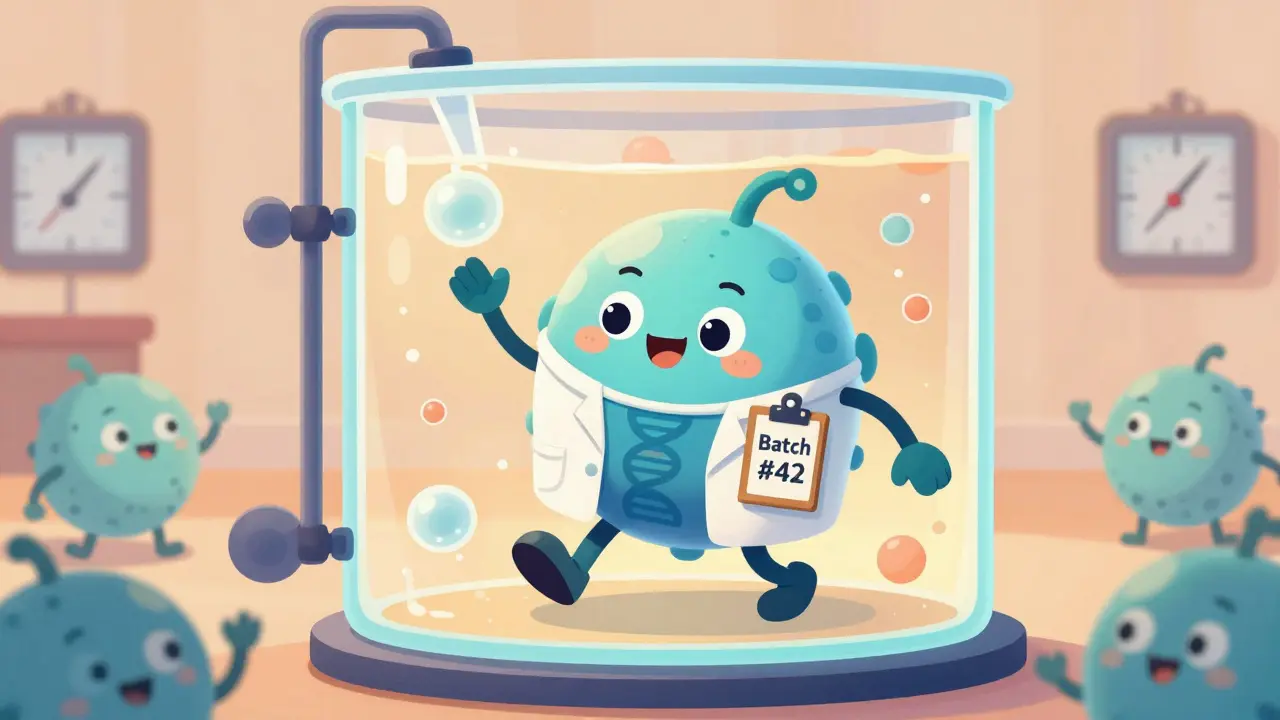
When you take a pill for high blood pressure or an antibiotic, you expect every tablet to be exactly the same. That’s because small molecule drugs are made through chemical reactions - like baking a cake from a recipe. Mix the same ingredients in the same order, and you get the same result every time. But biologic drugs? They’re not made that way. They’re grown. And because they’re grown in living cells, biologic drugs can never be exact copies of each other - not even from the same company.
What Makes Biologics So Different?
Biologic drugs are made using living systems: bacteria, yeast, or mammalian cells engineered to produce proteins that treat diseases like rheumatoid arthritis, cancer, or type 2 diabetes. Think of Humira for joint pain or Ozempic for weight and blood sugar control. These aren’t chemicals. They’re massive, complex molecules - up to 1,000 times bigger than a typical pill’s active ingredient. A small molecule drug might have a few dozen atoms. A biologic can have tens of thousands.Because they’re made by cells, not machines, every batch has tiny differences. Not because someone messed up - but because living cells aren’t robots. They respond to temperature, nutrient levels, oxygen, even the way the bioreactor vibrates. These subtle shifts change how the protein folds, how sugars attach to it, or how it clusters. The FDA calls these "inherent variations." They’re normal. Expected. And impossible to eliminate.
How Biologics Are Made (And Why It Takes So Long)
Making a biologic isn’t a quick process. It’s more like raising a baby than manufacturing a product.First, scientists insert human genes into host cells - usually Chinese hamster ovary cells - to turn them into protein factories. Then, those cells are placed in giant stainless steel tanks called bioreactors, where they’re fed nutrients, kept at exactly 36.5°C, and gently bubbled with oxygen for 10 to 14 days. During that time, the cells multiply and spit out the therapeutic protein. If the pH drops by 0.1 or the sugar level dips too low, the whole batch can fail.
After that, the messy mixture goes through purification. It’s filtered, spun, and pulled through special columns that grab only the right protein - like sorting a handful of identical-looking keys, but one of them opens a vault. This step alone can remove 95-98% of impurities. Then comes viral filtration, ultrafiltration, and formulation with buffers to keep the protein stable. The entire process? Three to six months. For a regular pill? Two weeks.
And the cost? Manufacturing a single batch of a biologic can run over $500,000. One contamination event - a stray microbe in the air, a faulty sensor - can wipe out an entire run. That’s why quality control makes up 30-40% of the total cost. For a small molecule drug? It’s 5-10%.
Why You Can’t Just Copy a Biologic Like a Generic
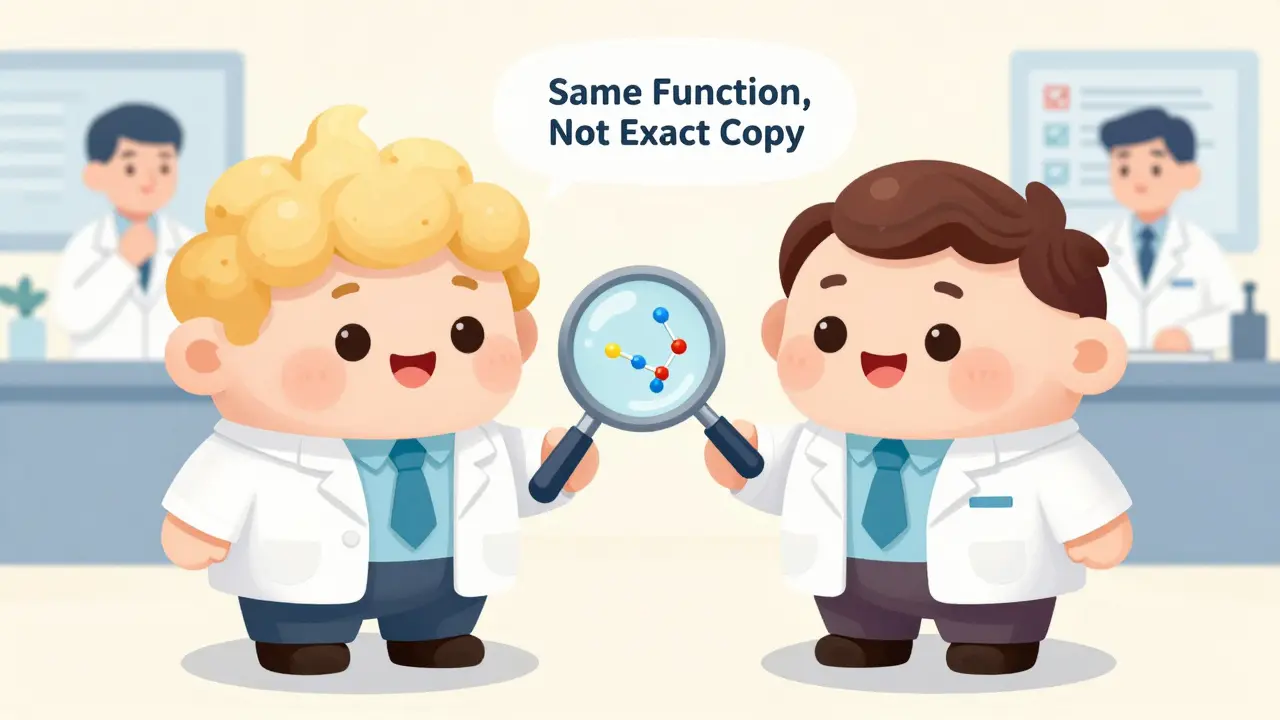
Generics are easy to copy because they’re simple. If the patent on aspirin expires, any lab can reverse-engineer it, buy the same chemicals, and make identical tablets. The FDA doesn’t need to run new clinical trials - the active ingredient is the same, down to the atom.But with biologics? There’s no "active ingredient" you can isolate and copy. The molecule itself is too complex. Even if you had the exact DNA sequence, the cells you use, the temperature, the water quality, the type of stirrer in the bioreactor - all of it changes the final product. Two companies using the same blueprint will make different proteins. Not because one is better, but because biology isn’t binary.
This is why we don’t have "generic biologics." We have biosimilars. These are highly similar, but not identical. Think of them as close cousins, not twins. A biosimilar must prove it behaves the same way in the body - same effectiveness, same safety profile - through dozens of analytical tests, animal studies, and sometimes even human trials. The FDA requires over 200 pages of data just to approve one.
The Real Cost of Getting It Right
Building a biologics factory isn’t like setting up a pharmaceutical plant. It costs $100 million to $500 million. You need ISO Class 5 cleanrooms - air cleaner than a hospital operating room. You need engineers who’ve spent years learning how to control cell cultures. You need software that tracks every temperature spike, every pH change, every drop of buffer added.One senior process engineer at Amgen said switching from a 2,000-liter bioreactor to a 15,000-liter one took 17 months and $22 million in lost revenue. Why? Because scaling up isn’t just making the tank bigger. It changes how the cells grow, how oxygen flows, how waste builds up. You have to rebuild the entire process from scratch.
And documentation? Each batch comes with over 10,000 pages of records. Every valve opened. Every sensor reading. Every test result. The FDA demands it. No shortcuts.
Biosimilars: The Smart Workaround
So what’s the solution when biologics cost $10,000 a year and patents expire? Biosimilars. They’re not copies. They’re the best possible approximation under the rules of biology.Since 2015, the U.S. has approved over 30 biosimilars. The global market hit $10.5 billion in 2023 and is expected to hit $30 billion by 2028. These drugs bring down prices - sometimes by 30-50% - without compromising safety. A biosimilar to Humira, for example, has been shown in clinical trials to work just as well for rheumatoid arthritis patients.
But getting approval isn’t easy. A biosimilar maker must prove:
- Its molecule is structurally and functionally nearly identical to the original
- It behaves the same way in the body (pharmacokinetics)
- It causes the same side effects
- It’s as effective in treating the disease
And even then, some doctors still hesitate. Why? Because patients have been told for years that "generic = same." With biosimilars, that’s not true. It’s "very, very similar." That nuance matters.
The Future: AI, Continuous Manufacturing, and New Challenges
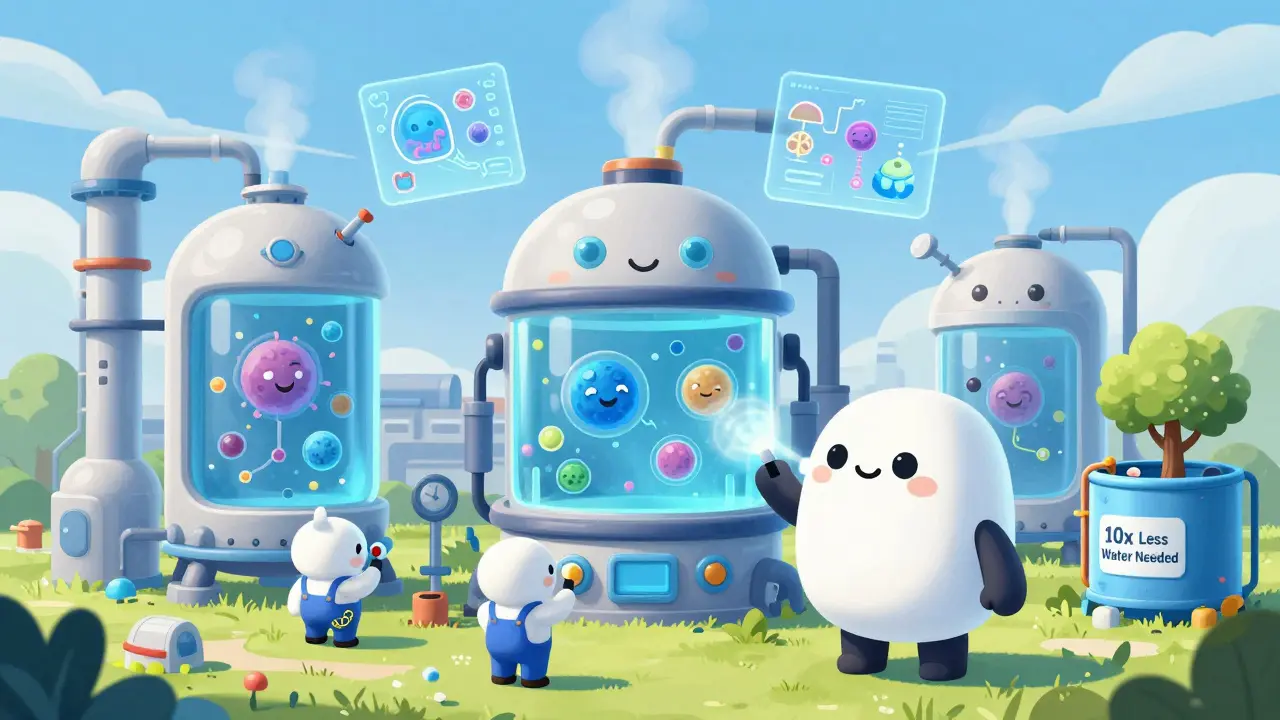
The industry is trying to fix the bottlenecks. Some companies are using AI to predict how changes in temperature or nutrient mix will affect the final product. Others are switching from batch manufacturing to continuous production - where cells flow through systems like a conveyor belt, not sitting in tanks for weeks. About 15% of new facilities now use this method, cutting production time by 20-30%.But there’s a catch. Even the best analytical tools today can only characterize 60-70% of a monoclonal antibody’s structure. That means we still don’t fully understand what we’re making. We know it works. We know it’s safe. But we can’t see every tiny variation.
And then there’s the environmental cost. Making a single dose of a biologic uses 10-15 times more water than making a regular pill. That’s a growing concern as climate pressures rise.
Still, the demand keeps climbing. Biologics made up 42% of global drug sales in 2022. By 2028, that number could hit 52%. They’re the only option for millions with autoimmune diseases, rare cancers, and genetic disorders. And until we figure out how to grow perfect proteins in machines, we’ll keep relying on living cells - and accepting that no two batches will ever be exactly the same.
Can biosimilars be substituted for the original biologic drug without a doctor’s approval?
In most cases, no. Even though biosimilars are proven to be as safe and effective as the original, substitution rules vary by state and country. In the U.S., pharmacists can only substitute a biosimilar if it’s designated as "interchangeable" by the FDA - a higher bar than biosimilarity. Most approved biosimilars today are not interchangeable. Always check with your doctor or pharmacist before switching.
Why are biologic drugs so expensive if they’re made from cells?
The high cost comes from the complexity of manufacturing, not the raw materials. Growing cells in sterile conditions for months, running hundreds of quality tests, maintaining ultra-clean facilities, and dealing with frequent batch failures all add up. A single failed batch can cost over half a million dollars. Plus, R&D for biologics takes 10-12 years and costs billions before the first dose is sold.
Are biosimilars as safe as the original biologic drugs?
Yes. Regulatory agencies like the FDA and EMA require biosimilars to show no clinically meaningful differences in safety, purity, or potency. Thousands of patients have been treated with biosimilars over the past decade, and studies consistently show the same safety profile as the original. In fact, some patients switch to biosimilars without any change in their condition - or even with improved outcomes due to better access to treatment.
What’s the difference between a biosimilar and a generic drug?
Generics are exact chemical copies of small-molecule drugs. Biosimilars are highly similar but not identical versions of complex biologic drugs. You can test a generic and confirm every atom matches the original. With biosimilars, you can’t - because the molecule is too large and complex. Instead, you prove they work the same in the body through extensive testing. Generics don’t need new clinical trials. Biosimilars often do.
Can I trust a biosimilar if it’s not made by the same company as the original?
Absolutely. Biosimilars are approved under the same strict standards as the original. Companies making them must prove their product behaves identically in the body. Many biosimilars are made by well-known pharmaceutical firms with decades of experience in biologics. The FDA doesn’t approve a biosimilar unless it meets the same high bar for safety and effectiveness as the reference product.
What This Means for Patients
If you’re on a biologic drug and your doctor suggests switching to a biosimilar, it’s not a downgrade. It’s a smart, science-backed option that can save you and the healthcare system thousands of dollars. The molecule might not be identical, but the outcome - fewer flare-ups, better control of your disease, fewer hospital visits - is the same.And if you’re wondering why your biologic costs so much? It’s not because the company is greedy. It’s because biology is messy. Making a living medicine isn’t like printing money. It’s like raising a child - and every batch is a little different, but still, it works.



Comments(10)