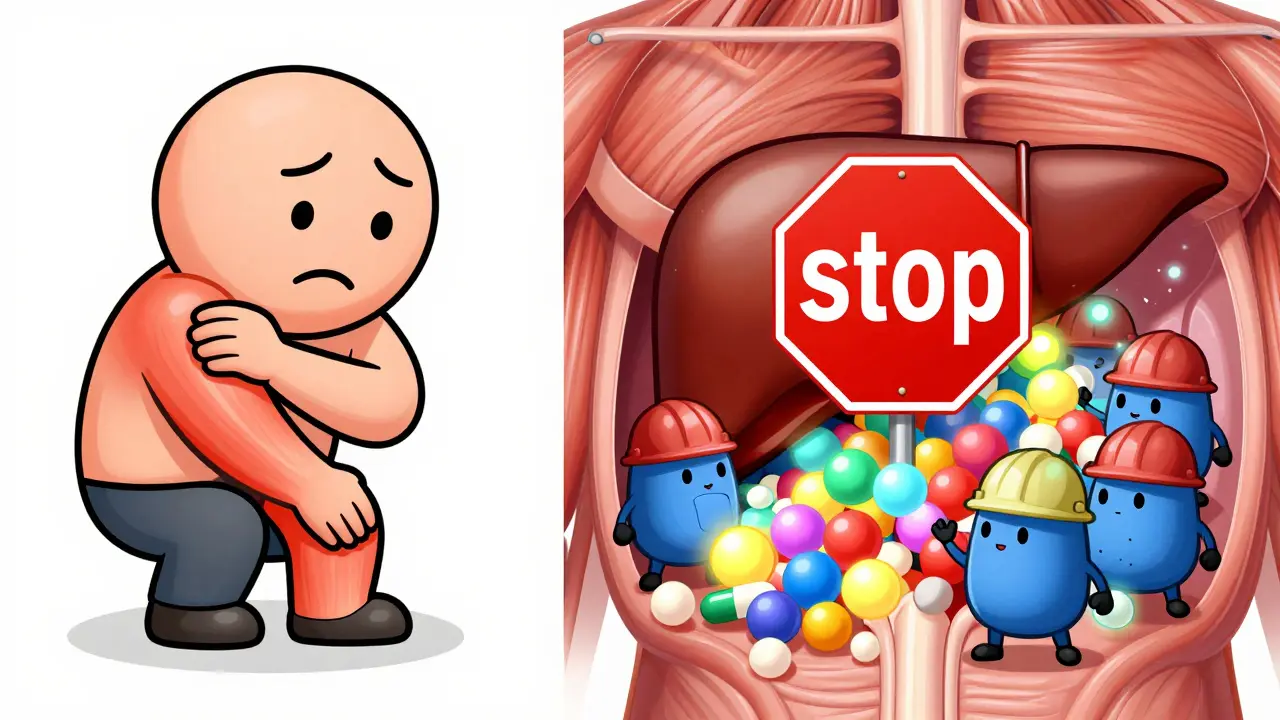
The core of the problem is an enzyme in your liver called CYP3A4. Think of this enzyme as a disposal crew that breaks down certain medications so your body can clear them out. Clarithromycin is a powerful inhibitor of this crew. When it shuts down the CYP3A4 pathway, the statin medication has nowhere to go. It piles up in your system, reaching toxic levels that attack your muscle fibers. In some cases, like with simvastatin, the concentration of the drug in your plasma can jump by 10 to 12 times the normal amount.
Which Statins Carry the Most Risk?
Not all statins are created equal. Some rely heavily on the CYP3A4 enzyme, while others take a different route. If you are taking a statin, you need to know which category yours falls into before starting an antibiotic course.
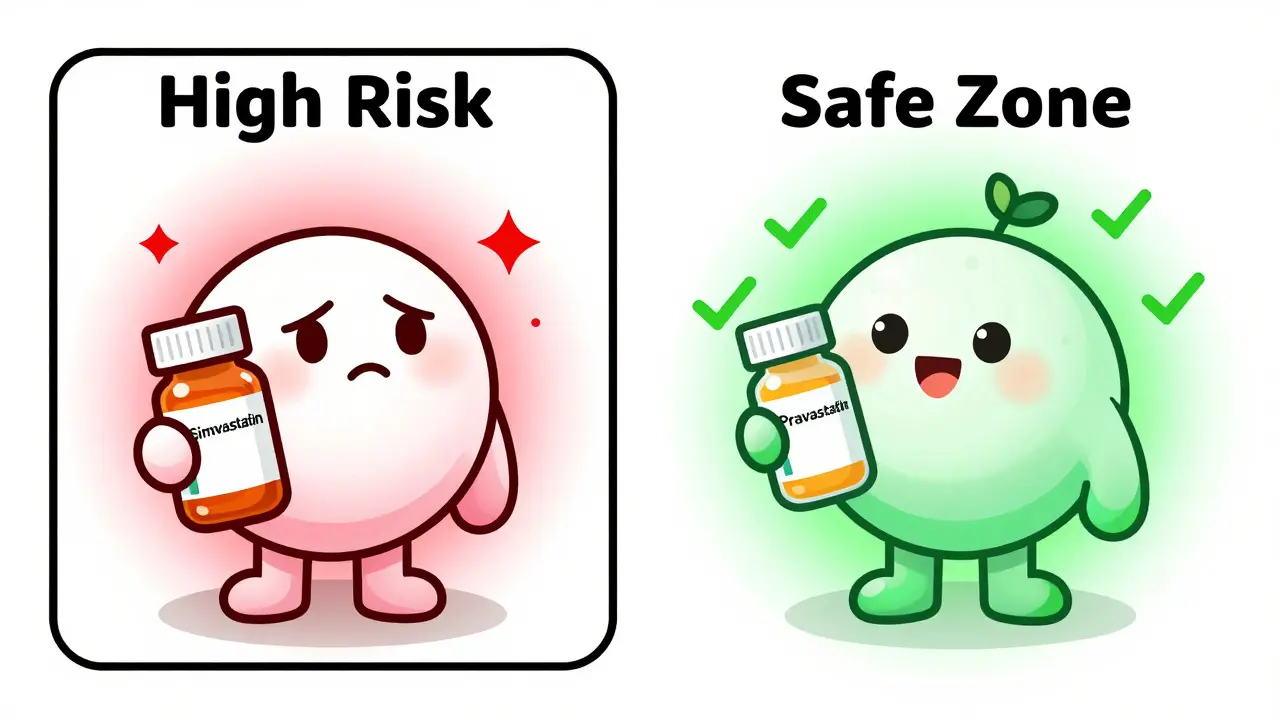
The highest risk comes from Simvastatin (Zocor) and Lovastatin (Mevacor). Because these are metabolized almost entirely by the enzyme that clarithromycin blocks, the risk of toxicity is extreme. The FDA has issued strict warnings against using high-dose simvastatin (above 20 mg) during clarithromycin treatment. Atorvastatin (Lipitor) also carries a moderate risk, as it is processed by the same pathway, though usually to a slightly lesser degree than simvastatin.
On the other hand, some statins are much safer because they use different enzymes or are cleared by the kidneys. Rosuvastatin (Crestor), Pravastatin (Pravachol), and Fluvastatin (Lescol) have a much lower interaction profile. For instance, pravastatin is metabolized via sulfation, meaning it doesn't need the CYP3A4 "disposal crew" at all. If you're on these, the risk of muscle toxicity is significantly lower, though you should still keep your doctor informed.
| Statin Medication | Risk Level | Typical Interaction Effect | Recommendation |
|---|---|---|---|
| Simvastatin | Very High | 10-12x plasma increase | Avoid or limit to 10-20mg |
| Lovastatin | Very High | 5-20x plasma increase | Generally avoid concurrent use |
| Atorvastatin | Moderate | 4-8x plasma increase | Limit dose to 20mg |
| Rosuvastatin | Low | 2-3x plasma increase | Safe at moderate doses (up to 20mg) |
| Pravastatin | Minimal | Negligible increase | No dose adjustment needed |
Recognizing the Warning Signs of Muscle Toxicity
Muscle toxicity doesn't always happen instantly. On average, symptoms appear about 3.2 days after you start taking the antibiotic, though it can happen anywhere from day one to a full week in. You shouldn't ignore "mild" soreness if you're on this combination.
The first red flag is unexplained muscle pain, tenderness, or weakness. This usually feels like a severe flu or the aftermath of an intense workout you didn't actually do. It's often diffuse, meaning it happens across multiple muscle groups rather than in one specific joint. A critical warning sign is the appearance of dark, tea-colored or cola-colored urine. This is a sign of myoglobinuria-muscle proteins leaking into your urine-which is a direct path to kidney failure.
In severe cases, the levels of Creatine Kinase (CK), an enzyme that signals muscle damage, can skyrocket. While a normal CK level is relatively low, patients experiencing rhabdomyolysis have reported levels exceeding 10,000 or even 200,000 U/L. This level of damage often requires hospitalization and intensive IV fluids to flush the kidneys.
How to Safely Manage the Interaction
You don't have to choose between treating an infection and managing your cholesterol, but you do need a strategy. Medical professionals generally use three main approaches to keep patients safe.
- The Temporary Pause: For a short course of clarithromycin (like 5 or 7 days), the safest bet is to simply stop taking your statin. Because the inhibitory effect on the liver can last for 7 to 10 days after the last dose of the antibiotic, you shouldn't jump back on your statin the moment the pills are gone. Waiting 3 to 5 days after the antibiotic course ends is a safer bet.
- The Antibiotic Swap: If you haven't started the medication yet, ask your doctor about Azithromycin (Zithromax). Azithromycin is another macrolide antibiotic, but unlike clarithromycin, it doesn't significantly block the CYP3A4 enzyme. Research shows it has no clinically relevant interaction with statins, making it a much safer choice for people with high cholesterol.
- The Dose Reduction: If the statin is absolutely critical and cannot be paused, doctors may drop the dose significantly (e.g., reducing simvastatin to 10 mg) and monitor your blood work weekly. However, this is typically reserved for low-risk patients.
Certain people are at a much higher risk for this interaction. If you are over 75, have pre-existing kidney impairment, or suffer from hypothyroidism, your body is already slower at clearing medications. For these high-risk individuals, a temporary pause of the statin is almost always the recommended path.

Practical Checklist for Patients and Caregivers
Prevention is far easier than treating kidney failure. If you or a loved one are prescribed an antibiotic while on a statin, use this checklist to ensure safety:
- Verify the specific statin name (e.g., is it Simvastatin or Rosuvastatin?).
- Confirm the antibiotic is Clarithromycin or Erythromycin (both are CYP3A4 inhibitors).
- Ask the pharmacist: "Does this antibiotic interact with my specific cholesterol medication?"
- Check if an alternative like Azithromycin is appropriate for the infection.
- Set a calendar reminder to restart the statin only after the recommended "washout" period (3-5 days post-antibiotics).
- Monitor urine color daily for any darkening.
Can I just take a lower dose of my statin while on the antibiotic?
It depends on the statin. For simvastatin, the FDA suggests a maximum of 20 mg, but many doctors prefer a total pause because the plasma levels can still spike dangerously. For atorvastatin, 20 mg is often the ceiling. Always follow your doctor's specific dosing instructions, as they know your kidney function and overall risk profile.
How long does the risk last after I finish the antibiotics?
The risk persists longer than the drug stays in your system. Clarithromycin's active metabolite continues to inhibit the CYP3A4 enzyme for several days. It is generally recommended to wait 3 to 5 days after your final dose of clarithromycin before restarting a high-dose statin to ensure your liver enzymes have returned to normal function.
What is rhabdomyolysis exactly?
Rhabdomyolysis is a serious syndrome involving the breakdown of skeletal muscle. When muscle cells rupture, they release a protein called myoglobin into the blood. The kidneys are not designed to filter large amounts of myoglobin, which can lead to acute kidney injury (AKI) or complete renal failure if not treated with aggressive hydration.
Is Azithromycin really safe for all statin users?
Yes, for the vast majority of patients. Large-scale studies, including a significant 2013 CMAJ study, have shown that azithromycin does not inhibit the CYP3A4 enzyme. This means it doesn't cause the "bottleneck" effect that clarithromycin does, making it the preferred macrolide choice for patients on cholesterol medication.
Why does this happen with some people and not others?
Genetics play a huge role. Some people have variations in their CYP enzymes (such as the CYP3A5 genotype) that make them naturally slower at processing drugs. Additionally, factors like age, low kidney function, and other medications that affect the liver can either increase or decrease your susceptibility to this interaction.
Next Steps and Troubleshooting
If you suspect you are experiencing muscle toxicity right now, do not wait. Contact your healthcare provider immediately or visit an urgent care center. Be prepared to tell them exactly when you started the antibiotic and the dose of your statin. A simple blood test for Creatine Kinase (CK) and a urinalysis can quickly confirm if your muscles are breaking down.
For those planning future treatments, the best way to avoid this is through communication. Your pharmacist is often the last line of defense and the best person to flag these interactions. If you travel frequently or see multiple specialists, keeping a current list of your medications in a wallet card or digital app can prevent a prescribing error that leads to an expensive and painful hospital stay.