
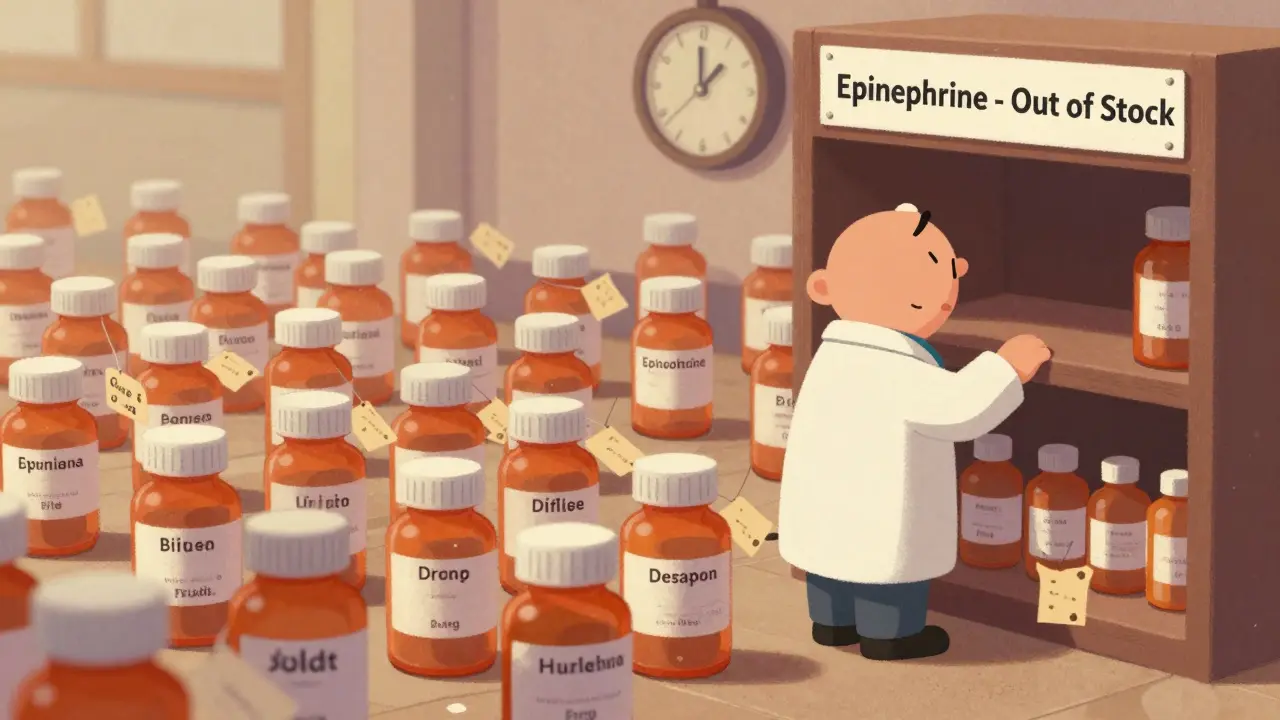
Every year, millions of people in the U.S., Australia, and around the world rely on generic drugs to manage chronic conditions like high blood pressure, diabetes, and asthma. These medications cost a fraction of their brand-name counterparts-often less than $10 a month. But behind the low price tag is a fragile system. In 2023, generic drug shortages hit record levels. And the root cause isn’t what you might think. It’s not a lack of manufacturers. It’s too much competition-or rather, the wrong kind of it.
How Competition Used to Work
When a brand-name drug’s patent expires, the door opens for other companies to make identical versions. This is supposed to be a win: more suppliers mean lower prices. And for a while, it was. In the early 2000s, when the first generics for Lipitor and Plavix hit the market, prices dropped by 80% within three years. Hospitals saved millions. Patients paid less. Everyone won. But today, that model is breaking down. The problem isn’t that companies won’t enter the market. It’s that they’re entering in droves-only to leave just as fast.The Race to the Bottom
The first few companies to launch a generic drug often make decent profits. They get early market share, charge slightly above cost, and build relationships with distributors. But within months, more players arrive. Then more. Soon, there are 10, 15, even 20 manufacturers all selling the exact same pill. And they all have to cut prices to survive. By the time the fifth or sixth company enters, the price per pill has dropped to pennies. For some older generics-like furosemide (a common diuretic) or metformin (for diabetes)-the profit margin is less than 5 cents per unit. When you’re selling 10 million pills a month, that might sound like a lot. But when you factor in the cost of FDA compliance, quality control, raw materials, and shipping, you’re barely breaking even. And here’s the catch: if you’re not making money, you stop making the drug.Who’s Left Standing?
In 2024, IQVIA found that 35% of generic drug markets had fewer than three active manufacturers. For 12% of those drugs, there was only one supplier left. That’s not competition. That’s a single point of failure. Take injectable antibiotics like vancomycin or ampicillin. These are lifesavers in hospitals. But because they’re cheap and old, most manufacturers have left. Today, just two companies make the majority of these drugs globally. If one plant has a quality issue-say, contamination in a sterile filling line-the whole country can go without. In 2023, a single FDA warning letter shut down a major facility in North Carolina that produced generic epinephrine auto-injectors. Within weeks, hospitals across 17 states ran out. Patients had to use expired devices or pay $600 for the brand-name EpiPen. That’s not an accident. It’s the result of a market where only the lowest-cost producers survive-and they have no room to absorb disruption.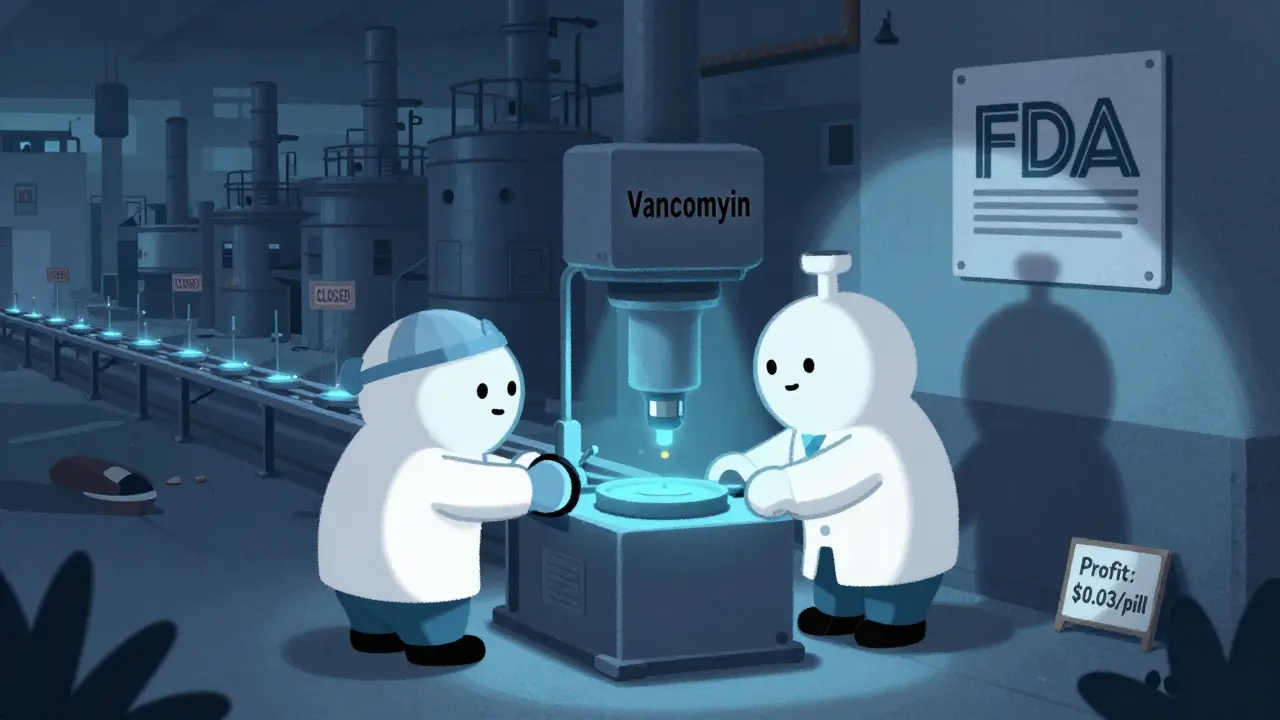
Why Some Drugs Are Still Made
Not all generics are created equal. Some are simple tablets with stable ingredients. Others-like sterile injectables, inhalers, or biosimilars-require advanced manufacturing. These are expensive to make. A single aseptic production line costs between $200 million and $500 million. The approval process takes 18 to 24 months. That’s why only a handful of companies make these complex generics. Five manufacturers control 46% of the sterile injectable market. And they’re the only ones who can step in when a shortage hits. But even they’re stretched thin. When one plant shuts down, the others can’t instantly ramp up production. It takes months to train staff, recalibrate machines, and pass FDA inspections. Meanwhile, newer, high-demand generics-like those for cancer drugs or diabetes-still attract competition. But here, the problem flips: too many players enter too fast. The first three companies capture 80% of the market. The rest fight over scraps. Many go bankrupt. Others pivot to more profitable drugs. The result? A cycle of boom and bust.The Regulatory Tightrope
The FDA wants more generics. More competition. Lower prices. So they’ve approved 956 generic applications in 2023 alone. But they’re also cracking down harder on quality. In 2023, the agency issued 147 warning letters for data manipulation, poor sanitation, and falsified records-a 23% increase from the year before. Many of these violations come from factories in India and China, where 80% of active pharmaceutical ingredients are now made. When a facility gets flagged, the entire supply chain for that drug can freeze. And because so many companies rely on the same raw material suppliers, one problem can ripple across dozens of drugs. Even when manufacturers pass inspections, they’re often operating on razor-thin margins. One former FDA official told Health Affairs in 2024: “Excessive price erosion from hyper-competition can undermine manufacturing quality and supply chain resilience.” In other words, the very thing that makes generics affordable is also what makes them unreliable.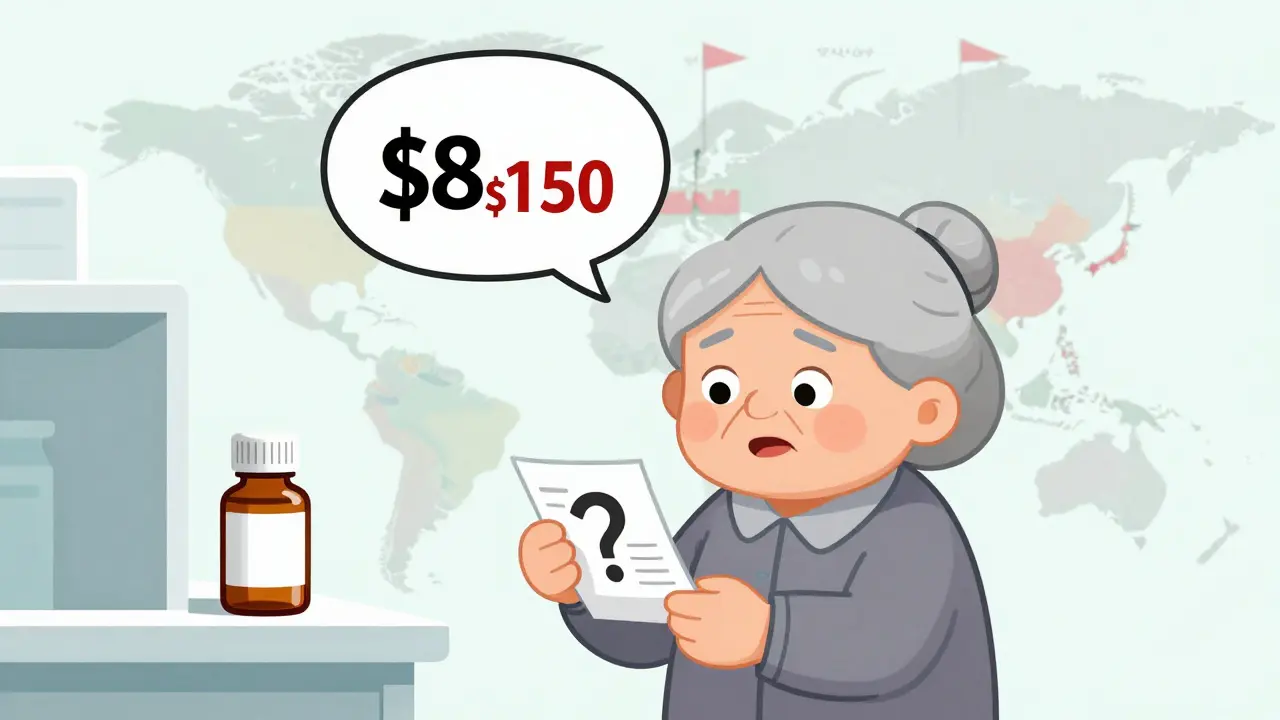
The Hidden Cost of Shortages
When a generic drug disappears, the impact isn’t just logistical. It’s personal. A 68-year-old woman in Sydney who takes generic lisinopril for her blood pressure may find her pharmacy has no stock. Her doctor prescribes the brand name-$150 a month instead of $8. She can’t afford it. She skips doses. Her blood pressure spikes. She ends up in the emergency room. The American Medical Association found that 78% of physicians experienced at least one generic shortage in 2023. For 42%, it was frequent enough to affect patient care. Hospital pharmacists say cardiovascular drugs, antibiotics, and oncology medications are the most vulnerable. And while insurers like UnitedHealthcare report saving $313 billion in 2023 thanks to generics, those savings don’t reach patients when the drugs aren’t available. Instead, patients pay more out of pocket, or worse-go without.What’s the Fix?
There’s no easy answer. But experts agree on one thing: we need to stop treating all generics the same. The European Medicines Agency says the sweet spot for essential medicines is 4 to 6 manufacturers. Enough to keep prices low. Enough to absorb a shutdown. Right now, only 65% of global essential generics meet that threshold. Some proposals are gaining traction:- Strategic stockpiles for critical drugs-like how governments keep emergency fuel reserves.
- Price floors for essential generics, so manufacturers don’t exit markets because they can’t make a living.
- Priority review for companies willing to produce high-risk, low-margin drugs, with faster approvals and longer exclusivity.
- Domestic manufacturing incentives to reduce reliance on overseas suppliers for vital medicines.
What This Means for You
If you take a generic drug daily, don’t assume it’ll always be there. Talk to your pharmacist. Ask if there’s an alternative. Ask if your insurance covers a backup brand. Keep a 30-day supply on hand if possible. If you’re a patient advocate, push for transparency. Demand to know which drugs are at risk. Support policies that value reliability as much as affordability. The system wasn’t designed to fail. But when competition is reduced to price alone, quality and supply vanish. We need generics that are cheap-and available. Not just cheap.Why do some generic drugs keep running out of stock?
Many generic drugs are made by just one or two manufacturers because the profit margin is too thin for others to stay in business. When that single supplier faces a production issue-like a quality failure, equipment breakdown, or regulatory shutdown-the entire supply chain collapses. There’s no backup, because no one else is making it at a price they can afford to produce.
Is it true that generic drugs are less safe than brand-name drugs?
No. Generic drugs must meet the same strict standards as brand-name drugs. The FDA requires identical active ingredients, strength, dosage form, and bioequivalence. The difference is usually in inactive ingredients-like fillers or dyes-which don’t affect how the drug works. The safety issue isn’t the drug itself-it’s that when manufacturers cut corners to survive financially, quality control can slip.
Why are most generic drugs made overseas?
Manufacturing generic drugs is low-margin work. Countries like India and China have lower labor costs, government subsidies for pharmaceutical production, and fewer regulatory hurdles. As a result, over 80% of the active ingredients and 40% of finished generic pills used in the U.S. and Australia come from these regions. While this keeps prices down, it also creates vulnerabilities-especially when geopolitical or regulatory issues disrupt supply chains.
Can’t we just make more generic drugs to fix shortages?
It’s not that simple. Adding more manufacturers doesn’t help if they can’t make a profit. Many companies enter the market, drive prices down, and then leave when they can’t stay afloat. The real problem is the business model: when every drug becomes a race to the lowest price, no one wins. The solution isn’t more companies-it’s smarter rules that ensure enough manufacturers stay in the game long-term.
What’s being done to fix this?
The FDA is speeding up approvals for critical generics and increasing inspections. Some countries, like Australia and the UK, are starting to stockpile essential drugs. The U.S. Inflation Reduction Act will soon negotiate prices for certain drugs, which could help-but might also hurt manufacturers if margins get too tight. Experts are now pushing for price floors on essential generics, government incentives for domestic production, and priority review for companies that commit to making high-risk, low-profit drugs.



Comments(10)