
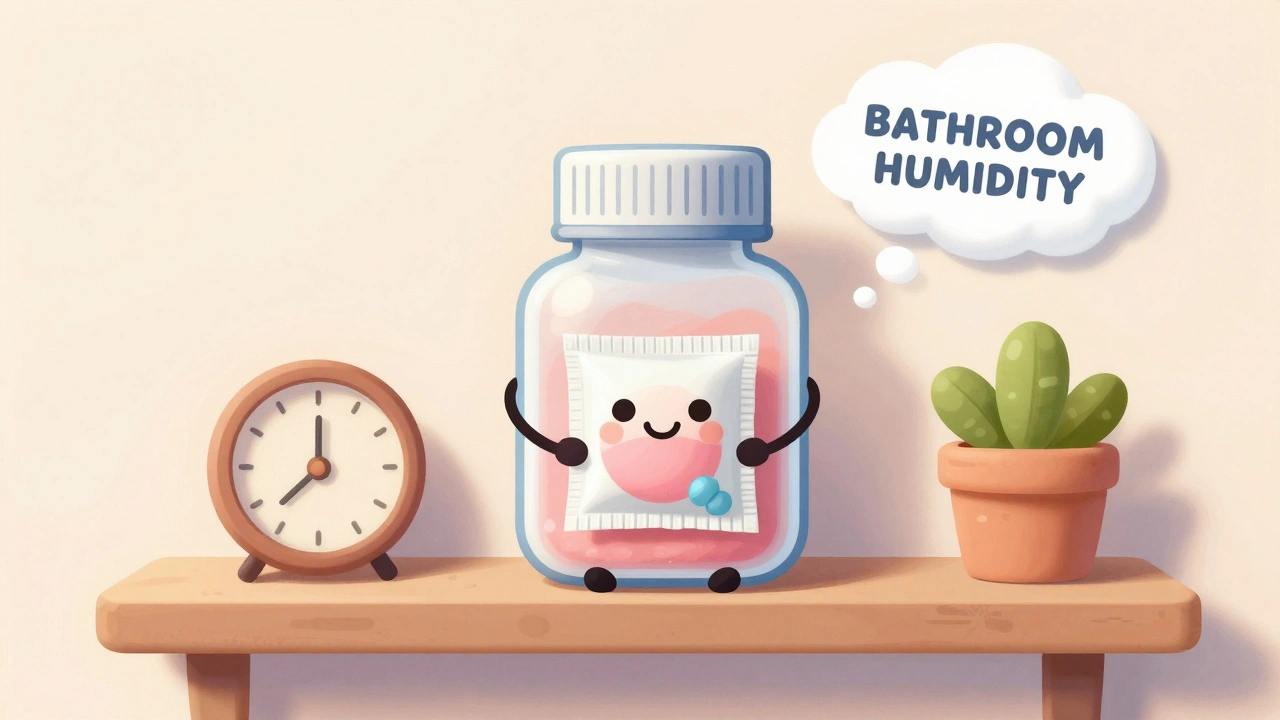
Moisture doesn’t just ruin your phone or your books-it can ruin your pills and capsules too. If your medication feels sticky, smells odd, or looks discolored, it might already be damaged. And that’s not just a waste of money. Moisture damage can make your drugs less effective-or even harmful. Aspirin turns into vinegar and salicylic acid. Vitamin C breaks down. Antibiotics lose potency. In humid climates, this isn’t rare. It’s common. And it’s preventable.
Why Moisture Destroys Pills and Capsules
Pills and capsules aren’t just powders in shells. They’re carefully engineered to stay stable until they reach your bloodstream. But water? Water triggers chemical reactions called hydrolysis and oxidation. These reactions break down active ingredients. The result? Your medication doesn’t work like it should.
Take amoxicillin/clavulanic acid-a common antibiotic. Studies show that uncoated tablets left outside their packaging for just 10 days lose nearly all their clavulanic acid. That’s the part that fights resistant bacteria. Without it, the whole dose becomes useless. Even if the pill looks fine, it could be 80% weaker. And in high humidity, this can happen in weeks-not years.
Some drugs are extra sensitive. Vitamin C, for example, reacts fast with moisture and oxygen. So do many generic antibiotics, pain relievers, and supplements. If your medication is labeled "keep in a cool, dry place," that’s not just advice. It’s a warning.
The Three Layers of Moisture Protection
Manufacturers don’t rely on one trick. They use three layers together: film coating, packaging, and desiccants. Each one handles a different part of the problem.
1. Film Coating: The First Shield
Most pills you buy today have a thin outer layer. That’s not just for color or taste. It’s a moisture barrier. There are two main types: HPMC (hydroxypropyl methylcellulose) and PVA (polyvinyl alcohol).
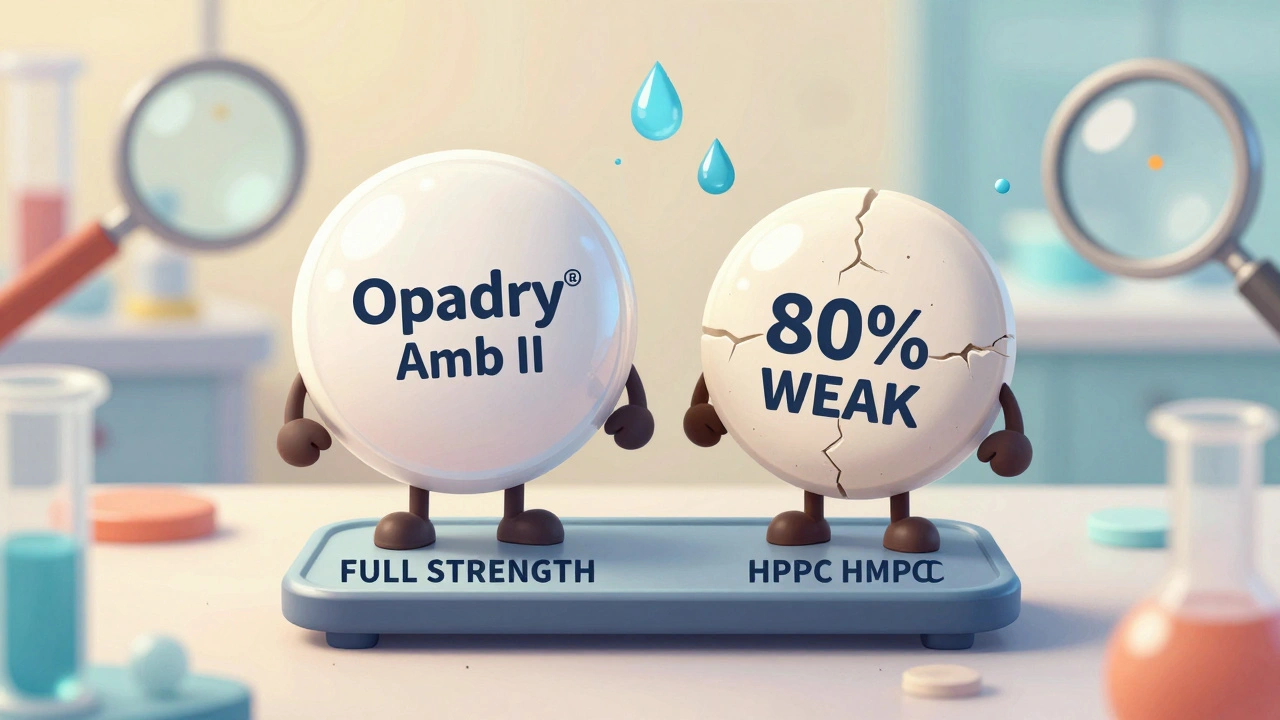
HPMC is cheaper and common. But it doesn’t hold up well. In tests, HPMC-coated tablets lost half their active ingredient after exposure to humidity. PVA coatings, like Opadry® Amb II, are far better. They block moisture up to 40% more effectively. In one study, PVA-coated tablets kept full potency even after 10 days outside the bottle. HPMC-coated ones didn’t.
That’s why pharmacies notice a drop in complaints when they switch to PVA-coated meds. One pharmacist reported going from five complaints a month to almost none after switching to Opadry-coated antibiotics.
2. Packaging: The Second Line
Even with a good coating, moisture can sneak in through the bottle. HDPE and PP plastic bottles are common. They stop liquid spills, but not water vapor. That’s why you’ll often see a little packet inside your pill bottle. That’s a desiccant.
But packaging matters beyond the bottle. Blister packs made of aluminum foil block moisture better than plastic. But they’re more expensive. That’s why many manufacturers use plastic bottles with desiccants instead. It’s a balance of cost and protection.
Here’s the catch: once you transfer pills to a daily pill organizer, you lose all packaging protection. That’s when moisture damage becomes a real risk-especially if you live in a humid area or store your pills in the bathroom.
3. Desiccants: The Silent Guardians
Silica gel is the gold standard. It’s the little packet you see in pill bottles, shoe boxes, and electronics packaging. It doesn’t react with medicine. It just sucks up water.
Wisesorbent’s testing showed that properly sized silica gel packs can limit moisture increase in pills to just 0.3% over two years-even at 50% humidity. In faster, harsher tests (40°C, 20% RH), moisture only rose 0.9% over six months. That’s because silica gel can absorb up to 40% of its own weight in water.
But size matters. A 500-pill bottle with two pills taken daily creates over 250 openings. Each time you open it, moist air rushes in. If the desiccant is too small, it gets overwhelmed. Industry best practice says: use a desiccant that can handle 150% of the expected moisture load. Many manufacturers still get this wrong. FDA warning letters from 2021-2022 cite undersized desiccants as a reason for recalls.
What You Can Do at Home
You can’t control how the drug was made. But you can control how you store it.
- Never store pills in the bathroom. Humidity from showers and sinks builds up fast. Even if it feels dry, the air holds more moisture than you think.
- Keep them in their original bottle. The bottle and desiccant are designed to work together. Transferring to a Tupperware or pill organizer removes that protection.
- Use a cool, dry spot. A bedroom drawer, kitchen cabinet away from the stove, or a closet shelf are all better than the bathroom. Avoid windows or direct sunlight.
- Don’t remove the desiccant. That little packet isn’t trash. Leave it in the bottle. Even if the bottle is half-empty, it still needs protection.
- Check for signs of damage. If pills are discolored, sticky, cracked, or smell weird, don’t take them. Contact your pharmacist. They can replace them.
For high-risk meds-antibiotics, heart meds, thyroid pills, or anything you take daily-consider keeping a spare bottle with a fresh desiccant. If you travel to humid places, bring the original bottle, not the pill organizer.
What Manufacturers Are Doing Now
The industry is moving fast. New PVA coatings like Opadry® Amb II (launched in 2021) are becoming standard for moisture-sensitive drugs. They’re more expensive-15-20% higher than HPMC-but they reduce returns, complaints, and waste.
Desiccant tech is improving too. Biodegradable options are gaining traction. Companies are testing moisture-sensing labels that change color when humidity gets too high. Some are even working on coatings that release moisture-absorbing agents directly into the tablet core-so even if the bottle is open, the pill protects itself.
Regulations are tightening. The FDA and EMA now require proof that packaging keeps drugs stable under real-world conditions. That means manufacturers can’t just slap on a plastic bottle and call it done. They have to test it. And more are doing it right.
What Happens When You Ignore Moisture
People don’t realize how often moisture damage affects health. A 2023 survey found that 78% of pharmacists say moisture-damaged meds reduce patient adherence. Why? Because patients take pills that don’t work. Their condition doesn’t improve. They think the drug is broken. They stop taking it. Or worse-they double up, thinking it’s not working.
One patient in Florida reported that her blood pressure meds stopped working after three months. She kept them in a bathroom cabinet. Her pharmacist found the pills were sticky and crumbling. She switched to a new bottle with better packaging-and her numbers normalized within two weeks.
It’s not just about effectiveness. Some degraded drugs create toxic byproducts. Old aspirin can irritate your stomach. Degraded tetracycline can damage your kidneys. This isn’t theoretical. It’s documented in medical journals and FDA reports.

Final Tips: Smart Storage, Better Health
Moisture damage isn’t a mystery. It’s predictable. And it’s avoidable.
- If your pharmacy offers PVA-coated versions of your meds, ask for them. They’re worth the slight cost difference.
- Don’t trust pill organizers for long-term storage. Use them only for daily doses, and refill from the original bottle.
- If you notice moisture damage, don’t guess. Call your pharmacist. Most will replace damaged meds for free.
- Consider buying extra desiccant packs online (silica gel, non-toxic) and adding one to your pill organizer if you must use it for more than a week.
- Check expiration dates. Moisture can shorten shelf life-even if the date hasn’t passed.
Medication isn’t like food. You can’t just throw it out if it looks off. But you also shouldn’t risk taking something that might not work-or hurt you. A little attention to storage can save you from a lot of trouble.
Can I reuse the desiccant packet from my pill bottle?
No. Once a silica gel packet has absorbed moisture, it can’t be reused effectively. Even if it looks dry, its capacity is reduced. Reusing it won’t protect your pills. Always use a fresh packet from the original packaging or buy new ones designed for medication.
Is it safe to store pills in the fridge?
Only if the label says so. Refrigerators can be humid, and condensation can form on bottles when you take them out. Unless your medication specifically requires refrigeration, keep it at room temperature in a dry place. The bathroom is worse, but so is the fridge for most pills.
What should I do if my pills are sticky or discolored?
Don’t take them. Sticky, cracked, or discolored pills may be chemically degraded. Contact your pharmacist immediately. Most pharmacies will replace damaged medication at no cost. Throw the pills away safely-don’t flush them. Follow local disposal guidelines.
Do all pill bottles have desiccants?
No. Many cheaper or older formulations use only plastic bottles without desiccants. If your bottle doesn’t have one, ask your pharmacist if your medication is moisture-sensitive. If it is, request a new bottle with a desiccant or consider switching to a PVA-coated version.
Can moisture damage make pills dangerous?
Yes. Some drugs break down into harmful substances. Aspirin turns into salicylic acid, which can irritate the stomach lining. Tetracycline can become toxic to the kidneys. Even if you don’t feel sick right away, degraded meds can cause long-term harm. When in doubt, throw them out and get a new supply.
Next Steps: Protect Your Medication Today
Check your medicine cabinet right now. Find your most-used pills. Are they in their original bottle? Is the desiccant still inside? Is the bottle stored in a dry place? If not, fix it today. A few minutes of reorganization can prevent weeks of ineffective treatment-or worse.
Don’t wait for a bad reaction. Prevention is simple. Know your meds. Know your storage. And never underestimate the power of a dry, cool shelf.





Comments(13)