

Antihistamine Recommendation Tool
Your Allergy Profile
Why Second-Generation Antihistamines Are the New Standard for Allergies
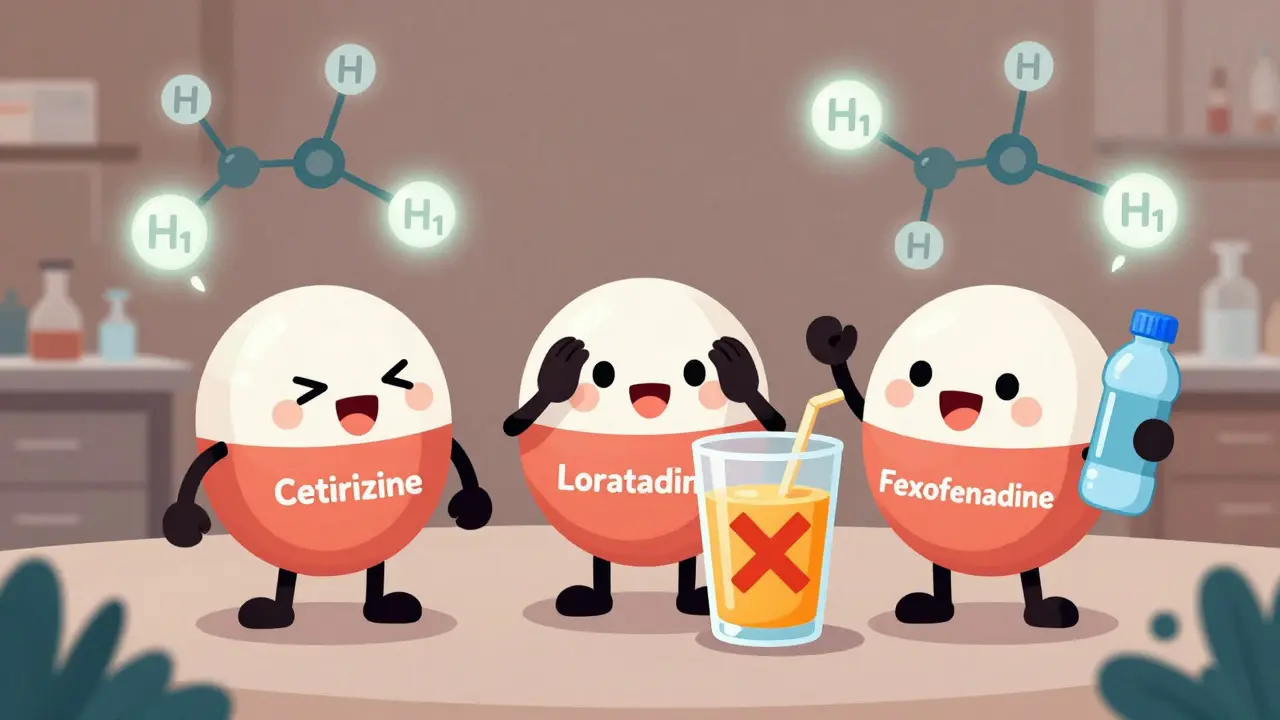
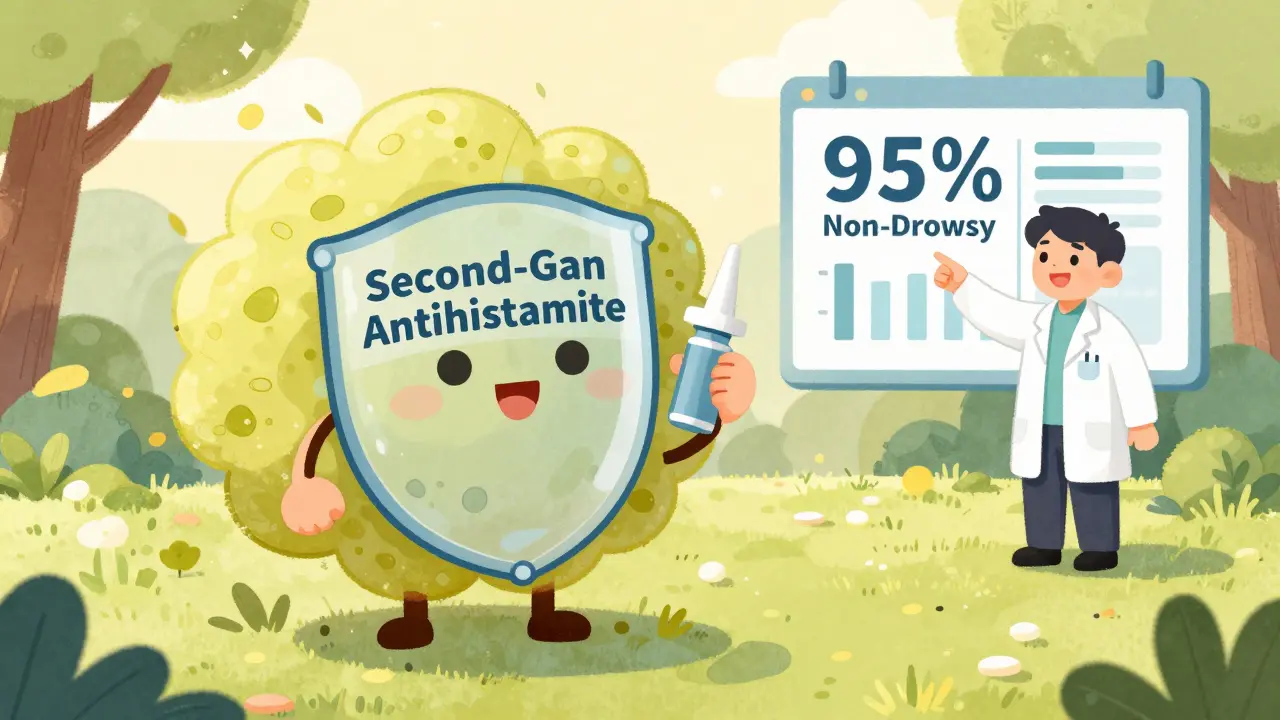
If you’ve ever taken Benadryl for hay fever and felt like you were about to fall asleep at your desk, you know why second-generation antihistamines became a game-changer. These medications-like loratadine, cetirizine, and fexofenadine-are designed to block allergy symptoms without knocking you out. Unlike older antihistamines, they barely cross into your brain, so you get relief from sneezing, itchy eyes, and runny nose without the foggy-headed side effect.
Back in the 1990s, the first wave of second-gen antihistamines like terfenadine and astemizole were pulled off the market because they caused dangerous heart rhythms when mixed with certain antibiotics or grapefruit juice. But the ones we use today-loratadine, cetirizine, and fexofenadine-have been thoroughly tested. They’re safe for daily use, even for people who drive, work with machinery, or need to stay sharp all day.
How They Work (Without Making You Sleepy)
First-generation antihistamines like diphenhydramine easily slip through the blood-brain barrier. That’s why they calm your allergies but also make you drowsy-they’re hitting histamine receptors in your brain, not just in your nose and skin.
Second-generation antihistamines are built differently. They’re larger, more polar molecules. Think of them like a key that’s too big to fit into the brain’s lock. That means they stay mostly in your peripheral tissues, where allergies happen. Research from Nature Communications in 2024 used cryo-electron microscopy to show exactly how these drugs latch onto the H1 receptor, blocking histamine without disturbing brain activity.
As a result, sedation rates dropped from 50-60% with first-gen drugs to just 6-14% with second-gen ones. That’s not a small improvement-it’s the difference between managing your allergies and being sidelined by them.
Which One Works Best? Loratadine, Cetirizine, or Fexofenadine?
Not all second-generation antihistamines are the same. Each has its own quirks, and what works for one person might not work for another.
- Loratadine (Claritin): Often the cheapest option. It’s non-drowsy for most, but about 1 in 10 users report headaches or dry mouth. One Reddit user said, “It gave me a 3-day headache-switched to cetirizine and never looked back.”
- Cetirizine (Zyrtec): Slightly more likely to cause drowsiness than the others. Clinical trials say 6-14% of users feel sleepy, but real-world reviews on WebMD show 23% of users report it. Still, it’s one of the most effective for itching and hives. Over 12,000 reviews give it a 4.2/5 rating.
- Fexofenadine (Allegra): The least likely to cause drowsiness. It’s also the only one that doesn’t rely heavily on liver metabolism. About 95% of it passes through your body unchanged, which means fewer drug interactions. A top-rated comment on r/Allergies says: “Fexofenadine works great without making me sleepy like Benadryl did.”
Market data from 2023 shows cetirizine holds 35% of the global second-gen antihistamine market, loratadine 30%, and fexofenadine 20%. That tells you which ones doctors and patients trust most.
What They Don’t Do (And Why You Might Still Need More)
Here’s the catch: second-generation antihistamines are great for sneezing, itching, and runny nose-but not for congestion.
That’s because they don’t block acetylcholine, the chemical that first-gen antihistamines also affect. Blocking acetylcholine helps dry up mucus, which is why Benadryl sometimes helps with a stuffy nose. Second-gen drugs? Not so much.
Consumer Reports found that 63% of users still needed extra help with nasal congestion. That’s why so many people end up using a nasal spray like Flonase alongside their antihistamine. Combination products like Allegra-D (fexofenadine + pseudoephedrine) now make up 22% of the congestion treatment market.
If your main issue is blocked sinuses, don’t rely on loratadine or cetirizine alone. Pair them with a steroid nasal spray or a decongestant if needed.
Real People, Real Experiences
Behind the stats are real users. On Drugs.com, someone wrote: “Loratadine gave me severe headaches for 3 days. Switched to cetirizine-no issues.” Another user on Reddit said: “I take fexofenadine every morning. I forget I have allergies until I check my calendar and see it’s pollen season.”
But it’s not all smooth sailing. About 12% of users report strange side effects like altered taste or dry mouth. A few mention rare but unsettling issues like palpitations-though these are extremely uncommon with today’s formulations.
One thing almost everyone agrees on: once-daily dosing is a win. No more taking pills every 4-6 hours like you used to with diphenhydramine. That convenience alone makes second-gen antihistamines the default choice for most.
When and How to Take Them
Timing matters. Taking your antihistamine 1-2 hours before you’re exposed to allergens-like heading outside on a high-pollen day-can cut symptoms by 40-50%, according to the Journal of Allergy and Clinical Immunology.
Most people take them in the morning. But if you’re someone who gets hit hard at night, take it before bed. Cetirizine might make you a little sleepy, so that’s actually a plus. Fexofenadine? No issue taking it anytime.
Don’t take fexofenadine with fruit juice. Orange, grapefruit, or apple juice can block its absorption and make it less effective. Stick to water.
Drug Interactions and Safety
Today’s second-gen antihistamines are much safer than the ones pulled from shelves in the 1990s. Fexofenadine, in particular, has almost no risk of heart rhythm problems. Even cetirizine and loratadine are considered low-risk when taken as directed.
The main interaction to watch for is with drugs that affect liver enzymes-especially CYP3A4. Things like ketoconazole, erythromycin, or even some grapefruit juice can raise levels of loratadine or cetirizine in your blood. But even then, the risk is minimal compared to what we saw with terfenadine.
The FDA updated labeling in 2021 to make warnings clearer. Now, OTC packages include small print about rare cardiac risks. But for 99% of healthy adults, these are perfectly safe.
What’s Next? The Future of Allergy Meds
Science isn’t stopping. A 2024 study in Nature Communications found a second binding site on the H1 receptor. That means researchers are now designing third-generation antihistamines that could be even more precise-targeting allergies without any side effects at all.
There’s also a new once-weekly version of bilastine in the pipeline, with FDA breakthrough status. That could help the 37% of users who forget to take their daily pill.
Climate change is pushing pollen levels higher. By 2050, pollen counts could be 25-30% higher than today. That might mean some people will need higher doses or combination therapies in the future. But for now, second-generation antihistamines are still the most reliable, safest tool we have.
Final Thoughts: Are They Right for You?
If you have seasonal allergies, hives, or chronic itching, second-generation antihistamines are almost certainly your best bet. They’re effective, safe, and won’t wreck your focus.
Try one for a week. If it doesn’t help with congestion, add a nasal spray. If it makes you sleepy, switch to another. Most people find their match after 2-3 tries.
They’re not magic. But they’re the closest thing we’ve got to a simple, daily fix for a problem that affects nearly 1 in 4 adults. And unlike the old-school antihistamines, you can actually live your life while taking them.
Are second-generation antihistamines safe for daily use?
Yes. Loratadine, cetirizine, and fexofenadine are approved for daily use in adults and children over 2 years old. They don’t cause dependence and have minimal long-term risks when taken as directed. The FDA and CDC both list them as first-line treatments for chronic allergies.
Can I take second-generation antihistamines with other allergy meds?
Absolutely. Many people combine them with nasal steroid sprays like Flonase or Nasacort for better congestion relief. Antihistamine eye drops can help with itchy eyes. Just avoid combining them with other sedating medications like sleep aids or certain painkillers unless your doctor says it’s okay.
Why does cetirizine make me sleepy when others don’t?
Cetirizine has slightly higher brain penetration than loratadine or fexofenadine. While it’s still far less sedating than first-gen drugs, about 1 in 5 people are more sensitive to it. If you feel drowsy, try switching to fexofenadine-it’s the least likely to cause sleepiness.
Do second-generation antihistamines help with cold symptoms?
Not really. They’re designed for allergic reactions, not viral infections. Studies show they don’t reduce sneezing or runny nose caused by colds. First-gen antihistamines might help a little because they block acetylcholine, but they come with drowsiness and dry mouth-so they’re not worth it for a cold.
Is it better to buy name-brand or generic versions?
Generic versions of loratadine, cetirizine, and fexofenadine are just as effective as the brand names. They contain the same active ingredient, same dose, and same release profile. The only difference is price-generics can be 80% cheaper. Save your money unless you have a rare reaction to a filler ingredient.







Comments(9)