
What’s the difference between a refill-by date and an expiration date?
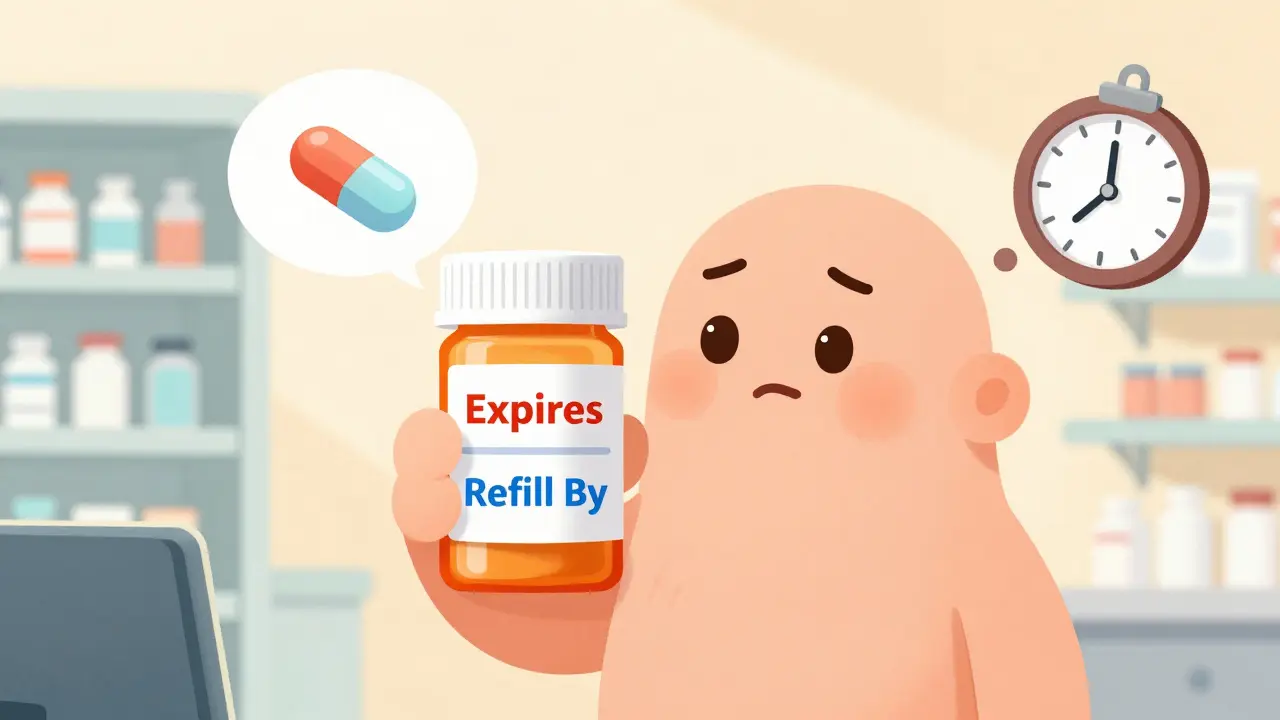
You grab your prescription bottle, look at the label, and see two dates. One says expiration date. The other says refill-by date. You might think they mean the same thing - that your medicine is no good after either date. But they don’t. Confusing them can cost you money, delay your treatment, or even put your health at risk.
The expiration date is about safety. It’s the last day the drug is guaranteed to work as it should. After that, it might lose strength, break down, or become unsafe. The refill-by date? That’s about paperwork. It’s when your doctor’s permission to refill the prescription runs out. Your medicine could still be perfectly good - but the pharmacy can’t give you more without a new prescription.
Expiration dates: When your medicine stops being reliable
The expiration date on your prescription bottle isn’t made up. It’s based on real science. Drug manufacturers test their medicines under controlled heat, light, and humidity to figure out how long they stay stable. The FDA requires this testing. If a pill or liquid is stored properly - cool, dry, away from sunlight - it often stays effective well past its labeled date. One FDA study found that 88% of medications kept their potency even years after expiration.
But here’s the catch: pharmacists can’t legally give you medicine past that date. Even if it’s still good, the law says they can’t. That’s why your bottle says "Do not use after [date]". It’s not just a suggestion. It’s a rule.
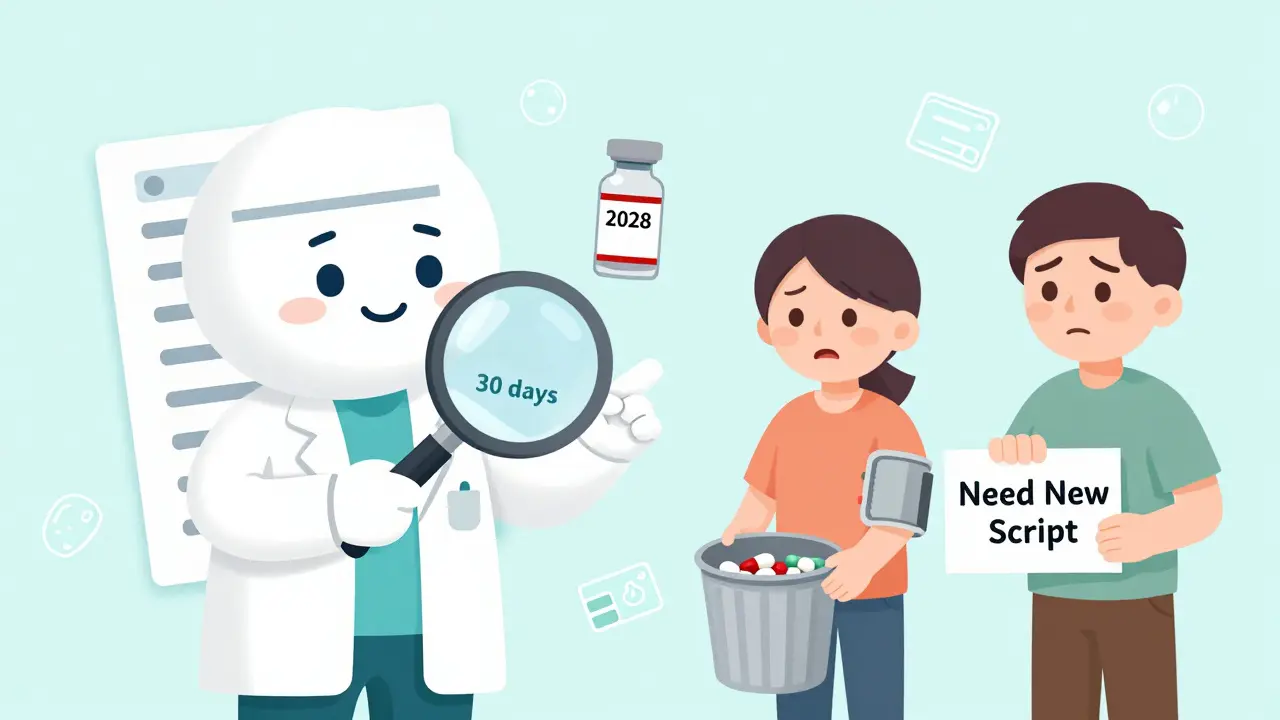
Some meds expire faster than others. Insulin, eye drops, and liquid antibiotics often have short shelf lives - sometimes just 30 days after opening. Other pills, like blood pressure or cholesterol meds, can last for years. But you won’t know unless you check the label. Never guess. If the date’s faded or you’re unsure, call your pharmacy. Don’t risk taking something that might not work.
Refill-by dates: When your prescription runs out of refills
This is where most people get tripped up. The refill-by date has nothing to do with how strong your medicine is. It’s an administrative cutoff. Your doctor wrote a prescription for, say, 3 refills. The pharmacy sets a deadline - usually one year from when you first filled it - after which those refills disappear. That’s the refill-by date.
For most non-controlled medications, that’s one year. But if you’re on a Schedule II drug - like oxycodone or Adderall - federal law cuts that to six months. Some states go even stricter. In New York, certain prescriptions expire after six months. In California, they can last up to 12. It varies. That’s why you need to read your label carefully.
Here’s a real example: You have a 90-day supply of lisinopril with three refills. You fill it on March 1, 2026. Your refill-by date is March 1, 2027. You still have 15 pills left on February 20, 2027. You try to refill them. The pharmacy says no - refill-by date passed. Your pills are fine. They’re not expired. But you can’t get more until your doctor writes a new prescription. That’s the refill-by date in action.
Why mixing them up is dangerous
People throw away perfectly good medicine because they think the refill-by date means the drug is expired. A Consumer Reports survey found that over half of prescription users couldn’t tell the difference. Nearly 3 in 10 admitted to tossing out meds they didn’t need to.
On the flip side, some people take expired pills because they still have refills left. That’s even riskier. A Reddit user shared how they threw out $300 worth of insulin after misreading the refill-by date as an expiration date. Another person kept taking their old blood pressure pills because the bottle still had refills - even though the expiration date had passed six months earlier.
Pharmacists say this confusion causes nearly 7 out of 10 medication access problems. It’s not just about wasting money. It’s about gaps in treatment. Missed doses of diabetes, heart, or mental health meds can lead to hospital visits. The CDC and FDA both link poor medication adherence to over 125,000 deaths in the U.S. every year. A simple mix-up on a label can be part of that chain.
How to read your prescription label correctly
Here’s how to spot the difference on your bottle:
- Expiration date: Usually labeled "Expires" or "Use By." It’s often printed in red or bold. This date comes from the manufacturer or the pharmacy’s one-year rule.
- Refill-by date: Might say "Refills expire," "Refill by," or "Last refill available." It’s typically blue or black. This is the deadline for using your remaining refills.
- Number of refills: Look for a number like "Refills: 2" or "Remaining: 1." That’s how many times you can still fill it before needing a new script.
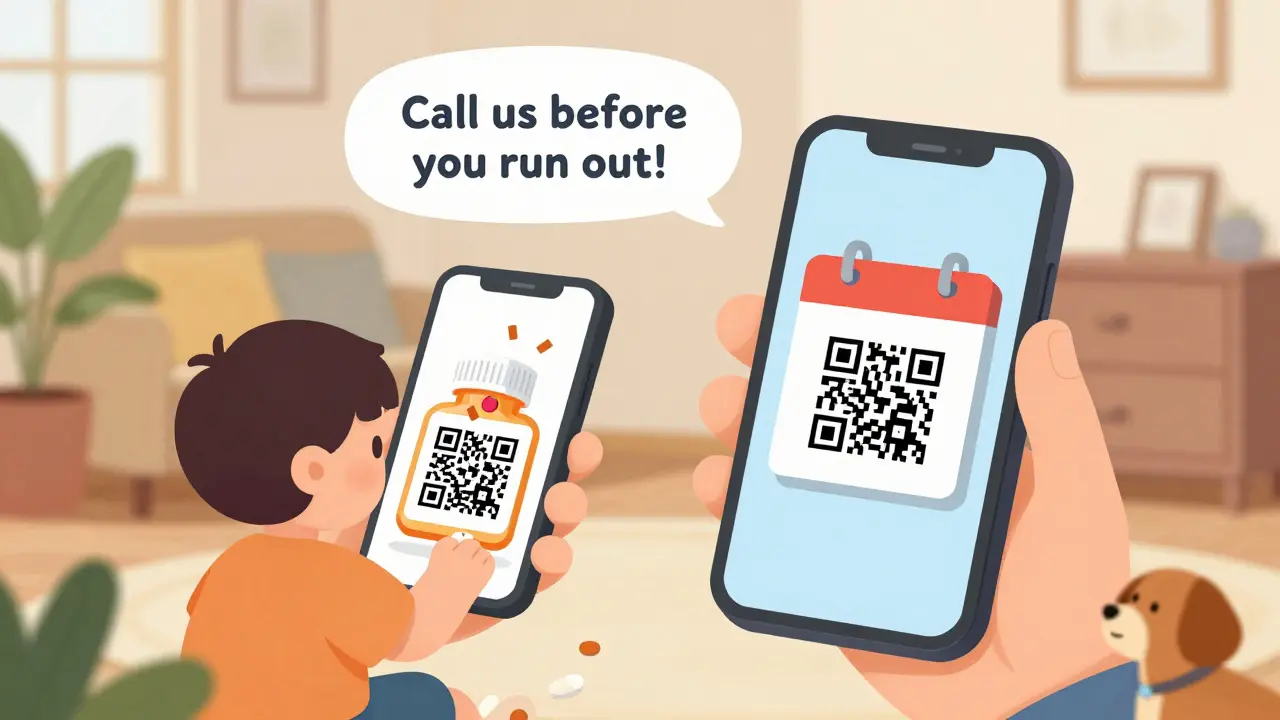
Don’t rely on memory. Write both dates down. Put them in your phone calendar. Set a reminder for 7 days before your refill-by date. That way, you give your doctor time to renew it without a gap in your treatment.
What to do when your refill-by date passes
If you run out of refills but your medicine isn’t expired, you need to contact your prescriber. Don’t wait until you’re out. Call your doctor’s office or use their patient portal. Many can e-prescribe a renewal the same day.
If you’re on Medicare Part D or private insurance, check your plan’s rules. Some require prior authorization for refills, especially for chronic conditions. Your pharmacy can help you with that paperwork.
Pro tip: Ask your doctor to write a prescription with a longer refill period if you’re on a stable medication. For example, instead of "3 refills in 30 days," ask for "1 refill in 90 days." That cuts down on trips to the pharmacy and reduces the chance you’ll miss a refill.
What pharmacies are doing to fix the confusion
Big chains like CVS and Walgreens are starting to color-code labels. Red = safety (expiration). Blue = administrative (refill-by). Some even put QR codes on bottles. Scan it with your phone, and a short video explains the difference.
Electronic systems now require pharmacies to clearly separate these dates in their software. The FDA pushed for this in 2023. By 2025, most prescriptions will include augmented reality labels - you point your phone at the bottle, and it highlights which date is which.
But tech alone won’t fix it. Patient education still matters most. That’s why clinics and pharmacies are adding simple handouts: "Expiration = Do Not Use. Refill-By = Need New Prescription."
Bottom line: Know your dates, protect your health
Don’t assume. Don’t guess. If you’re unsure what a date means, call your pharmacy. Ask: "Is this the date my medicine stops working, or the date I can’t get more refills?"
Keeping track of both dates helps you avoid waste, stay on your treatment plan, and stay safe. It’s one of the simplest things you can do to take control of your health - and it costs nothing.



Comments(8)