
Preterm Infant Medication Risk Calculator
Enter your baby's details and select medications to see personalized risk assessment based on NICU research.
Note: This tool uses data from NICU studies to estimate risk levels. Always consult your medical team for clinical decisions.
Select medication and enter weight/age to see risk assessment.
What Parents Should Ask
- Is this medication FDA-approved for preterm infants?
- What are the risks versus the benefits?
- Are there non-drug options available?
- How will you monitor for side effects?
- How long will they be on this drug? Is there a weaning plan?
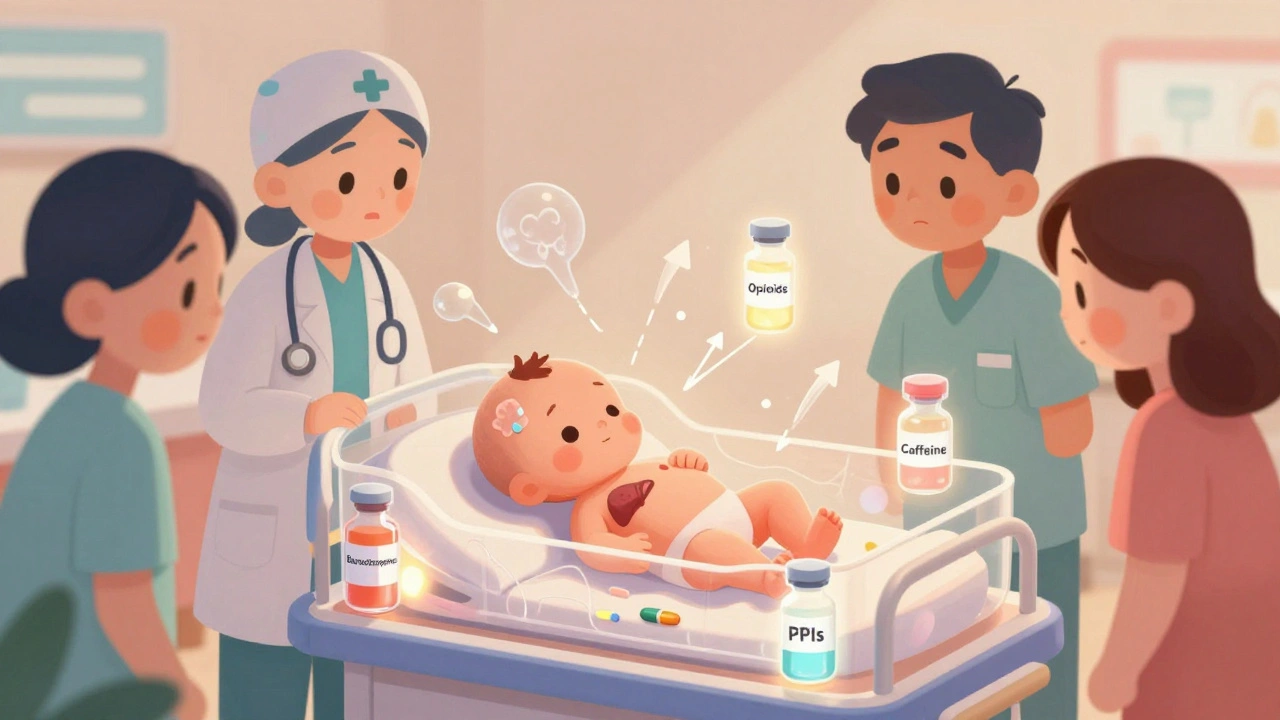
When a baby is born too soon, their body isn’t ready for the world - and it’s even less ready for the drugs they’re given to keep them alive. Preterm infants, especially those born before 28 weeks, are often exposed to multiple medications in the NICU: opioids for pain, benzodiazepines for sedation, antibiotics for suspected infection, caffeine for apnea, and proton pump inhibitors for reflux. But these aren’t just smaller versions of adult drugs. Their bodies process them differently, and the side effects can last far beyond their hospital stay.
Why Preterm Infants Are at Higher Risk
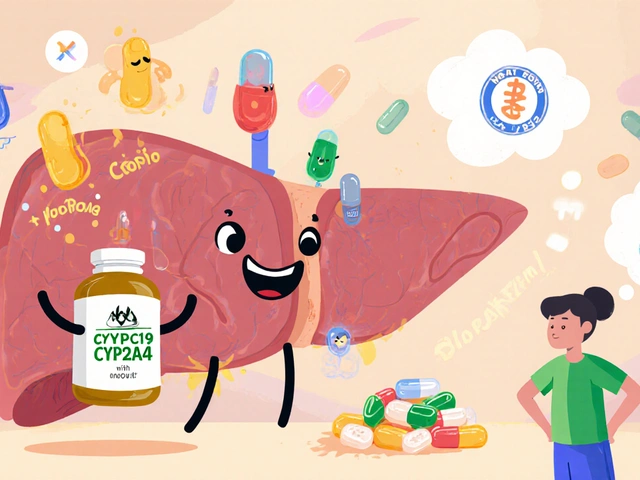
A preterm baby’s liver and kidneys aren’t fully developed. Their blood-brain barrier is leakier. Their gut is still forming. These aren’t minor differences - they change how drugs are absorbed, distributed, metabolized, and cleared from the body. For example, cytochrome P450 enzymes, which break down most medications, are only at 30% of adult levels at 32 weeks’ gestation. They don’t reach full maturity until the baby is a full year old. This means a dose that’s safe for a 38-week-old baby could be toxic to a 26-week-old. And because most drugs used in the NICU aren’t tested on preterm infants, doctors often guess the right amount. In fact, 92% of respiratory medications given to preterm babies are used off-label, and only 35% of all NICU medications have FDA approval for infants.Common Medications and Their Hidden Dangers
Opioids and benzodiazepines are given to ease pain during procedures or help babies tolerate ventilators. But a 2021 JAMA Network Open study found that 100% of extremely preterm infants received some form of sedation or analgesia during their NICU stay. Of those, 42.7% got opioids, and 28.3% got benzodiazepines. These drugs can suppress breathing, slow heart rate, and interfere with brain development. Long-term studies link early exposure to higher risks of learning delays, attention problems, and even autism spectrum behaviors. Caffeine citrate is one of the few medications with proven benefits for preemies - it reduces apnea and lowers the risk of cerebral palsy. But it’s not harmless. About 18.7% of infants on standard doses develop tachycardia. Around 7.3% have feeding problems so severe they need their dose lowered. Monitoring isn’t optional - it’s life-saving. Antibiotics are given to almost half of all preterm infants, often as a precaution. But research from Washington University shows that even a single course can permanently alter a baby’s gut microbiome. Preterm infants exposed to antibiotics had 47% more harmful bacteria like Enterobacteriaceae, 32% fewer good bacteria like Bifidobacterium, and 2.8 times more antibiotic-resistant genes. These changes stick around for years. One parent on Reddit shared that their son, given 28 days of antibiotics for suspected sepsis (which turned out to be false), had five ear infections and two more rounds of antibiotics by age two. Proton pump inhibitors (PPIs), like omeprazole, are prescribed to 41% of NICU graduates to treat reflux. But a 2022 Cochrane review found no evidence they help. Instead, they increase the risk of necrotizing enterocolitis (NEC) by 1.67 times, late-onset sepsis by 1.89 times, and bone fractures by 2.3 times. The American Academy of Pediatrics updated its guidelines in January 2024 to say: don’t use them routinely in preterm infants.How Disease Changes Drug Behavior
It’s not just prematurity that matters - it’s what else is going on inside the baby’s body. A patent ductus arteriosus (PDA), a common heart condition in preemies, can increase the volume of distribution for drugs by up to 80%. That means a drug spreads further through the body, lowering its concentration where it’s needed. A baby with PDA might need a higher dose - or a lower one, depending on the drug. Without knowing this, a standard dose could be ineffective or dangerous. Infections, low blood pressure, and lung disease all change how drugs move through the body. One study showed that morphine clearance dropped by 50% in preterm infants with sepsis. Another found that caffeine levels spiked dangerously high in babies with liver dysfunction. This isn’t theoretical - it’s why NICU pharmacists now adjust doses based on daily lab results, not just weight.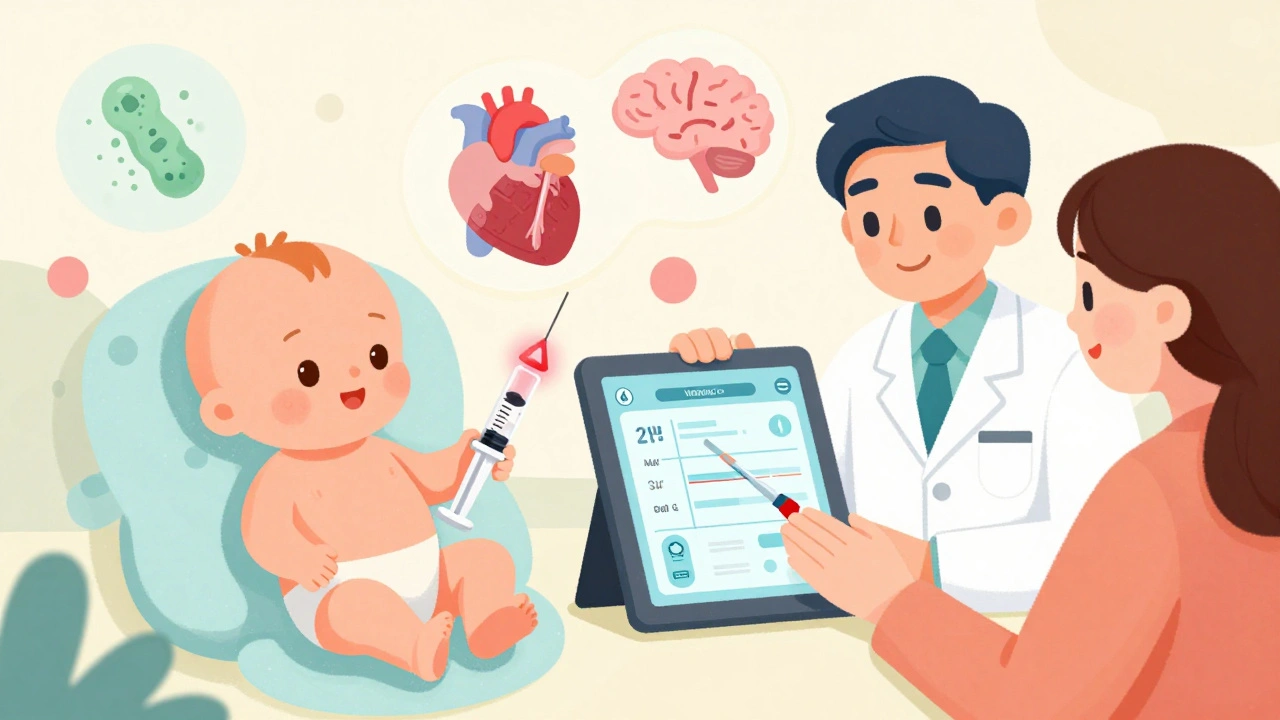
Medication Errors Are Common - and Deadly
Dosing errors happen more often in the NICU than in any other unit. A 2022 survey of NICU nurses found that 68.4% saw at least one medication error per month. Most were due to miscalculating weight-based doses. One wrong decimal point - giving 2 mg instead of 0.2 mg - can cause seizures, cardiac arrest, or death. These aren’t just mistakes. They’re systemic. Many hospitals still use adult syringes for tiny doses. Some still rely on handwritten orders. And because preterm infants weigh as little as 500 grams, even a 10% dosing error can be catastrophic. The solution? Technology. NICUs using pharmacokinetic modeling software like DoseMeRx reduced dosing errors by 58.7% in infants under 28 weeks. Automated dispensing systems with weight-based alerts cut errors in half. But only 37.2% of Level IV NICUs have adopted these tools.What’s Being Done - and What’s Still Missing
There’s progress. The FDA’s Best Pharmaceuticals for Children Act has led to 15 new pediatric labels since 2002. The PREEMIE Reauthorization Act of 2018 forced the NIH to fund neonatal drug safety research. In 2021, the Neonatal Research Network launched its Pharmacology Core to track adverse drug reactions across 14 major NICUs. New tools are coming. The Neonatal Precision Medicine Initiative, launched in 2023, aims to build gestational age-specific models for 25 high-risk drugs by 2026. A new fentanyl formulation designed just for preemies, called NeoFen, has received FDA Fast Track status and could be approved by mid-2025. But the gaps are still huge. Of the 50 most commonly used NICU medications, only 12 have specific neonatal dosing guidelines listed by the WHO. Most are still dosed based on outdated adult formulas. And while hospitals train pharmacists for 18 to 24 months beyond residency to specialize in neonatal care, many NICUs still rely on general pediatric pharmacists - who may not know the nuances of a 24-week-old’s metabolism.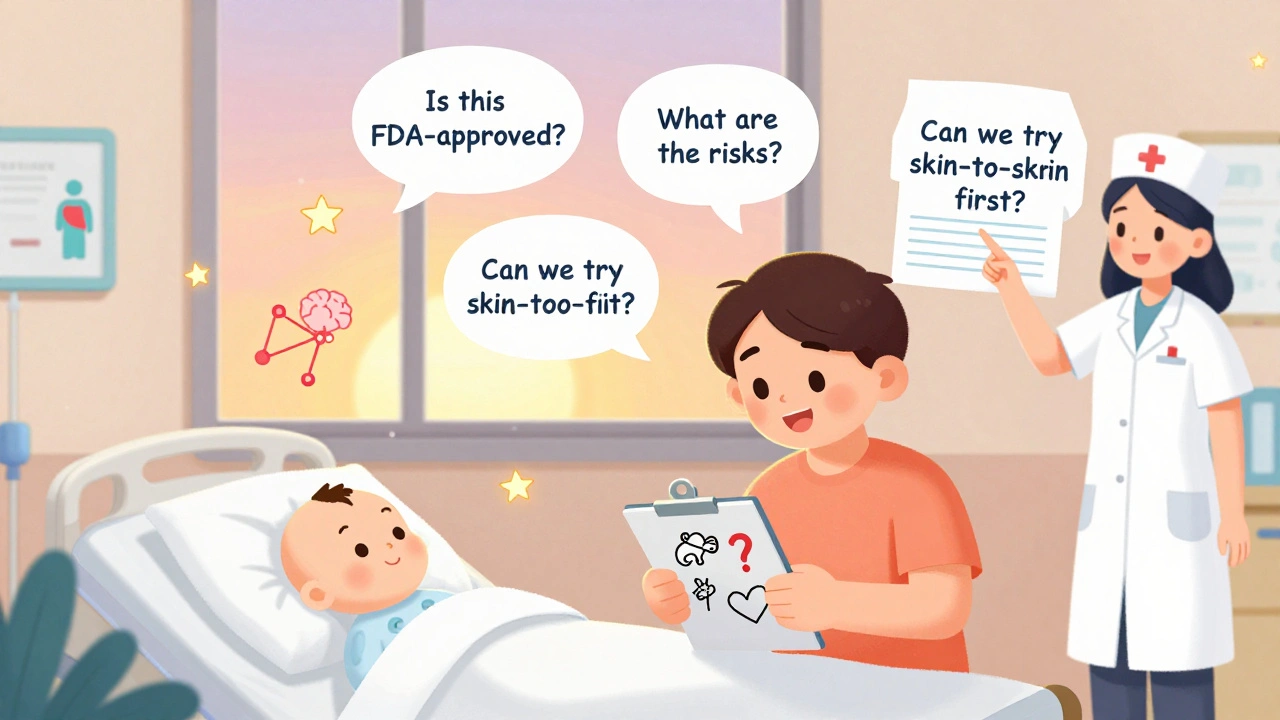
What Parents Should Ask
If your baby is in the NICU, you have the right to know what they’re being given - and why. Ask:- Is this medication FDA-approved for preterm infants?
- What are the risks versus the benefits?
- Are there non-drug options? (Skin-to-skin care, swaddling, and sucrose drops can reduce pain without drugs.)
- How will you monitor for side effects?
- How long will they be on this drug? Is there a plan to wean?





Comments(10)