
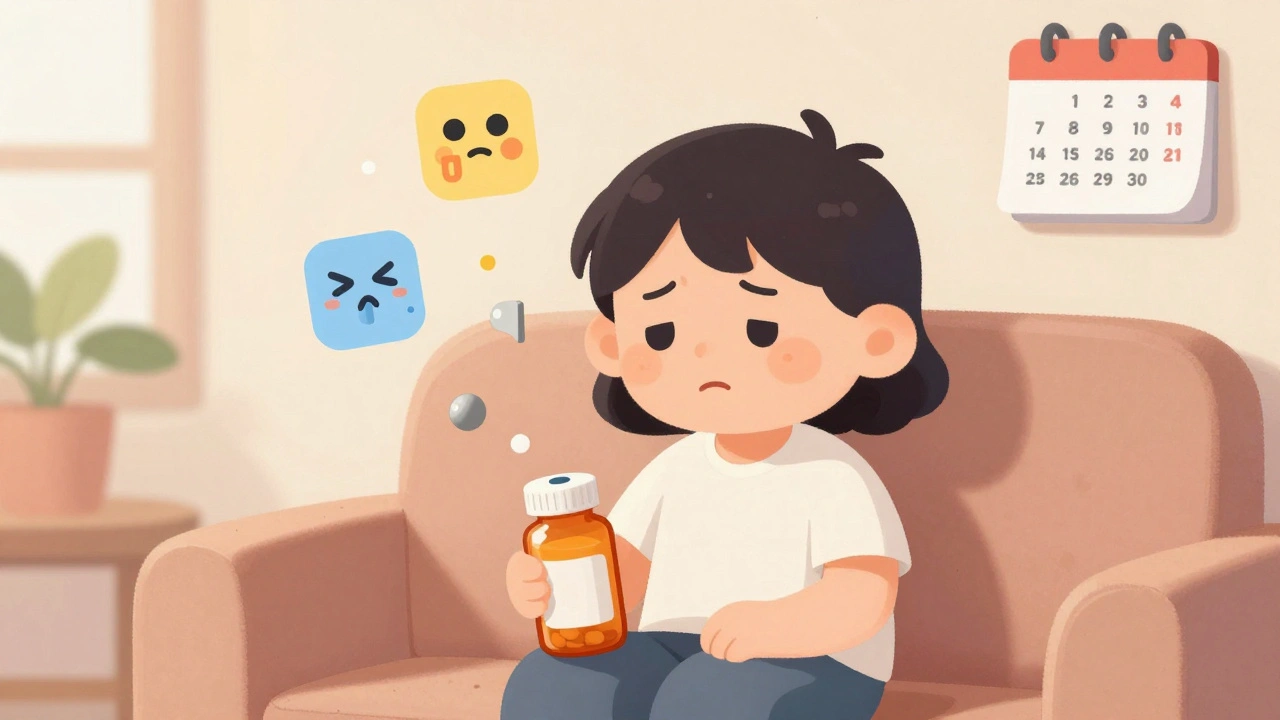
You’ve been prescribed a new medication. Your doctor says it’s life-changing. But then the side effects start - dizziness, nausea, fatigue, or maybe just that weird metallic taste in your mouth. Suddenly, skipping a dose doesn’t feel like a mistake. It feels like a relief.
Here’s the truth: medication adherence isn’t about forgetting your pill bottle. It’s about managing the real, uncomfortable, often unspoken side effects that make people stop taking their meds - even when they know they should keep going.
More than half of people with chronic conditions don’t take their medications as directed. That’s not laziness. It’s not ignorance. It’s a reaction to how the drugs make them feel. And if you’re one of them, you’re not alone. You’re also not broken. You just need better tools.
Why Side Effects Kill Adherence (Even When You Care)
People don’t stop taking meds because they don’t believe in them. They stop because the medicine makes them feel worse than the condition it’s supposed to fix.
Take blood pressure pills. One study showed that 30% of patients stopped taking them within the first year - not because they felt fine, but because they got dizzy every time they stood up. Or antidepressants. Patients with depression are twice as likely to skip their meds if they experience weight gain, sexual side effects, or emotional numbness. The irony? Those side effects often make their depression worse.
It’s not just physical. It’s psychological. Fear of interactions. Worry about long-term damage. Confusion over whether a symptom is the disease or the drug. These aren’t irrational fears. They’re rational responses to a system that rarely talks about side effects in real terms.
And here’s what no one tells you: side effects don’t always show up right away. Sometimes they creep in after weeks or months. That’s when people think, “I was fine before - why am I feeling this way now?” They assume it’s aging, stress, or bad luck. They don’t connect it to the pill they’ve been swallowing daily.
The Numbers Don’t Lie - And They’re Getting Worse
Let’s break it down:
- Only 25% to 30% of people take their meds exactly as prescribed after a few months.
- For every 100 prescriptions written, only 15% to 20% are refilled correctly over time.
- Up to 50% of hospitalizations linked to medications are caused by nonadherence - and side effects are the #1 reason people quit.
- 125,000 preventable deaths happen every year in the U.S. alone because people stopped taking their meds.
These aren’t abstract stats. They’re your neighbor. Your parent. Maybe you.
And here’s the kicker: doctors and pharmacists often don’t even know it’s happening. Pharmacists document nonadherence in just over half of cases. Nurses do better. Doctors? Better still. But if no one’s asking - or listening - the problem stays hidden.
What Works: Real Strategies That Help People Stay on Track
There’s no magic app or pill organizer that fixes this. But there are proven, practical ways to turn things around - especially when side effects are the issue.
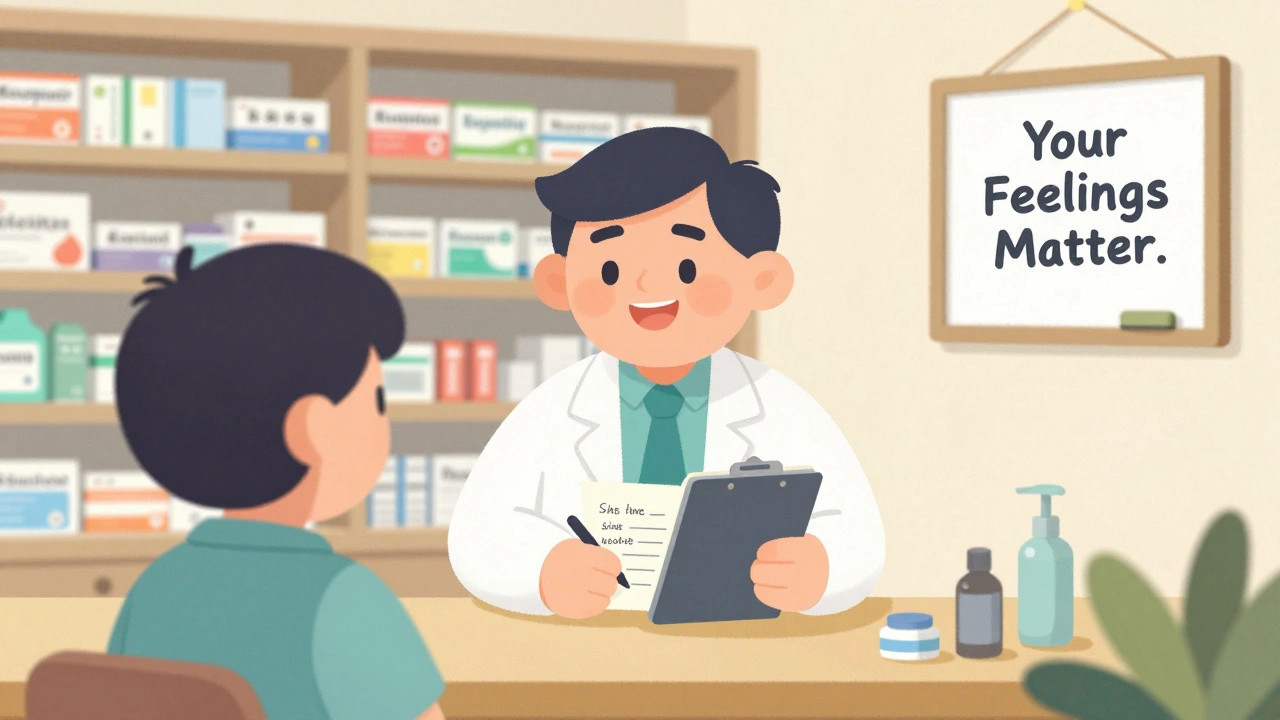
1. Talk to your pharmacist - not just your doctor.
Pharmacists are the unsung heroes of adherence. They see your full med list. They know drug interactions. They’ve heard every side effect story under the sun. And when they’re involved, adherence jumps by up to 40%.
Don’t wait for your next refill. Walk in. Say: “I’m having trouble with [side effect]. Is there a way to manage it without stopping the med?” They can suggest timing changes, dose adjustments, or even alternatives that work better for your body.
2. Track your symptoms - not just your pills.
Use a simple notebook or a free app. Write down:
- What time you took the pill
- What side effect you felt (even if it’s mild)
- How bad it was (1-10 scale)
- When it started and how long it lasted
This isn’t busywork. It’s evidence. When you show your doctor a log of dizziness starting 3 days after you began the new med, they can’t dismiss it as “just in your head.” You’ve given them data. And data changes decisions.
3. Ask about alternatives - not just “can I stop?”
Many people assume if the side effects are bad, the only option is quitting. But that’s not true.
There might be:
- A different formulation (extended-release instead of immediate)
- A lower dose with a different dosing schedule
- A similar drug from another class with fewer side effects
For example, switching from a statin that causes muscle pain to one with a different chemical structure can make all the difference. It’s not about giving up - it’s about finding what fits your body.
4. Simplify the regimen.
More pills = more chances to mess up. If you’re taking 6 meds at 3 different times a day, you’re setting yourself up to fail.
Ask your doctor: “Can any of these be combined? Can I take some at night instead of morning?” Even small changes - like switching to a once-daily version - can boost adherence by 20% or more.
5. Use reminders that work for you.
Phone alarms? Too easy to ignore. Pill boxes? Helpful, but only if you actually open them.
Try linking meds to habits you already do:
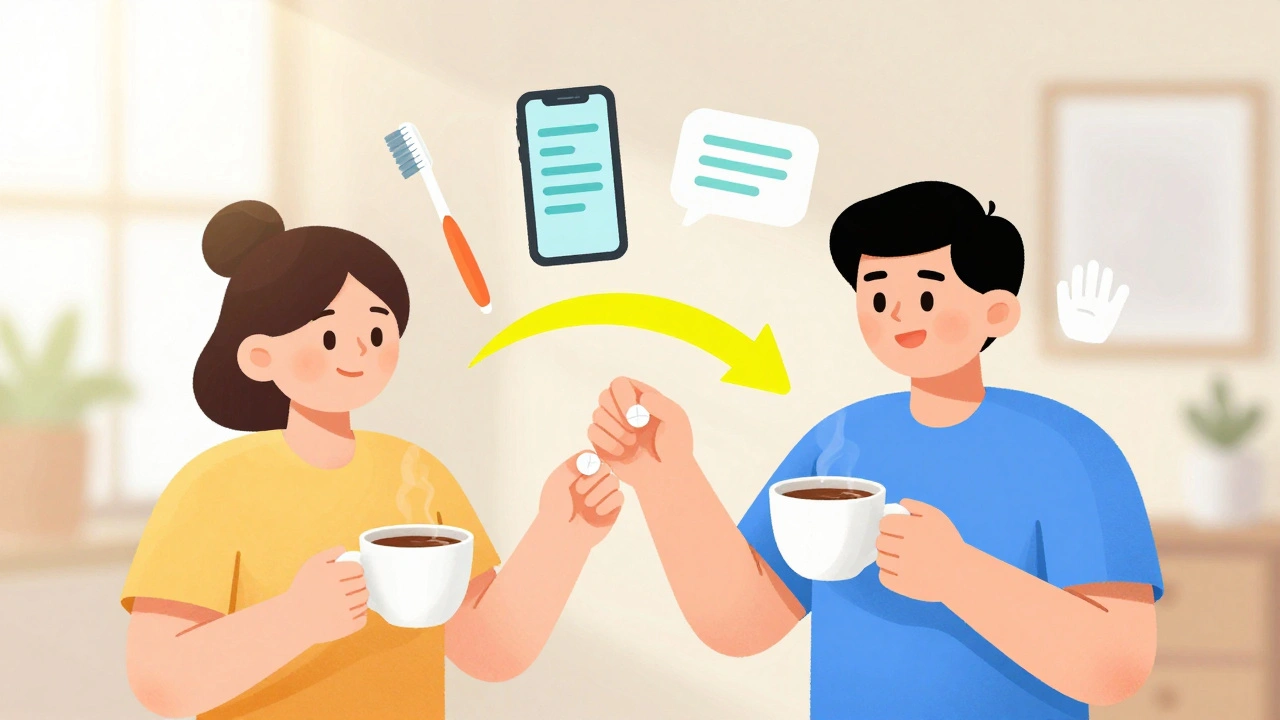
- Take your blood pressure pill with your morning coffee
- Put your diabetes med next to your toothbrush
- Set a weekly text reminder from a friend
Habit stacking works better than tech. Your brain remembers routines, not alarms.
When Side Effects Are Too Much - What to Do
Some side effects are serious. Chest pain. Swelling. Trouble breathing. These aren’t things to “wait out.” Call your doctor or go to urgent care immediately.
But most aren’t emergencies. They’re annoyances. And that’s where the real battle is.
If you’re considering stopping:
- Don’t quit cold turkey - especially with mental health, heart, or seizure meds. That can be dangerous.
- Write down exactly what you’re feeling - and how long it’s lasted.
- Call your pharmacist before your doctor. They can often help faster.
- Ask: “Is this side effect temporary? Or will it get worse?”
Many side effects fade after 1-2 weeks as your body adjusts. But you won’t know unless you track it - and talk about it.
Why This Matters More Than You Think
Skipping meds doesn’t just hurt you. It costs the system billions. Hospitals fill up. Insurance premiums rise. Care gets harder to access for everyone.
But more than that - it steals your life. If you’re not taking your meds because you feel awful, you’re not living. You’re surviving.
Adherence isn’t about compliance. It’s about control. It’s about choosing how you feel - not letting a side effect decide for you.
Every time you take your pill, even when it’s hard, you’re saying: “I matter. My health matters.” That’s not just medical. It’s personal.
Final Thought: You’re Not Failing - The System Is
The problem isn’t you. It’s that we treat medication like a checklist, not a partnership.
You shouldn’t have to suffer through side effects in silence. You shouldn’t have to guess if your fatigue is from the drug or your life. You deserve to have someone help you navigate this - not just hand you a script and hope for the best.
Start small. Talk to your pharmacist this week. Write down one side effect you’ve been ignoring. Ask one question you’ve been afraid to ask.
Staying on track isn’t about willpower. It’s about support. And you’re worth that.






Comments(10)