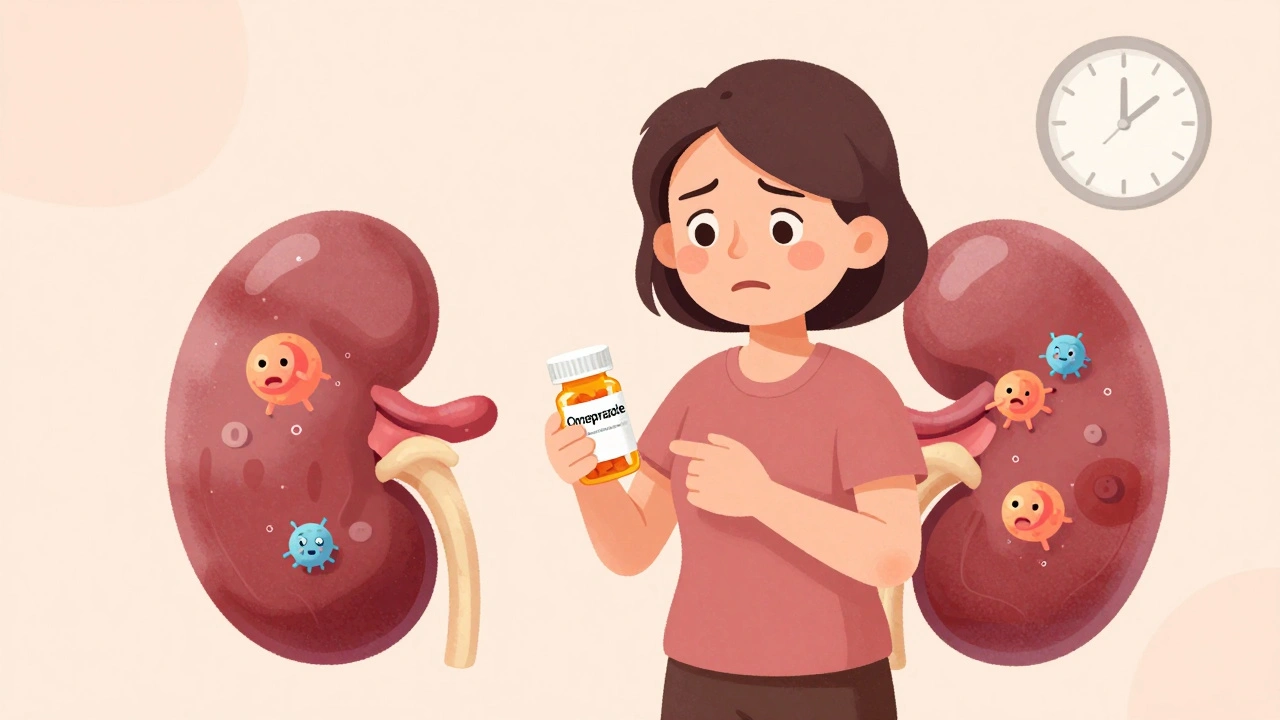
Acute Interstitial Nephritis: Causes, Medications, and What You Need to Know
When your kidneys suddenly swell up due to an immune reaction, it’s often called acute interstitial nephritis, a type of kidney inflammation triggered by drugs, infections, or autoimmune conditions. Also known as drug-induced interstitial nephritis, it’s not rare—especially if you’re taking common painkillers, antibiotics, or acid-reducing pills long-term. Unlike slow kidney decline from diabetes or high blood pressure, this hits fast. You might feel tired, have a fever, notice less urine, or see blood in your urine. Many people don’t realize it’s their meds causing the problem until it’s already affecting kidney function.
This condition ties directly to how your body handles nephrotoxic drugs, medications that can harm kidney tissue. Common culprits include NSAIDs like ibuprofen, proton pump inhibitors like omeprazole, and antibiotics such as penicillin or methicillin. Even herbal supplements and antivirals can trigger it. The reaction isn’t about dosage—it’s about your immune system mistaking kidney tissue for a threat. That’s why two people taking the same drug might react completely differently. One stays fine; the other ends up in the hospital.
What makes this tricky is that symptoms often show up weeks after you started the drug. You might think your fatigue is from stress or your new workout routine. But if you’ve recently started a new medication and your kidneys aren’t filtering right, it could be acute interstitial nephritis. Doctors check blood tests for rising creatinine, urine tests for white blood cells, and sometimes do a kidney biopsy to confirm. Stopping the drug early is the most effective treatment—often leading to full recovery. But if ignored, it can lead to permanent damage or even chronic kidney disease.
That’s why understanding how medications interact with your kidneys matters. You’ll find real, practical advice here on recognizing early signs, avoiding risky drug combinations, and knowing when to push back on a prescription. We cover how pharmacists verify drug safety, why some people are more vulnerable to kidney injury, and how to track side effects before they become serious. Whether you’re managing a chronic condition, taking multiple meds, or just want to protect your kidneys, this collection gives you the tools to act before it’s too late.