NICU Medications: What Every Parent and Provider Needs to Know
When a baby is born too early or too sick to go home, they enter the NICU, a specialized unit for newborns needing intensive medical care. Also known as a neonatal intensive care unit, it’s where tiny lives are supported by machines, monitors, and carefully chosen NICU medications, drugs specifically formulated or dosed for newborns. These aren’t just smaller versions of adult pills—they’re precision tools, often given through IVs, with doses calculated down to the milligram per kilogram of body weight.
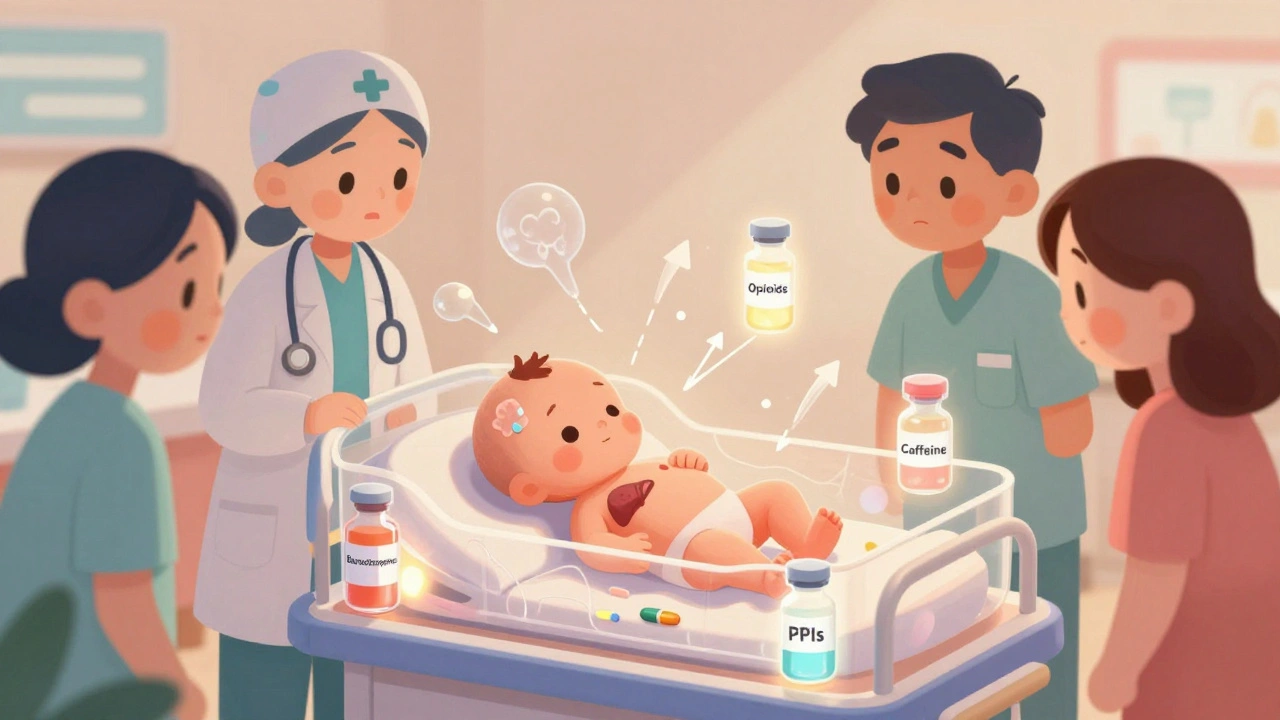
NICU medications include antibiotics for infections, caffeine to help with breathing, surfactant to open lungs, and pain relievers that won’t suppress a fragile respiratory system. Each drug is chosen based on the baby’s gestational age, weight, kidney and liver function, and how their body processes medicine differently than an adult’s. For example, a premature infant’s liver can’t break down drugs the same way, so a medication that’s safe for a 30-week-old might be dangerous for a 26-week-old. That’s why neonatal pharmacology, the science of how drugs behave in newborns is its own field—because guessing wrong can mean the difference between recovery and tragedy.
Parents often feel overwhelmed seeing their baby connected to tubes and receiving drugs they’ve never heard of. But understanding the basics helps you ask the right questions: Why this drug? What’s the goal? What are the risks? Is there a safer alternative? The posts below cover real-world cases—from how antibiotics are timed to prevent sepsis in preemies, to why caffeine is the go-to for apnea, to how pain is managed without sedating a baby’s brain. You’ll find what happens when dosing goes wrong, how drug shortages hit NICUs hardest, and why some medications that work in adults can be deadly in newborns. This isn’t theoretical. These are the decisions made every day in NICUs around the world, and they matter deeply to the families who live them.