

Every year, about 1 in every 1,000 contact lens wearers ends up with a serious eye infection. That might sound rare, but when you consider how many people use contacts - over 100 million globally - that’s tens of thousands of preventable cases. And most of them? They happen because someone skipped a step. Maybe they rinsed their lenses with tap water. Maybe they slept in them. Or maybe they just didn’t wash their hands before touching their eyes. It’s not laziness. It’s not ignorance. It’s just easy to forget, especially when you’re tired, in a rush, or think, “It’s only once.” But once is all it takes.
Hand Hygiene: The First and Most Important Step
Before you even touch your lenses, your hands need to be clean. Not just rinsed. Not just wiped with a tissue. Washed. Soap and water. For at least 20 to 30 seconds. That’s about the time it takes to sing “Happy Birthday” twice. Scrub your palms, between your fingers, under your nails. Then rinse and dry with a clean, lint-free towel. No paper towels - they shed fibers that can stick to your lenses and scratch your cornea.Alcohol wipes? Don’t use them. They might feel like a quick fix, but they leave residue that can irritate your eyes and damage the lens material. And no, your hand sanitizer won’t cut it either. It’s designed to kill germs on skin, not prepare your fingers for direct contact with your eyes. The CDC and the American Optometric Association both say handwashing is the single most effective way to prevent infection. Yet studies show only about half of contact lens users do it properly. If you’re one of them, you’re playing Russian roulette with your vision.
Solutions: Not All Are Created Equal
Your contact lens solution isn’t just cleaning fluid. It’s your defense against bacteria, fungi, and parasites like Acanthamoeba - a microscopic organism found in tap water, showers, and even swimming pools. This one can cause Acanthamoeba keratitis, a rare but devastating infection that can lead to permanent vision loss. Treatment costs, on average, $7,500 per case - and that’s just the start. Some patients need multiple surgeries and years of medication.Here’s the rule: Only use the solution your eye care professional recommends. Not the one your friend swears by. Not the one on sale. Not the one you’ve had sitting in your bathroom for six months. Different lenses need different solutions. Silicone hydrogel lenses? They react differently than traditional hydrogel ones. Hydrogen peroxide systems? They’re powerful, but you must wait 4 to 6 hours after disinfection before inserting lenses. Never rinse your lenses with hydrogen peroxide directly - it burns. Ever heard of a chemical burn from a solution? That’s how it happens.
And please, stop using saline or rewetting drops to clean your lenses. They don’t disinfect. They’re for comfort only. Same with tap water. Ever heard someone say, “I just rinsed it under the sink”? That’s a one-way ticket to infection. The FDA has issued multiple warnings about this. Acanthamoeba thrives in water. And if it gets on your lens? It burrows into your cornea. Fast. And it’s hard to kill.
Case Care: The Hidden Danger
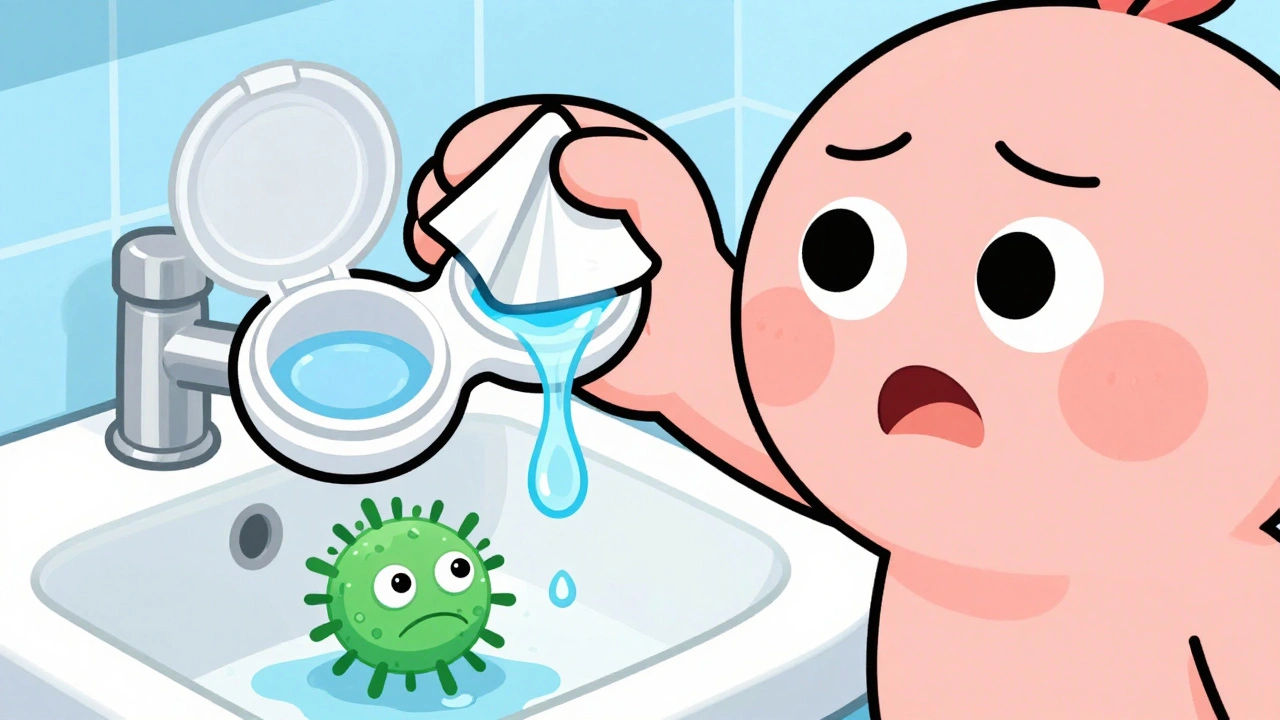
Your lens case is a breeding ground. If you’re not cleaning it right, it’s just as dirty as your lenses. Here’s how to fix it:- After each use, empty the case. Don’t just pour out the old solution - wipe the inside with a clean finger.
- Rinse it with fresh disinfecting solution - never tap water.
- Let it air dry upside down with the caps off. Moisture is the enemy.
- Replace the case every three months. If you’re sloppy, replace it every month. It’s cheaper than an eye infection.
And here’s the big one: Never top off solution. That means don’t add new solution to old solution. Ever. Mixing old and new cuts disinfection power by 30-50%. You think you’re saving money. You’re actually increasing your risk of infection. The CDC says this is one of the top mistakes people make. And it’s avoidable.
Wear Time: Don’t Push It
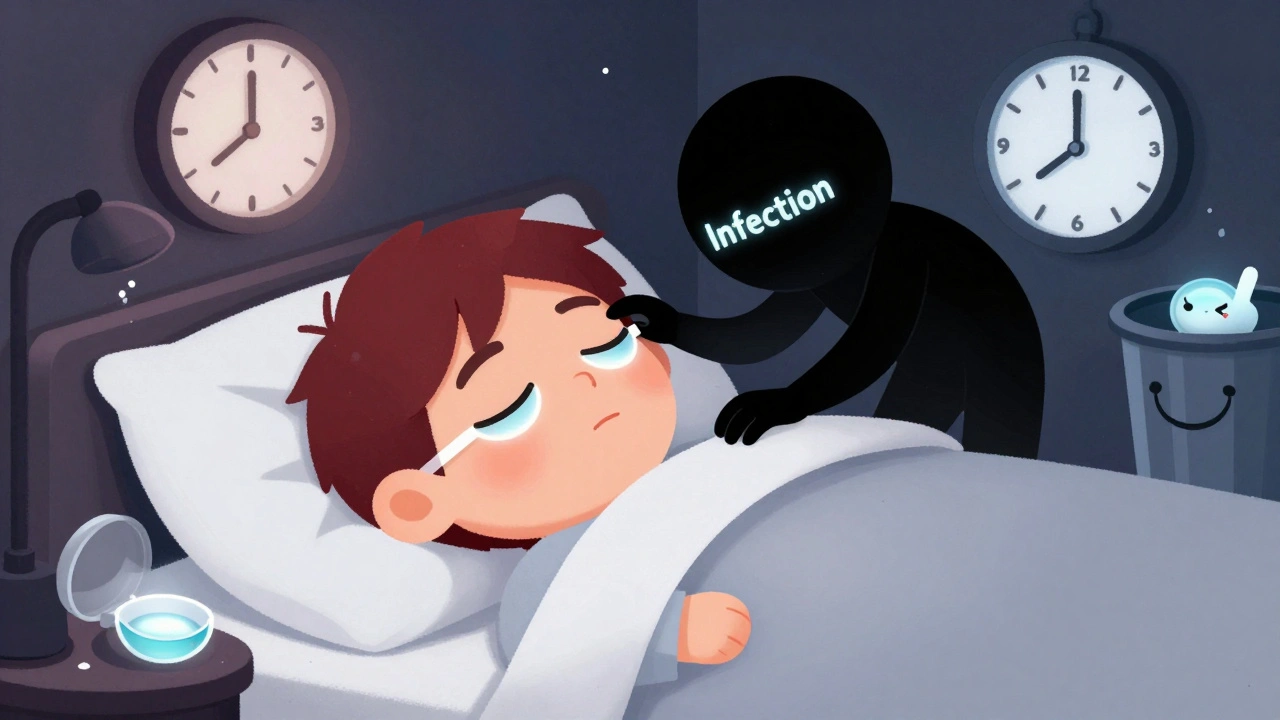
Daily disposables? Great. You throw them out every night. No cleaning. No case. No risk. That’s why they now make up 65% of the U.S. market - up from 45% in 2018. If you’re still using biweekly or monthly lenses, you’re doing more work and taking more risk.Here’s the hard truth: Never sleep in lenses unless your eye doctor specifically prescribed them for overnight wear. Even then, only about 10-15% of lenses are approved for that. Most aren’t. Sleeping in regular lenses cuts oxygen to your cornea, traps bacteria, and turns your eye into a warm, moist petri dish. A 2018 CDC study found 40-50% of users sleep in lenses they shouldn’t. That’s half the population putting their vision at risk.
And water? Remove your lenses before showering, swimming, or even splashing your face. The FDA says wearing contacts while swimming increases infection risk by 10-15 times. That’s not a suggestion. That’s a warning. If you accidentally get water on your lenses, take them out, clean them with fresh solution, and disinfect them. Or just toss them. Daily disposables make this easy.
Who’s Most at Risk?
The data doesn’t lie. Eighty-five percent of contact lens complications happen in people aged 18 to 24. Why? Because they’re busy. They’re tired. They think they’re invincible. They’re also the least likely to follow up with their eye doctor. A 2023 study showed that young adults skip appointments more than any other group. They think, “My vision’s fine.” But infections don’t always hurt right away. By the time you feel pain, it might be too late.One Reddit user, u/ContactLensNewbie, wrote: “Woke up with a painful red eye after sleeping in dailies once - never doing that again.” Another, u/EyeHealthAdvocate, said: “Since I started replacing my case every month and never topping off solution, I’ve had zero infections in two years.” One mistake. One change. Two totally different outcomes.
What’s Changing? What’s Next?
The good news? Technology is catching up. New lens materials are being tested with antimicrobial coatings that reduce bacterial adhesion by 70%. Daily disposables are becoming cheaper and more accessible. Hydrogen peroxide systems are now easier to use, with built-in neutralizing cases that make disinfection foolproof.But here’s the catch: innovation won’t fix bad habits. The CDC projects infection rates will stay the same through 2025 unless people actually follow the rules. Educational campaigns are helping - but only by 5-7% a year. That’s not enough. Real change comes from one person deciding to wash their hands. To replace their case. To take their lenses out before the shower.
It’s not complicated. It’s not expensive. It’s just consistent. And it’s the only thing standing between you and a lifetime of vision problems.




Comments(12)