
MAOI Safety Checker
Check Your Dextromethorphan Safety
If you're taking or recently stopped an MAOI medication (for depression, anxiety, or Parkinson's), this tool helps you determine if you've waited long enough to safely use cough medicines containing dextromethorphan.
When did you last take your MAOI?
Enter the date you took your last dose of MAOI medication
Why This Matters
MAOIs permanently inhibit serotonin breakdown enzymes. Your body needs 14 days to produce new enzymes before dextromethorphan is safe.
Enter your MAOI last dose date to check safety
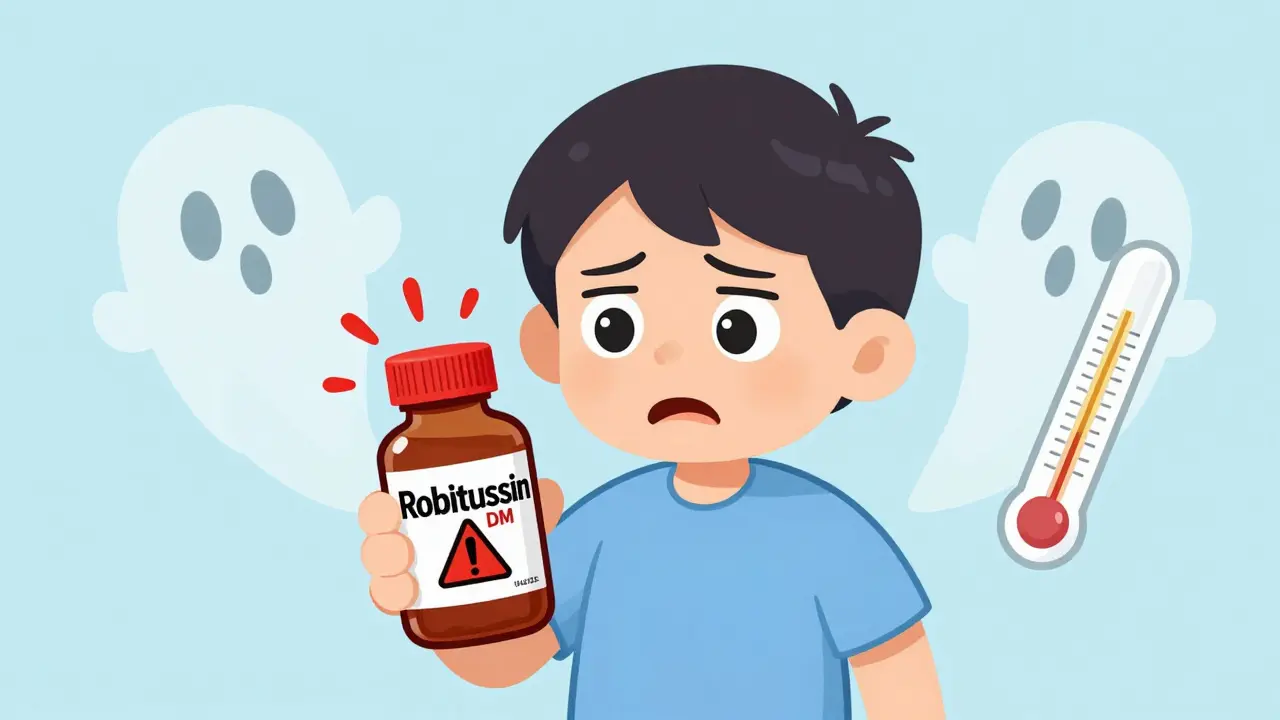
If you're taking an MAOI for depression, anxiety, or Parkinson’s, and you reach for a bottle of cough syrup because you have a cold, you could be putting your life at risk. Dextromethorphan - the active ingredient in popular over-the-counter cough medicines like Robitussin, Delsym, and Coricidin - can trigger a dangerous, sometimes deadly reaction when mixed with monoamine oxidase inhibitors (MAOIs). This isn’t a rare edge case. It’s a well-documented, high-risk interaction that catches people off guard every single day.
Why This Interaction Is So Dangerous
Dextromethorphan works as a cough suppressant by acting on the brain’s cough center. But it also has a hidden side effect: it blocks the reuptake of serotonin, a key brain chemical that regulates mood, sleep, and muscle control. MAOIs, on the other hand, stop your body from breaking down serotonin in the first place. When you take both together, serotonin builds up faster than your body can handle. This leads to serotonin syndrome - a condition that can turn mild symptoms like shivering or restlessness into a medical emergency within hours.Serotonin syndrome isn’t just uncomfortable. It can cause high fever (over 104°F), muscle rigidity, seizures, rapid heart rate, confusion, and even organ failure. Studies show that 2% to 12% of severe cases result in death. The U.S. Food and Drug Administration (FDA) first flagged this risk in 1976. Since then, over 237 cases have been reported to the FDA’s adverse event database between 2010 and 2022, with nearly half requiring hospitalization. One patient on Reddit described feeling extreme confusion and a 104°F fever after taking cough syrup while on selegiline. They ended up in the ER. Another person on PatientsLikeMe said they couldn’t speak clearly after taking Parnate and a cold medicine - doctors told them they were lucky to survive.
How the Body Turns a Simple Cold Medicine Into a Threat
It’s not just serotonin. Dextromethorphan is broken down in your liver by an enzyme called CYP2D6. Many MAOIs, especially older ones like phenelzine and tranylcypromine, slow down this enzyme. That means dextromethorphan doesn’t get cleared from your system like it should. Clinical studies show plasma levels of dextromethorphan can spike by 300% to 400% when taken with an MAOI. That’s not a small increase - it’s the difference between a mild cough suppressant and a toxic dose.And it doesn’t stop there. Some MAOIs themselves can interfere with serotonin metabolism in multiple ways. For example, selegiline (used for Parkinson’s) and rasagiline (Azilect) are irreversible MAOIs. That means once they bind to your enzymes, they stay bound for weeks. Even after you stop taking them, your body needs time to grow new enzymes. That’s why experts say you must wait at least two weeks after your last MAOI dose before using any product with dextromethorphan. The Therapeutic Goods Administration of Australia and the U.S. National Library of Medicine both reinforce this 14-day rule.
What Medicines Actually Contain Dextromethorphan?
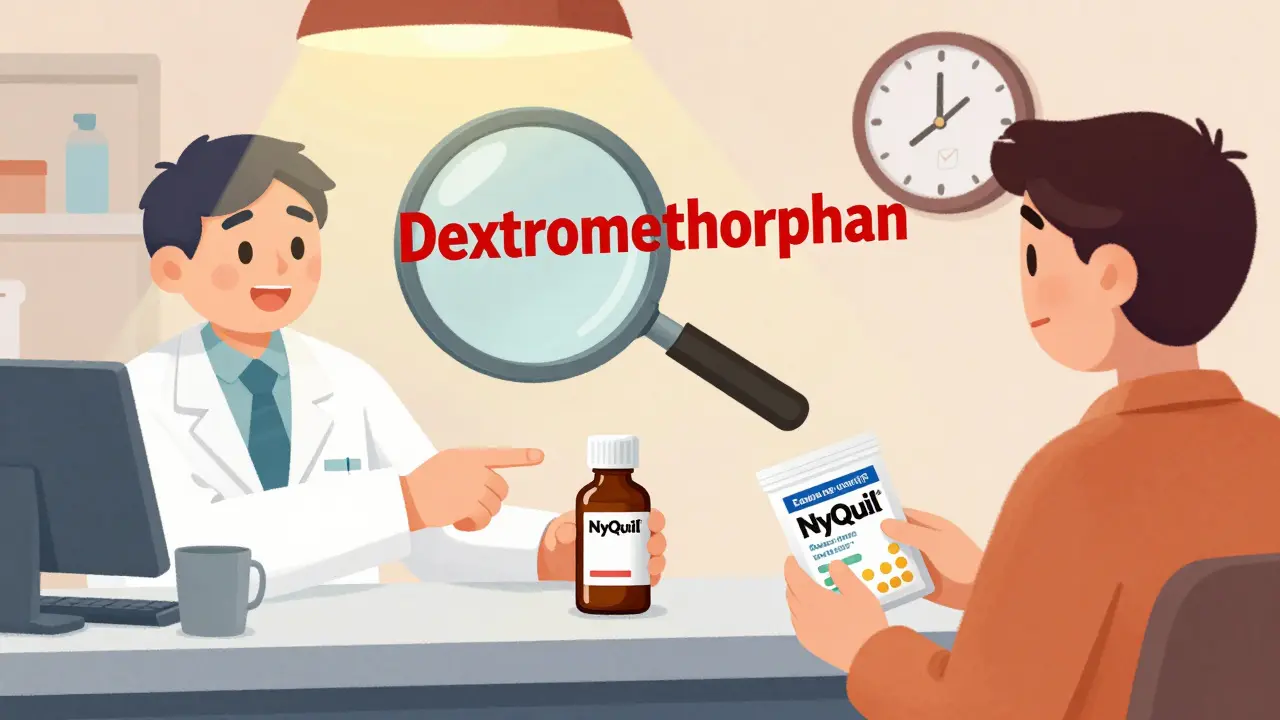
You’d be surprised how many products hide dextromethorphan under different names. It’s not just cough syrups. It’s in combination cold and flu tablets, nighttime sleep aids, and even some allergy medicines. Here’s what to look for on labels:- Robitussin DM
- Delsym
- Coricidin HBP Cough & Cold
- NyQuil Cold & Flu (some versions)
- Vicks Formula 44
- Theraflu Severe Cold & Flu
- Store-brand generic cough syrups labeled "DM" or "Dextro"
Even if the bottle says "non-drowsy" or "for high blood pressure," it might still contain dextromethorphan. A 2019 survey by the American Society of Health-System Pharmacists found that 78% of patients on MAOIs didn’t know their cough medicine had it. That’s not their fault - the warnings are often buried in tiny print.
Why Labels Don’t Always Save You
You’d think the FDA’s requirement for warning labels would be enough. But a 2021 analysis by the Institute for Safe Medication Practices found that only 38% of dextromethorphan products display the MAOI warning prominently. Many labels use vague language like "consult your doctor" instead of clear, bold statements like "DO NOT USE IF TAKING AN MAOI." Some even put the warning on the side panel, where it’s easy to miss.And here’s the kicker: MAOIs aren’t just for depression anymore. They’re increasingly used for treatment-resistant depression, anxiety disorders, and even Parkinson’s. The American Journal of Psychiatry reports a 22% rise in MAOI prescriptions since 2020. More people are taking them - and more are reaching for cough medicine without realizing the danger.
What to Use Instead of Dextromethorphan
You still need relief from a cough. You don’t have to suffer. Here are safer options:- Guaifenesin (Mucinex) - breaks up mucus. No serotonin risk.
- Honey - studies show it’s as effective as dextromethorphan for nighttime coughs in adults and children over one year old. Just avoid honey products that contain added tyramine (like some fermented or aged honey blends).
- Steam inhalation - humidifying your air can soothe irritated airways.
- Warm salt water gargles - helps with throat irritation that triggers coughing.
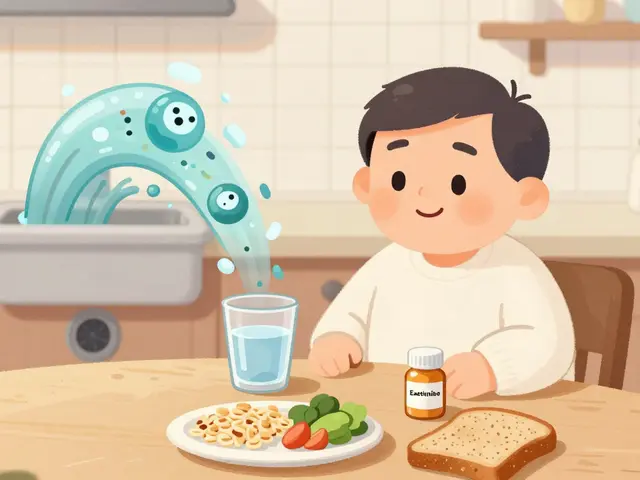
- Hydration - drinking water keeps mucus thin and easier to clear.
Always check the label. Even "natural" or "herbal" cough remedies can contain hidden ingredients. Some herbal supplements like St. John’s Wort or 5-HTP can also raise serotonin levels. Stick to single-ingredient products when possible.
What to Do If You Accidentally Mix Them
If you’ve taken dextromethorphan within two weeks of your last MAOI dose and you feel any of these symptoms:- High fever (102°F or higher)
- Muscle stiffness or twitching
- Rapid heartbeat or high blood pressure
- Confusion, agitation, or hallucinations
- Nausea, vomiting, or diarrhea
Call emergency services immediately. Do not wait. Serotonin syndrome can worsen rapidly. Some patients die before the drugs wear off. Emergency treatment includes stopping the medications, cooling the body, giving IV fluids, and sometimes using benzodiazepines or serotonin blockers like cyproheptadine. In severe cases, patients need intensive care.
How Pharmacists Can Help You Stay Safe
Your pharmacist is your best line of defense. A 2021 study showed that when pharmacists actively counseled MAOI patients about OTC risks, accidental dextromethorphan use dropped by 67%. Ask them to review every new medication - even if it’s just a cold tablet from the grocery store.Bring your pill bottles with you. Many people don’t realize their "daily vitamins" or "sleep aid" might contain dextromethorphan. Pharmacists can scan your medications and flag dangerous combinations in seconds. Don’t be shy - this is exactly why they’re there.
What’s Changing in 2025?
The FDA proposed stronger labeling rules in 2022, requiring larger, bolder warnings on all dextromethorphan products. Those changes are now in effect as of late 2024. The European Medicines Agency has started requiring printed patient guides listing brand names of dextromethorphan products with every MAOI prescription.There’s also new research on newer MAOIs. Moclobemide, a reversible MAOI used in Europe and Canada, appears to carry much lower risk - only one case of serotonin syndrome linked to dextromethorphan has been reported. But if you’re on phenelzine, tranylcypromine, or selegiline, the old rules still apply: avoid dextromethorphan completely.
And awareness is improving. The National Alliance on Mental Illness reports that patient education materials on OTC risks are being rolled out across clinics in early 2025. But until then, the burden is on you. Know your meds. Read every label. Ask questions. Your life could depend on it.
Can I take dextromethorphan if I stopped my MAOI two weeks ago?
Yes, but only if you’ve waited the full 14 days after your last dose. MAOIs like phenelzine and tranylcypromine permanently block enzymes, and your body needs time to make new ones. Even if you feel fine, the risk remains until the two-week window passes. Don’t guess - wait the full time.
Is it safe to use dextromethorphan if I’m on a low dose of MAOI?
No. There is no safe dose of dextromethorphan when you’re on an MAOI. Even small amounts can cause dangerous serotonin buildup. The interaction isn’t about dosage - it’s about how the drugs interact chemically in your brain and liver. Low dose doesn’t mean low risk.
What if I took dextromethorphan by accident - what should I do?
Call your doctor or go to the ER immediately. Don’t wait for symptoms. Serotonin syndrome can start within 6 hours and escalate quickly. Bring the medicine bottle with you so medical staff can identify the ingredients. Early treatment saves lives.
Are all cough medicines dangerous with MAOIs?
No. Only those containing dextromethorphan. Medicines with guaifenesin (like Mucinex), honey, or plain saline sprays are safe alternatives. Always check the active ingredients list - not the product name. Look for "dextromethorphan" or "DM" on the label.
Can my doctor prescribe a cough medicine that’s safe with MAOIs?
Yes. Doctors can prescribe non-dextromethorphan alternatives like codeine (with caution) or benzonatate. But most prefer non-pharmaceutical options first - honey, steam, hydration - because they’re safer and just as effective for most coughs. Always ask your doctor before taking anything new.





Comments(10)