
Every year, millions of unused or expired pills sit in bathroom cabinets, kitchen drawers, and medicine chests across the country. Many people don’t know what to do with them-so they keep them, flush them, or toss them in the trash. But here’s the truth: drug take-back programs are the safest, most responsible way to get rid of unwanted medications. And they’re easier to use than you think.
What Exactly Is a Drug Take-Back Program?
A drug take-back program is a community-based system designed to collect expired, unused, or unwanted medications so they can be destroyed safely. These programs exist to prevent drug abuse, accidental poisonings (especially in kids and seniors), and environmental harm. Flushing pills down the toilet or throwing them in the trash doesn’t just disappear them-it pollutes waterways, contaminates soil, and puts dangerous drugs within reach of teens or pets. The federal government set the foundation for today’s programs with the Secure and Responsible Drug Disposal Act of 2010. That law gave the DEA the power to create legal, secure ways for people to drop off medications. Since then, the number of permanent collection sites has exploded-from just a few hundred in 2010 to over 16,500 today. These include pharmacies, hospitals, police stations, and even some fire departments.How Do These Programs Actually Work?
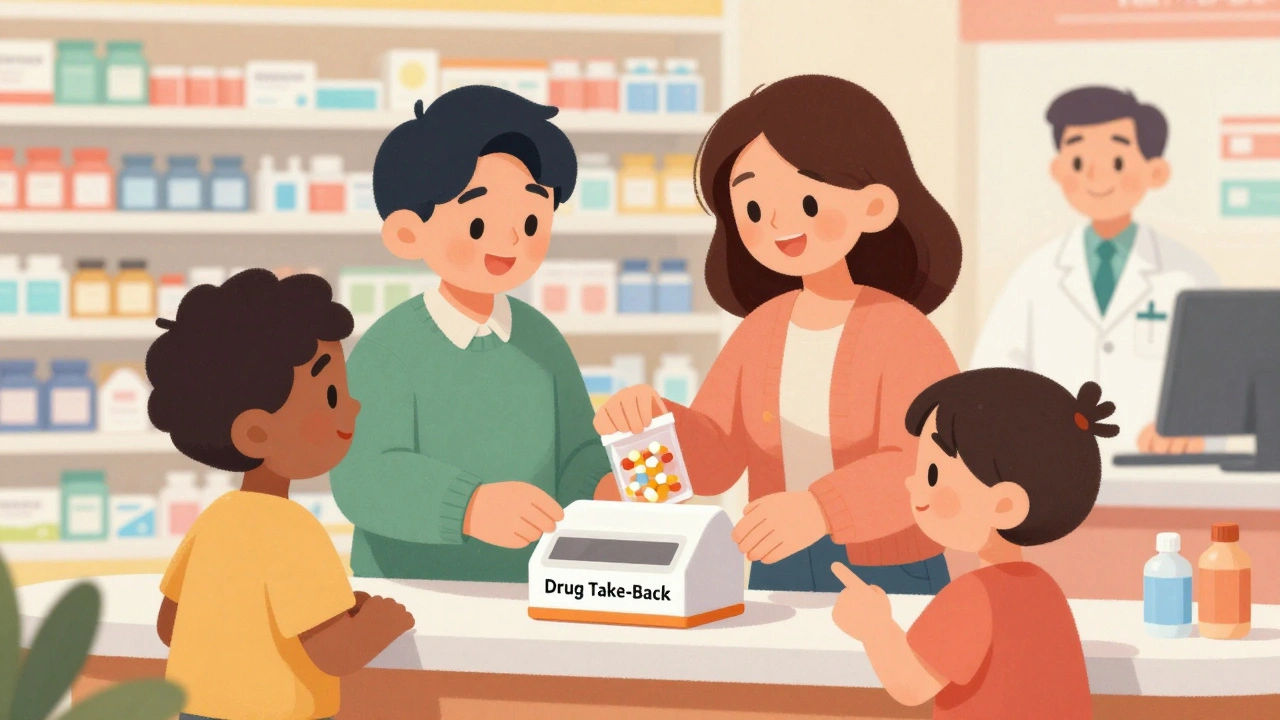
There are three main ways drug take-back programs operate, and each has its own benefits.- Permanent drop boxes are locked, secure containers you can visit anytime. You’ll find them in pharmacies like Walgreens and CVS, or in police station lobbies. No appointment needed. Just walk in, hand over your meds, and leave.
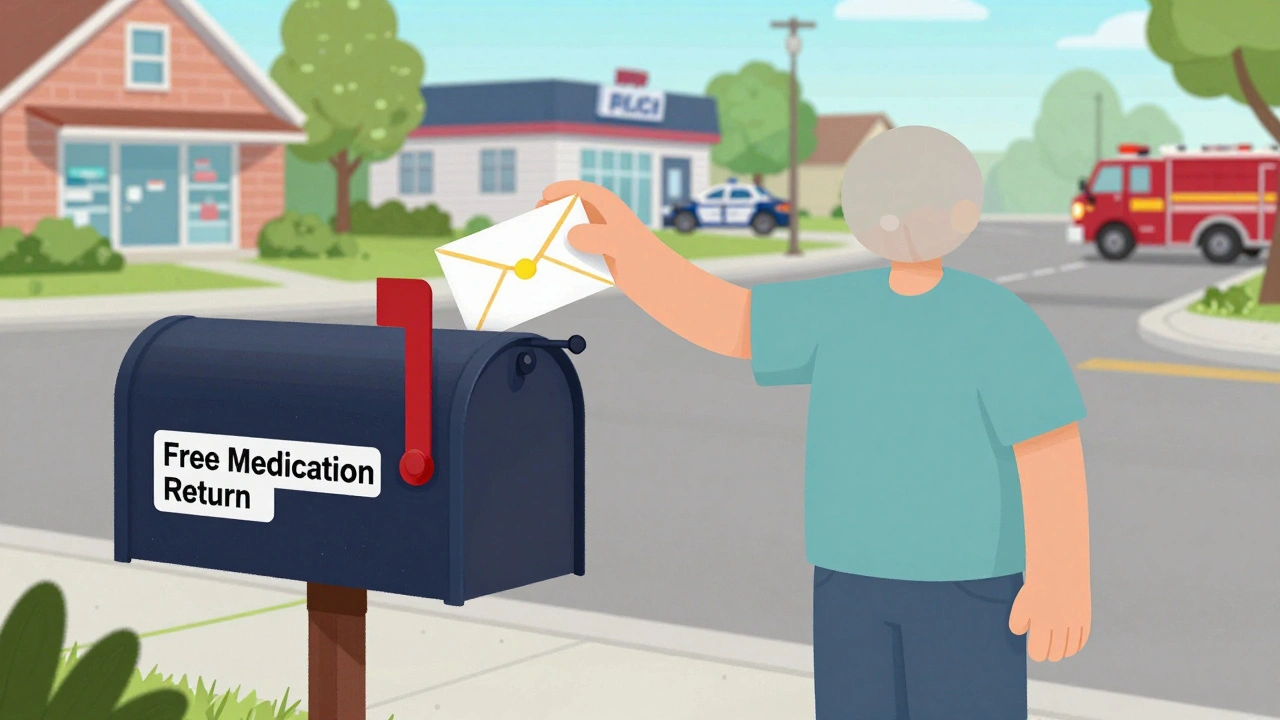
- Mail-back programs let you order a free, prepaid envelope from your pharmacy or local health department. You put your medications inside (in their original containers), seal it, and drop it in the mailbox. The company handles the rest.
- Take-back events happen twice a year-April and October-on National Prescription Drug Take Back Day. Thousands of sites open up for one day only. These are great if you’ve been waiting to clean out your medicine cabinet, but they’re not a year-round solution.
What Can You Drop Off?
Not everything goes in the drop box. Here’s what’s accepted:- Prescription pills and liquids
- Over-the-counter medicines
- Vitamins and supplements
- Patch medications (like fentanyl or nicotine patches)
- Topical ointments and creams
- Pet medications
- Asthma inhalers or other aerosols
- Thermometers (especially mercury ones)
- Hydrogen peroxide
- Iodine-based medicines
- Alcohol or illegal drugs
How to Prepare Your Medications
You don’t need to empty your pill bottles. In fact, it’s better if you don’t.- Keep pills in their original containers. This helps staff identify what they are.
- If the label is worn off or missing, put the pills in a sealed plastic bag and write the name on the outside with a marker.
- Remove or black out your name, address, and prescription number. Your privacy matters.
- Don’t mix different medications in one bag. Keep them separate.
Where to Find a Drop-Off Location Near You
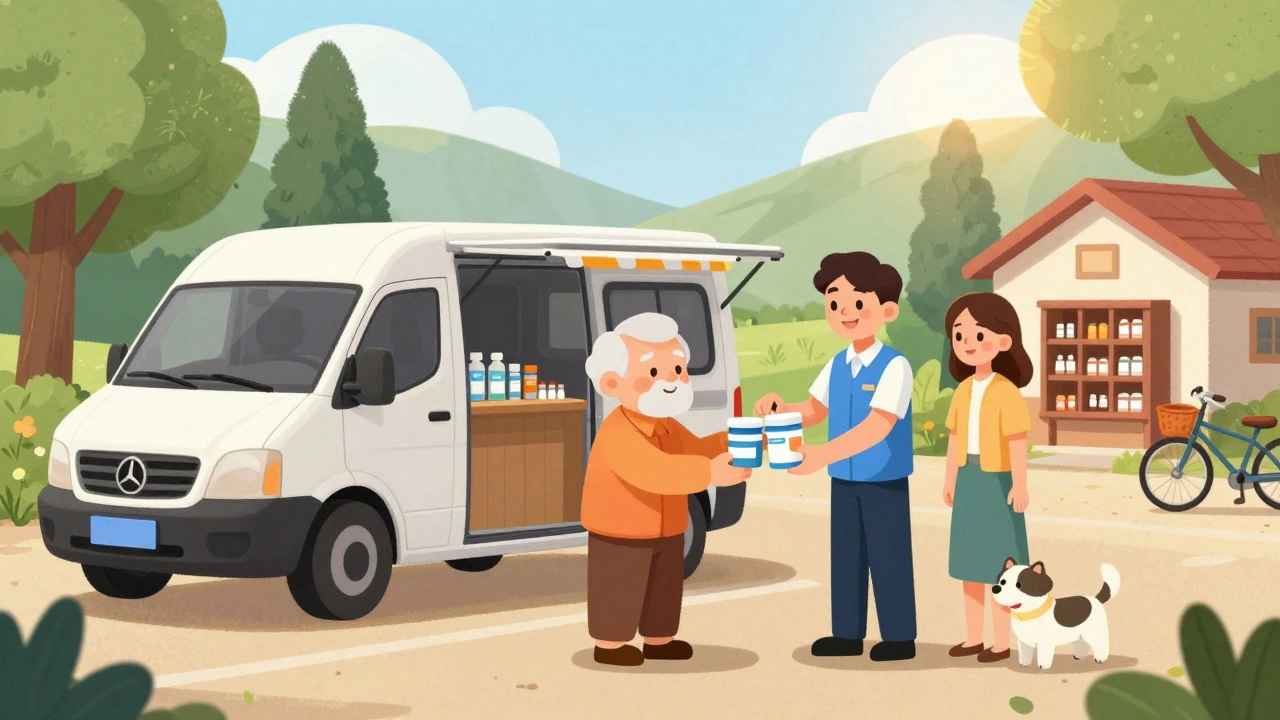
The easiest way to find a collection site is to go to DEA.gov/takebackday and use their searchable map. You can filter by zip code, city, or state. As of 2025, there are more than 16,500 locations nationwide. Walgreens alone has over 1,600 drop boxes across 49 states. CVS has them in most of its stores. Hospitals and local police departments often have them too. Some rural areas rely on mobile units that visit community centers or libraries on set days. If you’re in a small town, call your local pharmacy first-they might know of a nearby site you didn’t realize existed.Why Permanent Drop Boxes Beat One-Day Events
Take-back events get a lot of attention, but they’re not the most effective solution. Studies show communities with permanent drop boxes see 25% higher participation than those relying only on one-day events. Why? Convenience. If you have to wait six months for the next event, you’re more likely to just keep the meds. But if there’s a box right down the street, you’ll drop them off when you remember. There’s another issue: fear. In places where police stations are the only drop-off point, participation drops by 32%. People don’t want to walk into a police station with a bag of pills-even if it’s legal and safe. Pharmacies don’t carry that stigma. In fact, communities with pharmacy-based drop boxes see a 41% boost in participation.What If There’s No Drop-Off Site Near You?
If you live in a rural area or somewhere without easy access, you’re not out of options. The FDA says the next best thing is at-home disposal-but only as a last resort. Here’s how to do it safely:- Take pills out of their bottles.
- Crush tablets or open capsules.
- Mix them with something unappetizing-used coffee grounds, kitty litter, or dirt.
- Put the mixture in a sealed plastic bag or container.
- Throw it in the trash.
Why This Matters Beyond Safety
Drug take-back programs aren’t just about keeping kids from stealing grandma’s painkillers. They’re part of a bigger public health strategy. The CDC reports over 100,000 Americans die each year from drug overdoses. Many of those start with prescription pills that end up in the wrong hands. A 2023 study showed communities with strong take-back programs saw a 19% drop in teen prescription drug misuse within three years. And it’s not just about people. The EPA says flushing meds contributes to pharmaceutical pollution in rivers and lakes. Fish in some areas have shown hormonal changes from traces of antidepressants and birth control pills in the water. Take-back programs stop that before it starts.What’s Changing in 2025?
The push for year-round access is working. The DEA’s "Every Day is Take Back Day" campaign has turned temporary events into permanent infrastructure. Mail-back programs are expanding, and new legislation proposed in 2023 could require Medicare Part D plans to cover the cost of prepaid disposal envelopes-potentially helping 48 million seniors. Some states are testing mobile units that drive to neighborhoods without pharmacies. Broward County, Florida, used this method and saw a 73% increase in participation. Rural areas are catching up slowly, but disparities remain. Only 42% of rural communities have the same density of drop boxes as urban ones.What You Can Do Today
You don’t need to wait for a special event or a new law. Here’s your action plan:- Check your medicine cabinet. Pull out anything expired, unused, or no longer needed.
- Go to DEA.gov/takebackday and find the nearest drop box.
- Remove personal info from bottles. Keep pills in their containers.
- Drop them off. No questions asked.
- Tell a friend or family member. Share this info. Many people still don’t know this exists.
Are drug take-back programs free?
Yes. All DEA-approved drop boxes and mail-back programs are completely free. You don’t pay to drop off medications. Some pharmacies may charge for the envelope if you need to buy one, but most offer them for free through community partnerships or state programs.
Can I drop off medications for someone else?
Absolutely. You can drop off medications for family members, friends, or even neighbors. You don’t need to be the person named on the prescription. Just make sure personal info is removed from the containers.
What happens to the medications after I drop them off?
They’re collected by licensed waste management companies and taken to specialized incineration facilities. The drugs are burned at extremely high temperatures, completely destroying them. Nothing goes to landfills or water treatment plants. This is the only method approved by the EPA and FDA as environmentally safe.
Do I need to bring ID to drop off meds?
No. You don’t need to show ID, and you won’t be asked any questions. These programs are anonymous and confidential. The goal is to make it easy and stress-free for people to dispose of meds safely.
Are there any medications that should always be flushed?
Only about 15 specific drugs on the FDA’s flush list, mostly powerful opioids like fentanyl patches and certain painkillers. These are high-risk if accidentally ingested. For everything else, use a take-back program or the trash-and-mix method. Check the FDA’s website for the full list if you’re unsure.
Can I drop off pet medications?
Yes. Pet medications are accepted at most take-back locations. Whether it’s flea treatment, antibiotics, or pain meds for your dog or cat, you can drop them off just like human medications. Just remove personal info from the label.



Comments(10)