
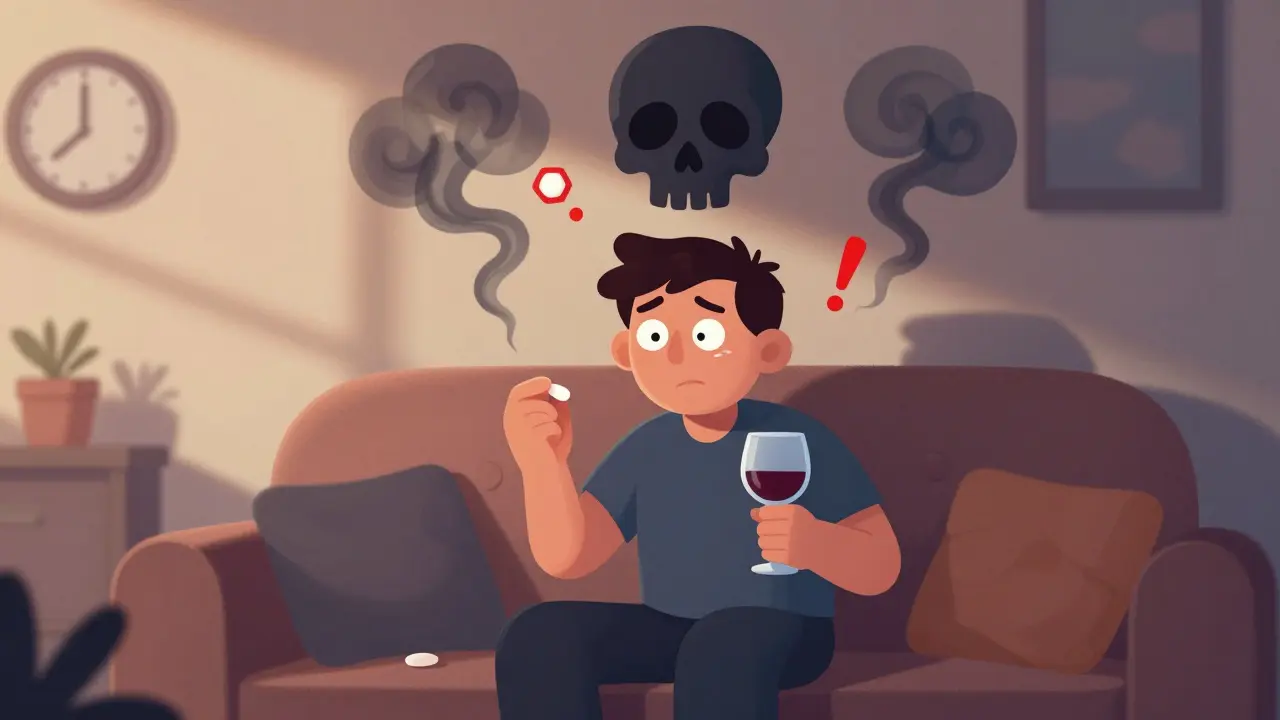
Every year, thousands of people end up in emergency rooms or worse because of something simple: they took two things that shouldn’t have been mixed. It’s not always illegal drugs. Sometimes it’s a prescription painkiller and a glass of wine. Or Xanax and a few beers after a long day. These combinations aren’t just risky-they can kill you faster than you think.
Why Some Drug Mixes Are Deadlier Than Others
It’s easy to think that if one drug is safe on its own, adding another won’t make much difference. But that’s not how your body works. When two substances interact, they don’t just add up-they multiply. The result? A dangerous surge in side effects that no one sees coming.
Take opioids and alcohol. Individually, both can cause drowsiness and slow breathing. Together? They can shut down your lungs completely. Research from the Journal of Clinical Pharmacology found that mixing opioids with alcohol increases the risk of respiratory depression by 4.5 times. That means if you’re taking oxycodone or hydrocodone for pain and have a drink, your body might stop breathing without warning. No scream. No struggle. Just silence.
This isn’t rare. The CDC found that in over half of all opioid overdose deaths, alcohol was also involved. And it’s not just heavy drinkers. Even one drink can push someone over the edge, especially if they’re not used to the medication. A Reddit user in Sydney shared how he almost died after having two beers while recovering from dental surgery. He was on oxycodone. He passed out. His roommate called an ambulance. He woke up in the hospital with naloxone still in his system.
The Silent Killer: Benzodiazepines + Opioids
If you’ve ever been prescribed Xanax, Valium, or Ativan for anxiety-or even sleep-you need to know this: combining them with opioids is one of the deadliest drug pairings in modern medicine.
Benzodiazepines are central nervous system depressants that calm brain activity. Opioids do the same. When you mix them, your brain’s breathing control center gets overwhelmed. The Substance Abuse and Mental Health Services Administration (SAMHSA) reports that 30.1% of opioid-related overdose deaths in 2020 also involved benzodiazepines.
Doctors used to prescribe these together all the time. Now, they’re avoiding it. In 2019, Medicare started forcing pharmacies to flag these combinations in their systems. The result? A 18% drop in co-prescribing within two years. But many people still get these drugs from different doctors or buy them online. That’s where the danger hides.
One user on a harm reduction forum described taking diazepam for anxiety and fentanyl for chronic pain. He didn’t think it was a problem-he’d done it before. One night, he didn’t wake up. His partner found him blue, not breathing. He survived because he had naloxone. Most don’t.
The Speedball: Cocaine + Heroin
You’ve probably heard of the "speedball"-a mix of cocaine and heroin. It sounds like a way to balance out highs and lows. But it’s a trap.
Cocaine is a stimulant. Heroin is a depressant. Together, they create a false sense of control. Your heart races from cocaine, but your breathing slows from heroin. Your brain thinks you’re fine. Your body is screaming for help.
National Institute on Drug Abuse (NIDA) reports that 50% of cocaine overdoses in 2021 involved heroin. That’s not coincidence. It’s a deadly pattern. The combination raises blood pressure to dangerous levels-sometimes over 180/110-and spikes heart rates to 160 beats per minute. It can trigger heart attacks, strokes, or sudden cardiac arrest.
And it’s not just heroin. Cocaine mixed with any opioid-fentanyl, methadone, even prescription painkillers-carries the same risk. Fentanyl is now in 6 out of 10 illegal pills, according to the DEA. That means someone thinking they’re taking cocaine might be getting a lethal dose of fentanyl without knowing it.
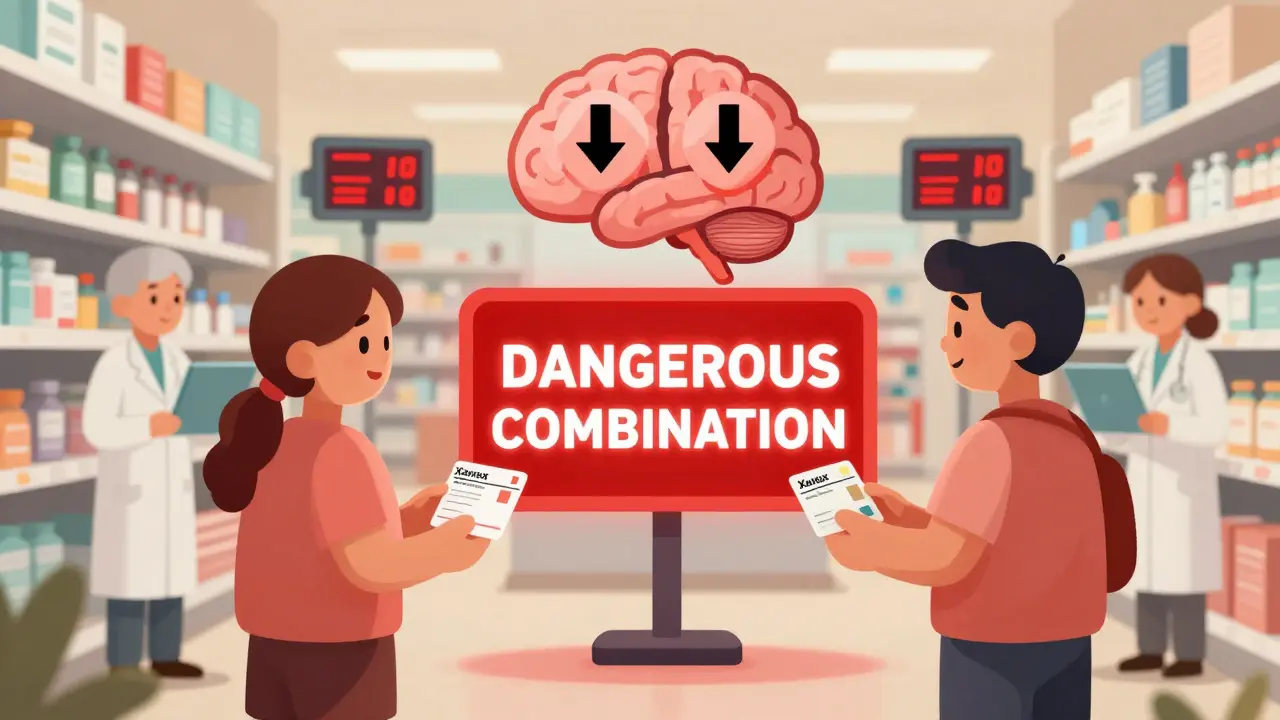
Cocaethylene: The Hidden Poison in Alcohol + Cocaine
Here’s something most people don’t know: when you mix alcohol and cocaine, your liver creates a new toxin called cocaethylene a metabolite that’s more toxic than either drug alone.
It lasts longer in your body than cocaine. It’s harder on your heart. And it increases your chance of dying right after use by 25%. Symptoms? Severe chest pain, irregular heartbeat, seizures, vomiting blood. One study found that 65% of chronic users of this combo had liver damage.
People think, "I can handle my drinks. I can handle my coke." But cocaethylene doesn’t care about your tolerance. It forms no matter how much or how little you take. And it doesn’t show up on standard drug tests, so users don’t realize they’re poisoning themselves.
Antidepressants and Alcohol: A Quiet Danger
It’s not just opioids and street drugs. Even your daily medication can turn deadly with a glass of wine.
Duloxetine (Cymbalta) is commonly prescribed for depression and nerve pain. Mixing it with alcohol increases liver toxicity risk by 40%. Venlafaxine (Effexor) lowers your body’s ability to process alcohol, making overdose more likely. The Journal of Clinical Psychopharmacology showed a 25% drop in the threshold for fatal alcohol poisoning in people on venlafaxine.
And buprenorphine? Used to treat opioid addiction. Sounds safe. But combine it with alcohol and you risk dropping your blood pressure below 90/60, slowing your breathing to under 10 breaths per minute, and slipping into a coma. The SA Health Department warns: "The more alcohol in your body, the less heroin you need to overdose." That rule applies to buprenorphine too.
What You Can Do
Knowing the risks isn’t enough. You need to act.
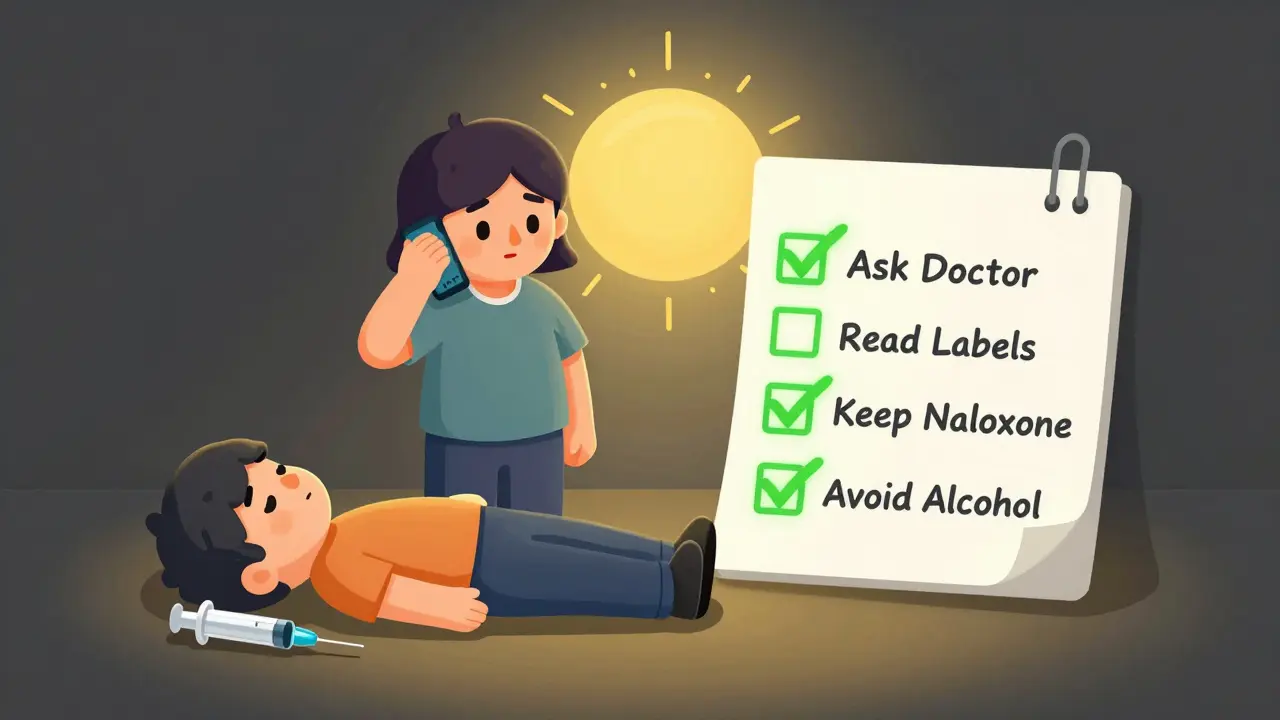
- If you’re on opioids, benzodiazepines, or certain antidepressants, avoid alcohol completely-even one drink.
- Don’t assume your doctor knows everything you’re taking. Tell them about supplements, over-the-counter meds, and recreational use.
- Keep naloxone at home if you or someone you know uses opioids. It saves lives. Many pharmacies now sell it without a prescription.
- Use drug interaction checkers like WebMD or Medscape before mixing anything-even natural remedies.
- If you’re using street drugs, assume everything is laced with fentanyl. No exceptions.
Harm reduction isn’t about judgment. It’s about survival. In communities where people were given naloxone kits and clear warnings about drug combinations, overdose deaths dropped by 22%. That’s not magic. That’s knowledge.
What’s Changing
There’s progress. The FDA now requires opioid labels to warn about alcohol and benzodiazepine risks. AI tools in electronic health records are being rolled out to catch dangerous combinations before they’re prescribed. In 2023, SAMHSA launched a national campaign to raise awareness-and calls to poison control centers jumped 27%.
But the biggest change needs to happen in your hands. If you’re taking medication, read the label. Ask questions. Don’t be embarrassed. And if you’re worried about someone, speak up. One conversation could save a life.
Can I have one drink if I’m on painkillers?
No. Even one standard drink can significantly increase the risk of respiratory depression when combined with opioids. The interaction isn’t linear-it’s exponential. What feels like a small amount can be enough to stop your breathing. The safest choice is zero alcohol.
Is it safe to mix Xanax and alcohol if I only take them occasionally?
No. Benzodiazepines and alcohol both depress your central nervous system. Even occasional use can lead to blackouts, falls, car accidents, or sudden respiratory failure. There is no safe level of mixing. The risk doesn’t decrease with frequency-it compounds.
What should I do if I accidentally mixed dangerous drugs?
Call emergency services immediately. Don’t wait for symptoms. If the person is unconscious, not breathing, or turning blue, give naloxone if available and start CPR. Do not try to "sleep it off." Time is critical. Many people die because they waited too long to get help.
Are herbal supplements safe to mix with prescription drugs?
Not always. St. John’s Wort can interfere with antidepressants. Kava can enhance sedation when mixed with benzodiazepines. Even garlic and ginkgo can increase bleeding risk with blood thinners. Always check with your pharmacist before adding any supplement to your routine.
Why do some people not realize they’re at risk?
Because they’ve done it before and lived. That’s the trap. The body builds tolerance, so users think they’re in control. But each time they mix drugs, the risk rises. One time might be luck. The next time could be fatal. There’s no way to predict who will survive.
Where can I get naloxone in Australia?
Naloxone is available without a prescription at most pharmacies across Australia. You can ask for it at the counter. Some community health centers and needle and syringe programs also provide it for free. It’s safe, easy to use, and can bring someone back from an overdose.




Comments(15)