
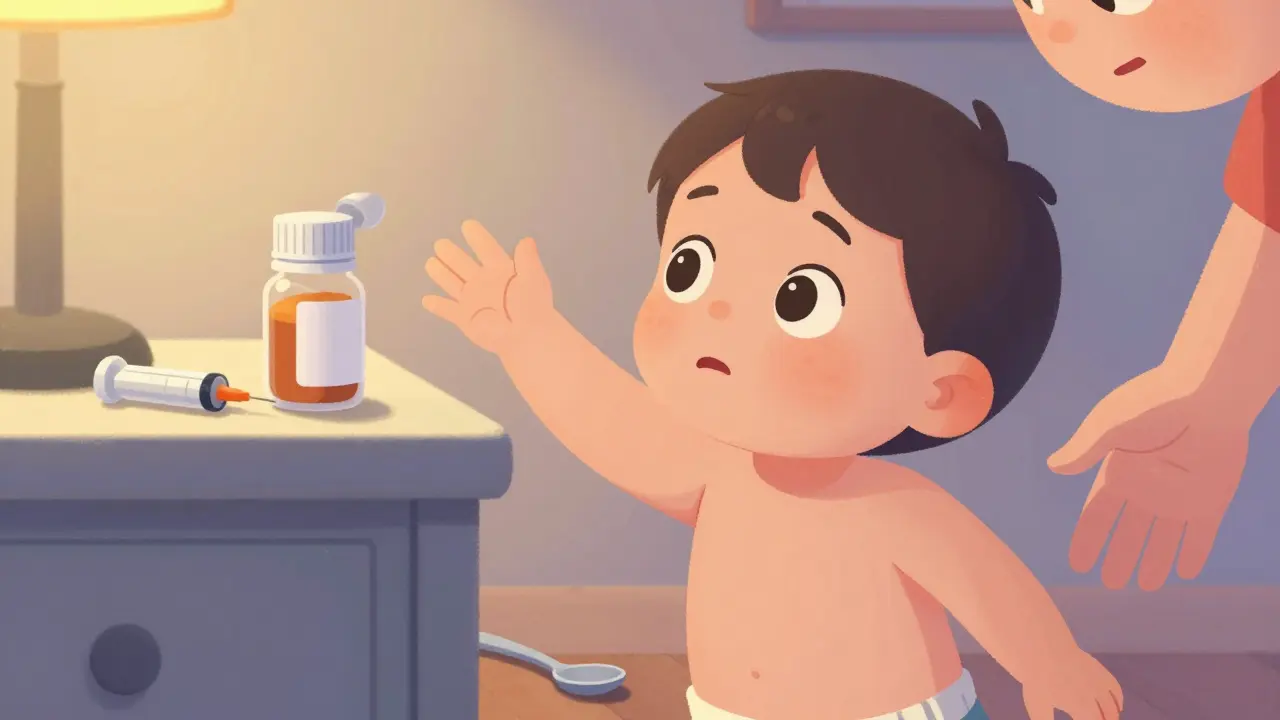
Every year, tens of thousands of children under five end up in emergency rooms because they got into medicine they weren’t supposed to. It’s not because parents are careless-it’s because medicine is everywhere, and kids are curious. A bottle left on the nightstand. A teaspoon used instead of the dosing cup. Confusion between infant and children’s acetaminophen. These aren’t rare mistakes. They’re common, preventable, and often deadly.
Why This Happens More Than You Think
Children under five are natural explorers. They put things in their mouths to learn about the world. That’s normal. What’s not normal is leaving medicine within reach. According to CDC data, emergency visits for accidental pediatric overdoses spiked to 76,000 in 2010-and while numbers have dropped since, they’re still far too high. Liquid medications are the biggest culprit: acetaminophen and diphenhydramine alone account for over 40% of cases.One of the biggest problems? Dosing. A 2022 study found that nearly 80% of medication errors involved liquid drugs, and most of those happened because caregivers used kitchen spoons. A tablespoon isn’t 15 mL. A teaspoon isn’t 5 mL. Kitchen spoons vary by brand, size, and how full you fill them. Even small mistakes can lead to overdose.
Another hidden danger? Different concentrations. Infant drops of acetaminophen are more concentrated than children’s liquid. One wrong squirt-and you’ve given your toddler three times the dose they should get. Parents don’t always notice the difference until it’s too late.
The PROTECT Initiative: A Real Solution in Action
In 2008, the CDC launched the PROTECT Initiative to tackle this crisis head-on. It’s not just a slogan. It’s a three-part system that’s working.First, packaging. Child-resistant caps aren’t enough. The best ones require a twist-and-push motion that makes a distinct click. That click matters. But here’s the catch: not all medications have it. Flow restrictors-small plastic inserts that limit how much liquid can pour out-are now required on most pediatric liquids, but some manufacturers still skip them.
Second, labeling. Since 2019, federal rules require all pediatric liquid meds to use milliliters (mL) only. No more teaspoons or tablespoons. That’s huge. 95% of manufacturers now comply. But if you’re still seeing "1 tsp" on a bottle, it’s outdated. Throw it out or ask your pharmacist for a new one.
Third, education. The Up and Away and Out of Sight campaign isn’t just a poster. It’s a rule: keep all meds in a locked cabinet, at least 4 feet off the ground. Not on the counter. Not in the purse. Not in the bathroom. Locked. And don’t forget: child-resistant doesn’t mean child-proof. About 10% of kids can open those caps by age 3.5. That’s not a flaw in the design-it’s a fact of child development.
What You Can Do Right Now
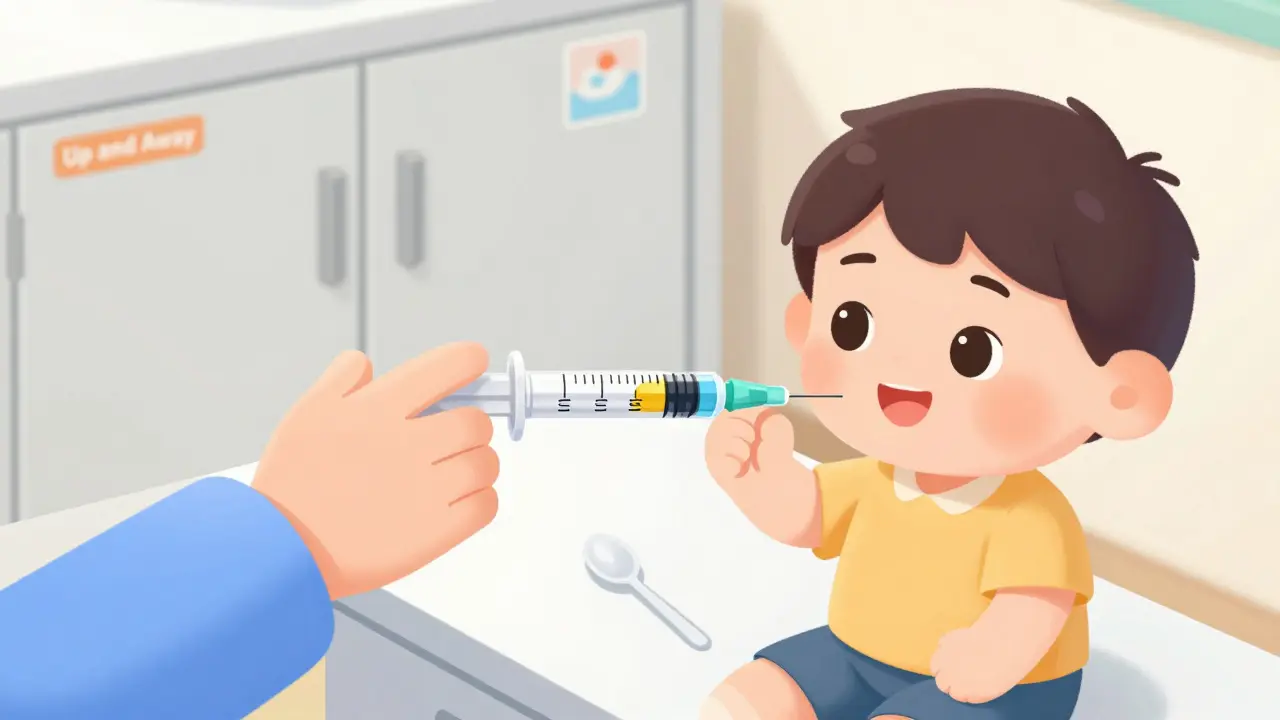
You don’t need a PhD to keep your child safe. Just follow these steps:- Use only the dosing tool that comes with the medicine. No spoons. No syringes from other bottles. Use the one designed for that specific product.
- Store meds locked and high. A cabinet with a child lock is ideal. If you don’t have one, use a high shelf in a closet with a latch. Even a plastic storage bin with a lid works if it’s out of reach.
- Read the label twice. Check the concentration. Check the dose. Check the measurement. If it says "infant drops," don’t use the children’s liquid bottle.
- Dispose of old meds properly. Don’t flush them. Don’t toss them in the trash. Take them to a pharmacy drop box or a local take-back event. If neither is available, mix pills with coffee grounds or cat litter, seal them in a bag, and throw them away. Liquid meds? Pour them down the drain only if the label says it’s safe.
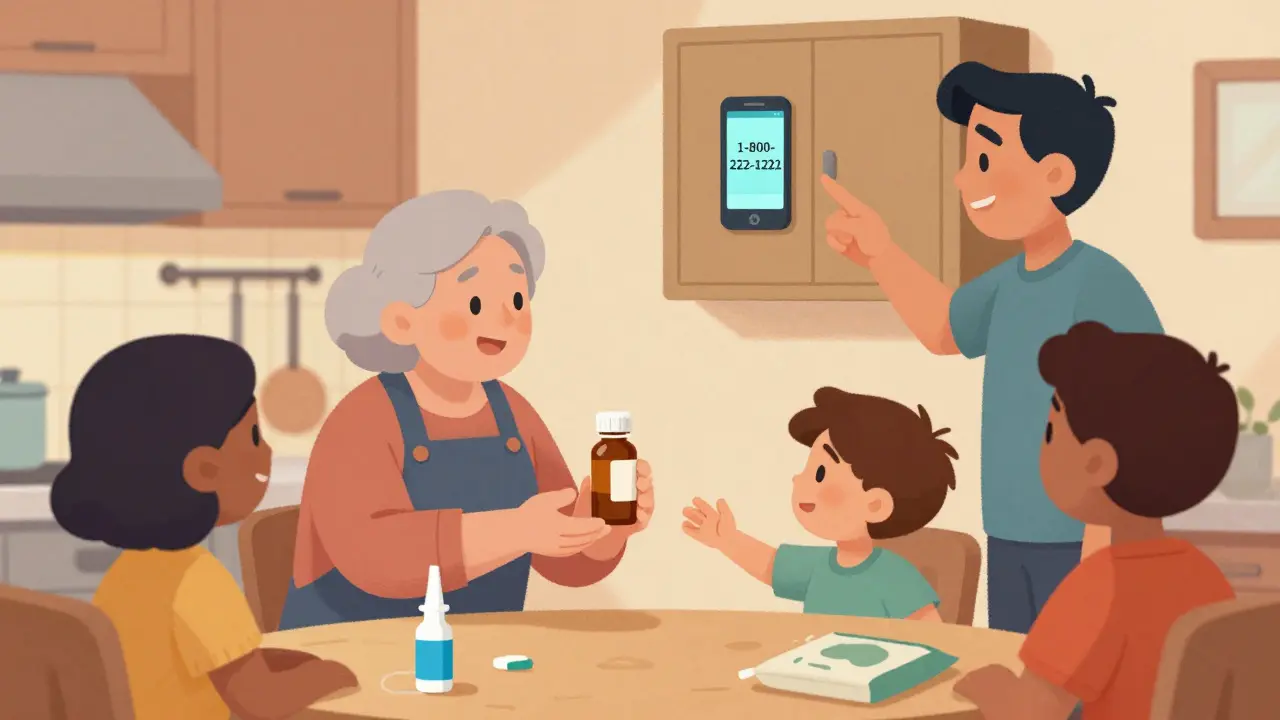
- Know the poison control number. Save 1-800-222-1222 in your phone. It’s free, confidential, and available 24/7. Call before you wait for symptoms.
What to Do If Your Child Swallows Something They Shouldn’t
If you think your child took medicine they shouldn’t, don’t wait. Don’t call your pediatrician first. Don’t Google it. Call poison control immediately.While you wait for help, gather this info:
- What was taken? (Name of medicine, if you can read the label)
- How much? (Estimate if you’re not sure)
- When? (Time of ingestion)
- How much does your child weigh?
- Any symptoms? (Sleepiness, vomiting, rapid breathing, unresponsiveness)
For opioid overdoses-like if your child got into pain meds-naloxone can save their life. The American Academy of Pediatrics now recommends co-prescribing naloxone with every opioid prescription for kids. If you’ve been given naloxone, know how to use it. Intranasal spray is easiest: one spray in each nostril. You don’t need to be a medic. The device guides you.
Don’t try to make your child vomit. Don’t give them milk or charcoal unless instructed. Just get help.
Why Most Prevention Programs Fail (And How to Avoid It)
Many families think they’re doing enough because they use child-resistant caps. But only 58% of households use them correctly. And only 32% store meds in locked cabinets. Why? Because it’s inconvenient. It’s easy to forget.Here’s the truth: prevention isn’t about being perfect. It’s about building habits. Put the meds away the second you finish giving them. Make it part of your routine, like washing hands after using the bathroom. Set a reminder on your phone: "Meds in cabinet."
And don’t assume others are doing it right. Grandparents, babysitters, visitors-they might leave meds on the nightstand because they’re used to it. Talk to them. Show them where you store yours. Make it normal.
What’s Next? Better Tools, Better Systems
The future is coming. By 2025, the FDA will require flow restrictors on all liquid opioid prescriptions. The CDC plans to expand the Up and Away campaign into 12 new languages by 2026. And a new guide from the American Society of Health-System Pharmacists will give doctors clearer rules for pediatric medication safety.But the biggest change won’t come from regulation. It’ll come from you.
Every locked cabinet. Every dosing syringe used correctly. Every call to poison control. Every conversation with a grandparent. That’s what stops overdoses.
Medicine saves lives. But when it’s not handled right, it can take them. The difference between safety and tragedy isn’t luck. It’s what you do today.
Can child-resistant caps really keep my toddler out of medicine?
No, they can’t guarantee safety. Child-resistant caps are designed to slow down kids, not stop them. Testing shows that about 10% of children can open them by age 3.5. That’s why the PROTECT Initiative recommends storing meds in locked cabinets-caps are just one layer of protection, not the whole system.
Is it safe to use a kitchen spoon to measure liquid medicine?
No. Kitchen spoons vary in size and shape. A tablespoon can hold anywhere from 12 to 20 mL. A teaspoon can be as little as 3 mL. The dosing tool that comes with the medicine is calibrated to deliver the exact amount. Using anything else risks underdosing or overdosing-both can be dangerous.
What should I do if my child takes an opioid like oxycodone?
Call 911 immediately and give naloxone if you have it. Naloxone reverses opioid overdoses and is safe for children. Use the intranasal spray: one spray in each nostril. Even if you’re unsure if it’s an opioid, give it anyway. It won’t harm them if they didn’t take opioids. Then keep giving rescue breaths if they’re not breathing until help arrives.
Are there apps or devices that help prevent dosing errors?
Yes, devices like Hero Health’s automated dispenser track doses and lock meds until it’s time. But they’re expensive and not covered by insurance. For most families, the cheapest and most effective tool is still the dosing syringe that comes with the medicine-and storing it in a locked cabinet.
How do I know if I’m giving the right dose of acetaminophen?
Always check the concentration on the label. Infant drops are 80 mg per 0.8 mL. Children’s liquid is 160 mg per 5 mL. Never swap them. Use the dosing tool that came with the bottle. Write the date you opened it on the bottle. Most liquid meds expire 3-6 months after opening. If you’re unsure, ask your pharmacist.
Where can I safely dispose of old or expired medicine?
Look for a drug take-back box at your local pharmacy, hospital, or police station. Many communities have drop-off days twice a year. If you can’t find one, mix pills with coffee grounds or cat litter, seal them in a plastic bag, and throw them in the trash. For liquids, pour them down the sink only if the label says it’s safe. Otherwise, mix with an unappetizing substance and seal before disposal.
Should I keep naloxone at home if I don’t use opioids?
Yes. Opioids are found in many homes-prescribed for injuries, surgeries, or dental work. Even if you don’t use them, a visitor or grandparent might. Naloxone is safe, easy to use, and can save a life. Many pharmacies now sell it without a prescription. Keep one in your medicine cabinet and make sure caregivers know where it is.
How often should I check my medicine cabinet?
Every 3 months. Check for expired meds, missing bottles, or new prescriptions that might be out of place. If your child had a recent illness, get rid of leftover antibiotics or cough syrup. Unused meds are the biggest risk. If you’re unsure whether to keep it, throw it out.



Comments(15)