
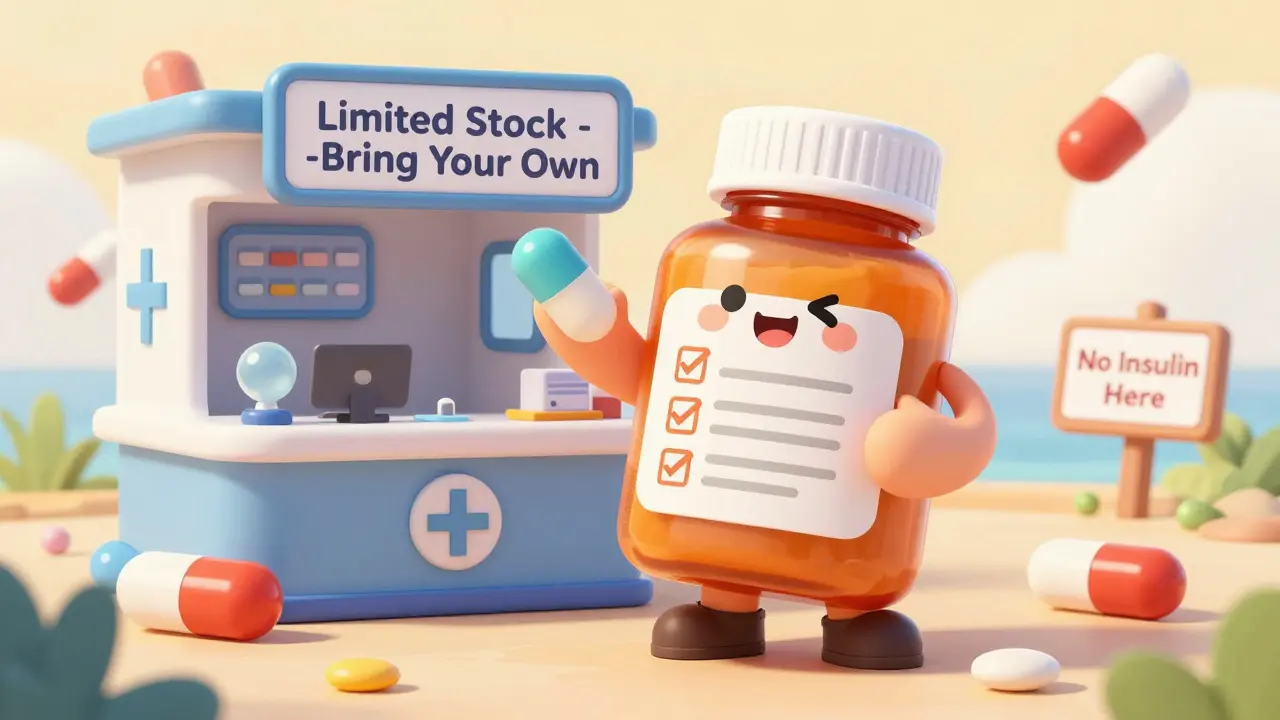
When you’re out on the open ocean, the last thing you want is to run out of your regular medication. Cruise ship medical centers aren’t hospitals-they’re infirmaries. That means they can handle seasickness, minor cuts, colds, or stomach bugs, but they won’t have your specific blood pressure pill, insulin, or anxiety med unless you brought it yourself. Most cruise lines stock only the most common medications, and even then, prices can be three times what you’d pay at home.
What You Can Actually Get Onboard
Cruise ship pharmacies carry a limited selection of drugs, mostly for immediate, common issues. You’ll usually find:- Antacids and anti-nausea meds for upset stomachs
- Seasickness pills (often free)
- Antibiotics like amoxicillin or azithromycin for infections
- Pain relievers like ibuprofen or acetaminophen
- Antihistamines for allergies
- Basic diabetes supplies (insulin is rare and only in emergencies)
Forget specialty meds. If you take something like biologics for rheumatoid arthritis, ADHD stimulants, or opioids for chronic pain, don’t count on the ship having them. Storylines, a residential cruise line, is an exception-they offer compounding and stock more niche drugs, but even they require you to submit prescriptions 6 to 12 months in advance. For everyone else, assume your meds aren’t available.
Why Bringing Your Own Meds Isn’t Optional
A 2023 survey of over 500 cruise passengers found that 78% who brought enough medication for the full trip plus 3-5 extra days had zero issues. Meanwhile, 63% of those who brought unlabeled pills or didn’t pack extras got stuck when a port visit got canceled or the ship’s pharmacy ran out.Here’s what you need to do:
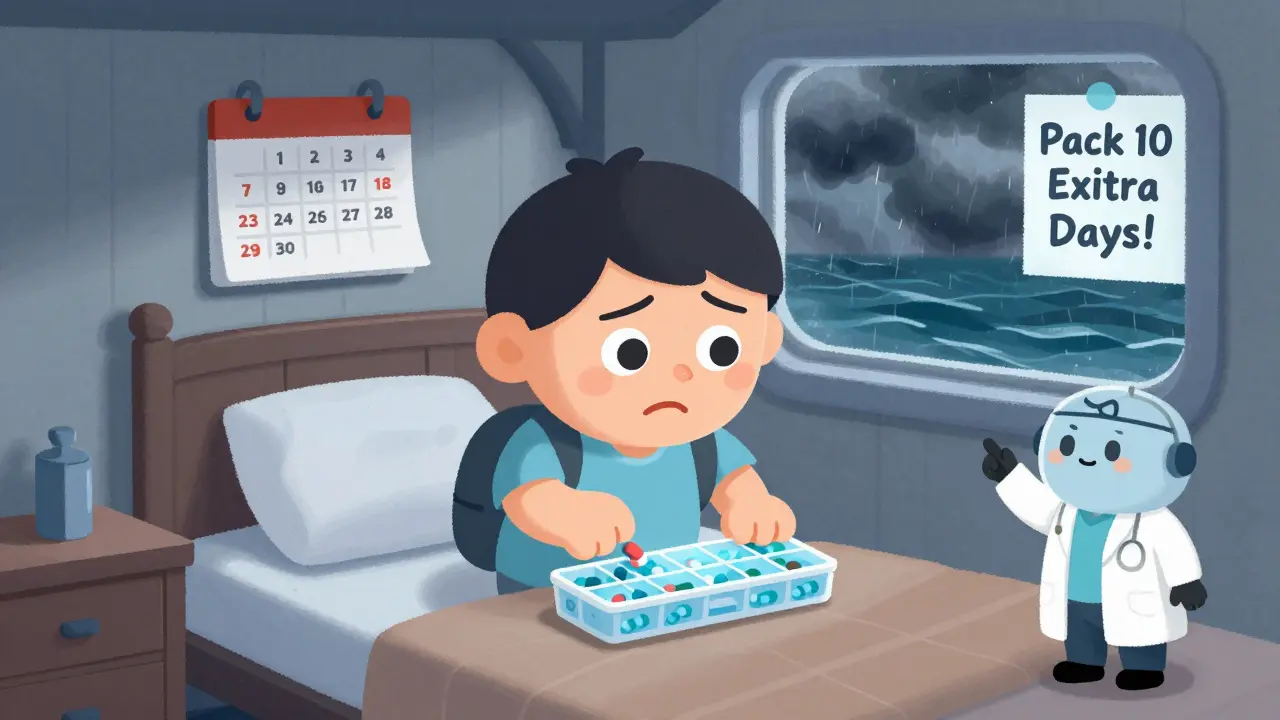
- Bring at least a 10-day supply beyond your return date. Delays happen. Weather, mechanical issues, or port closures can add days to your trip.
- Keep all prescriptions in their original bottles with your name and the doctor’s info clearly visible. Security and customs agents will ask to see them.
- Make sure the name on your prescription bottle matches your passport exactly. No nicknames, no initials-full legal name.
- Pack meds in your carry-on. Checked bags can get lost, delayed, or stolen. If your meds are in your suitcase and it doesn’t show up, you’re out of luck.
- Carry a printed list of your medications, dosages, and why you take them. If you’re diabetic, include a doctor’s note for insulin. If you use a CPAP, bring distilled water and an extension cord-Storylines recommends this, and even regular cruise lines won’t provide it.
Costs Are Higher Than You Think
If you do need to buy something onboard, expect to pay more. A typical antibiotic like amoxicillin might cost $30-$40 on the ship. At your local pharmacy? $5-$15. That’s a 200-300% markup. The reason? Logistics. Ships can’t stock everything, so they order small batches at a premium. Plus, they don’t have the same bulk purchasing power as land-based pharmacies.Some cruise lines, like Disney, are stricter about what they dispense. They require all prescriptions to be in labeled bottles with the pharmacy’s original label. Others are looser-but that doesn’t mean they’ll have what you need.
What Happens If You Run Out?
If you run out of your medication and the ship doesn’t have it, you’re stuck. Port pharmacies might be open-but not always. A 2023 report from Cruise Critic showed that 23% of medication emergencies happened because a port pharmacy was closed due to weather or local holidays. And if you’re in the middle of the Atlantic? No pharmacies nearby.Some ships now offer telemedicine. Royal Caribbean’s 2024 updates allow doctors to consult with shore-based specialists. But even that won’t get you a new prescription unless your doctor back home approves it and sends it electronically-which most can’t do across international borders for controlled substances.
Special Cases: Diabetes, CPAP, and Controlled Substances
If you have diabetes, insulin is your top priority. Most cruise lines won’t carry it. Even if they do, it’s only for emergencies. You must bring your own. Pack extra syringes, test strips, and batteries. Bring a doctor’s note explaining why you need insulin-it helps if you’re questioned by security.CPAP users need to plan ahead too. The ship won’t supply distilled water for your machine. Bring your own. And bring an extension cord-many cabins don’t have outlets near the bed.
Narcotics? Forget it. Even if you have a valid prescription for oxycodone or hydrocodone, cruise lines like Storylines say these are only available in “minimal quantities and only in extreme emergencies.” No refills. No extras. If you need them for chronic pain, you’ll need to manage without them-or consider a different vacation.
What Cruise Lines Actually Stock (And What They Don’t)
The American College of Emergency Physicians sets minimum standards. All ships with over 100 passengers must carry:- Advanced cardiac life support drugs (epinephrine, amiodarone, etc.)
- Antibiotics for common infections
- Medications for high blood pressure and heart rhythm issues
- Antihistamines, anti-nausea, and pain relief
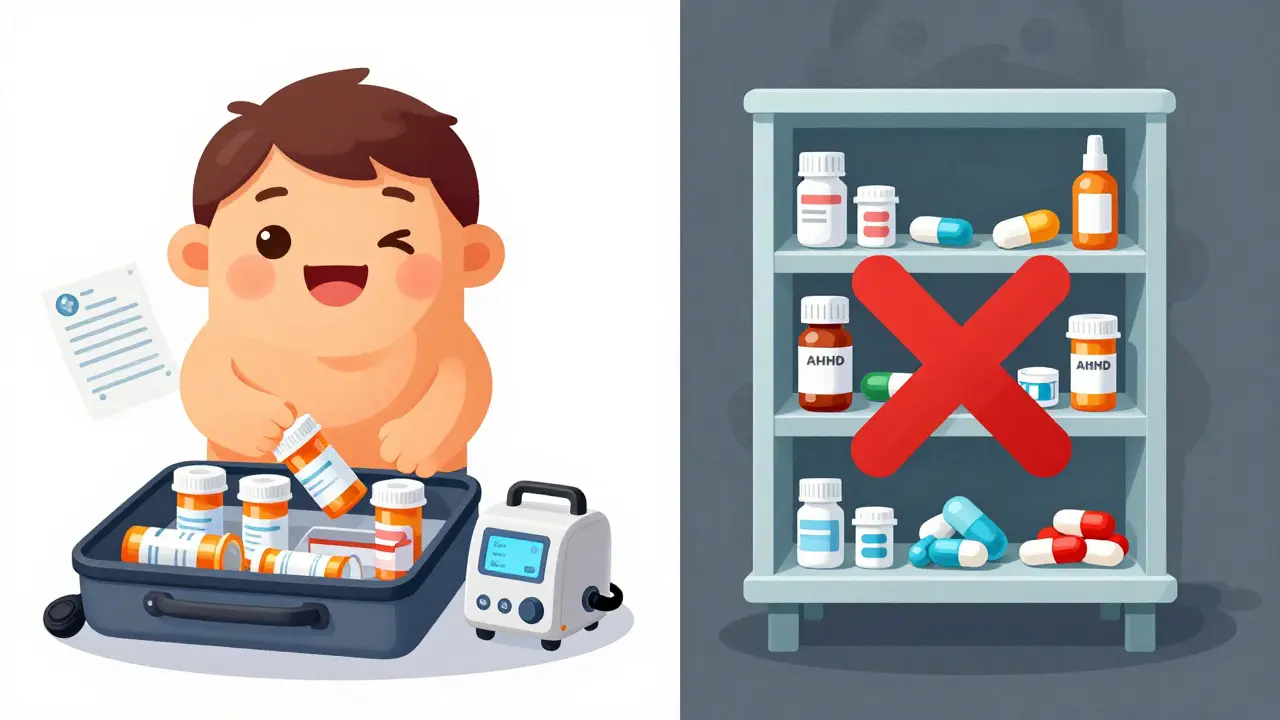
But beyond that? It’s up to the cruise line. Smaller ships carry 50-70 different drugs. Larger ones like Royal Caribbean’s Oasis-class might carry 100-120. But none of them carry:
- Insulin (except in emergencies)
- Biologics (Humira, Enbrel, etc.)
- Stimulants (Adderall, Ritalin)
- Narcotics (oxycodone, codeine, tramadol)
- Psychiatric meds (SSRIs, benzodiazepines)
- Birth control pills
And if you’re taking any of those? You’re responsible for bringing enough.
Pro Tips From Real Passengers
- One Reddit user, u/CruiseMedFail, ran out of blood pressure meds on day 7 of a 14-day cruise. The next port’s pharmacy was closed. He had to skip the shore excursion and stay onboard. His advice? “Bring 90 days’ worth if you’re going on a long trip.” - A TripAdvisor reviewer said the free seasickness pills saved their first day. “We didn’t even know they were available 24/7 until we asked.” - Another passenger got flagged by security because her pills were in a pill organizer. She had to show her prescription bottle from the pharmacy-luckily, she had it in her carry-on.Final Rule: Assume Nothing
Cruise ship medical centers are not your backup pharmacy. They’re emergency rooms with a few shelves of meds. Don’t rely on them. Don’t hope they’ll have your drug. Don’t assume your doctor’s office can fax a prescription halfway across the ocean.Your job is simple: bring enough. Bring it in the original bottles. Bring extra. Bring documentation. And if you’re unsure? Call your cruise line’s medical department. Ask directly: “Do you carry [medication name]?” If they say no-or don’t know-then you already have your answer.
Traveling by cruise is wonderful. But your health shouldn’t be left to chance. Plan ahead. Pack smart. And enjoy the voyage without worrying about what’s missing in the medicine cabinet.




Comments(9)