When a migraine hits, you don’t want to waste time guessing which pill will work-and which might make things worse. Three main classes of acute migraine meds are now widely used: triptans, gepants, and ditans. Each helps stop a migraine in its tracks, but they come with very different safety profiles. Choosing the right one isn’t just about speed or effectiveness-it’s about what your body can handle.
Triptans: Fast, But Not for Everyone
Triptans like sumatriptan (Imitrex), rizatriptan (Maxalt), and almotriptan (Axert) have been the go-to for decades. They work fast-often cutting pain in half within an hour. That’s why they’re still used in over 60% of acute migraine cases. But their mechanism comes with trade-offs. They activate serotonin receptors that narrow blood vessels in the brain, which stops migraine pain. But that same effect can tighten blood vessels elsewhere. That’s why people with heart disease, uncontrolled high blood pressure, or a history of stroke shouldn’t use them. The American Academy of Family Physicians is clear: if you have cardiovascular risks, triptans are off the table. Side effects are common, and they’re not always mild. About 1 in 6 people feel chest tightness or pressure. That’s not a heart attack, but it’s scary enough to make people quit. Tingling in the hands or face, dizziness, fatigue, and flushing are also frequent. One study found that 40% of users who inject sumatriptan get pain at the injection site. Nasal sprays leave a bitter aftertaste for about 1 in 4. Still, not all triptans are equal. Almotriptan and frovatriptan cause fewer side effects than others. And while serious problems like heart attacks are rare-studies show no significant increase in risk-the fear alone makes many patients avoid them.Gepants: The Gentle Alternative
Gepants like ubrogepant (Ubrelvy) and rimegepant (Nurtec ODT) work differently. Instead of squeezing blood vessels, they block CGRP, a protein involved in migraine pain signaling. This means they don’t affect your heart or arteries. That’s why they’re now recommended as a safer first choice for people with heart conditions. Their side effect profile is much cleaner. Nausea happens in only 4-6% of users. Drowsiness affects about 2-4%. Hypersensitivity reactions are rare-less than 1 in 1,000. In user reviews on Drugs.com, rimegepant scores 7.1 out of 10, with many saying, “No chest pressure like with triptans.” The catch? They’re slower. Triptans often work in 30-60 minutes. Gepants can take 2 hours or more to fully kick in. But they last longer. Rimegepant stays active for 10-12 hours, which means fewer headaches coming back later. That’s why many users report better relief at 24 and 48 hours. One thing to watch: rimegepant can interact with strong CYP3A4 inhibitors like ketoconazole or grapefruit juice. That can raise drug levels in your blood and increase side effects. Your doctor should check your other meds before prescribing it.Ditans: Effective, But Sedating
Lasmiditan (Reyvow) is the only ditan approved so far. It targets a different serotonin receptor (5-HT1F) that doesn’t affect blood vessels at all. So, it’s safe for people with heart problems-no vasoconstriction risk. But here’s the problem: it hits your brain hard. In clinical trials, 18.8% of users on the 100mg dose felt dizzy. Nearly 1 in 10 had tingling or numbness. Over 7% were so sleepy they couldn’t function. Others reported vertigo, muscle weakness, and even blurred thinking. The FDA requires a black box warning: you cannot drive or operate machinery for at least 8 hours after taking it. A 2021 study showed driving skills were impaired even 5 hours after dosing. On Reddit, users describe it as “feeling drunk without alcohol.” One person wrote, “Felt completely out of it for 6 hours. Can’t function at work.” It’s also not for people with seizure disorders, even though actual seizure cases are rare. The theoretical risk is enough that doctors avoid it unless other options fail.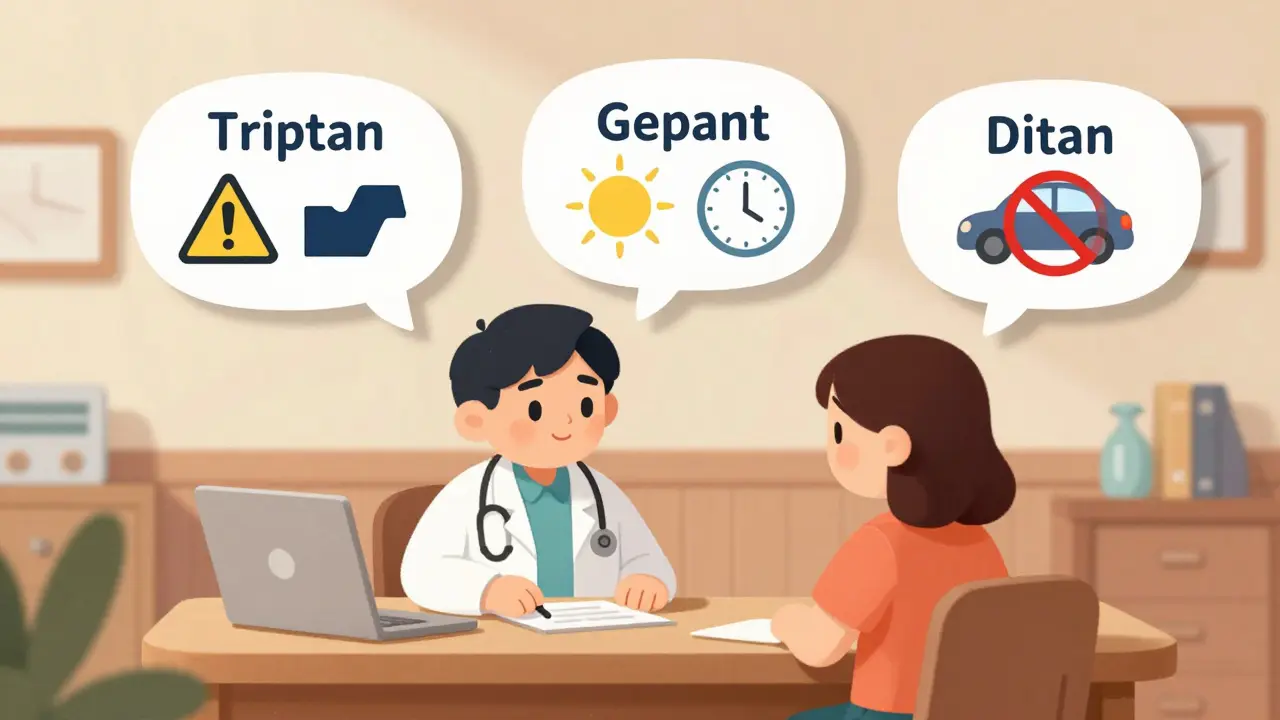
Safety Head-to-Head
A major 2021 analysis of 64 trials involving over 46,000 people gives us the clearest picture yet:- Ditans had the highest risk of any side effect-almost 3 times more than placebo.
- Triptans came next, with moderate risk, especially for chest tightness and dizziness.
- Gepants had the lowest risk of any class. Almost as safe as a placebo.
| Medication Class | Speed of Relief | Cardiovascular Risk | Common Side Effects | Best For |
|---|---|---|---|---|
| Triptans | Fast (30-60 min) | High (contraindicated in heart disease) | Chest tightness, dizziness, tingling, fatigue | People without heart issues who need quick relief |
| Gepants | Slower (1-2+ hours) | Very low | Nausea, drowsiness (rare) | People with heart conditions, long-lasting relief needed |
| Ditans | Fast (60-90 min) | None | Dizziness, sedation, vertigo, impaired coordination | Heart patients who can’t drive after taking it |
Real-World Experience
Real people aren’t just numbers in trials. On Drugs.com, triptans average a 6.4/10. Half of users say they help-but nearly half quit because of side effects. Gepants score higher at 7.1/10. Ditans lag at 5.8/10, with most complaints about feeling “zombie-like.” Reddit’s r/Migraine community has over 70 posts in a single month about triptan side effects. Only about 40 mention gepants, and just 30 focus on ditans. But the ditans threads are full of warnings: “Don’t take this before work.” “I couldn’t stand up.” “Felt like I’d had too much wine.” Doctors agree. Dr. Elizabeth Loder from Harvard says triptans still offer the best overall benefit-risk balance-for those who can use them. Dr. Rami Burstein adds that ditans are too sedating for most people who need to get back to daily life.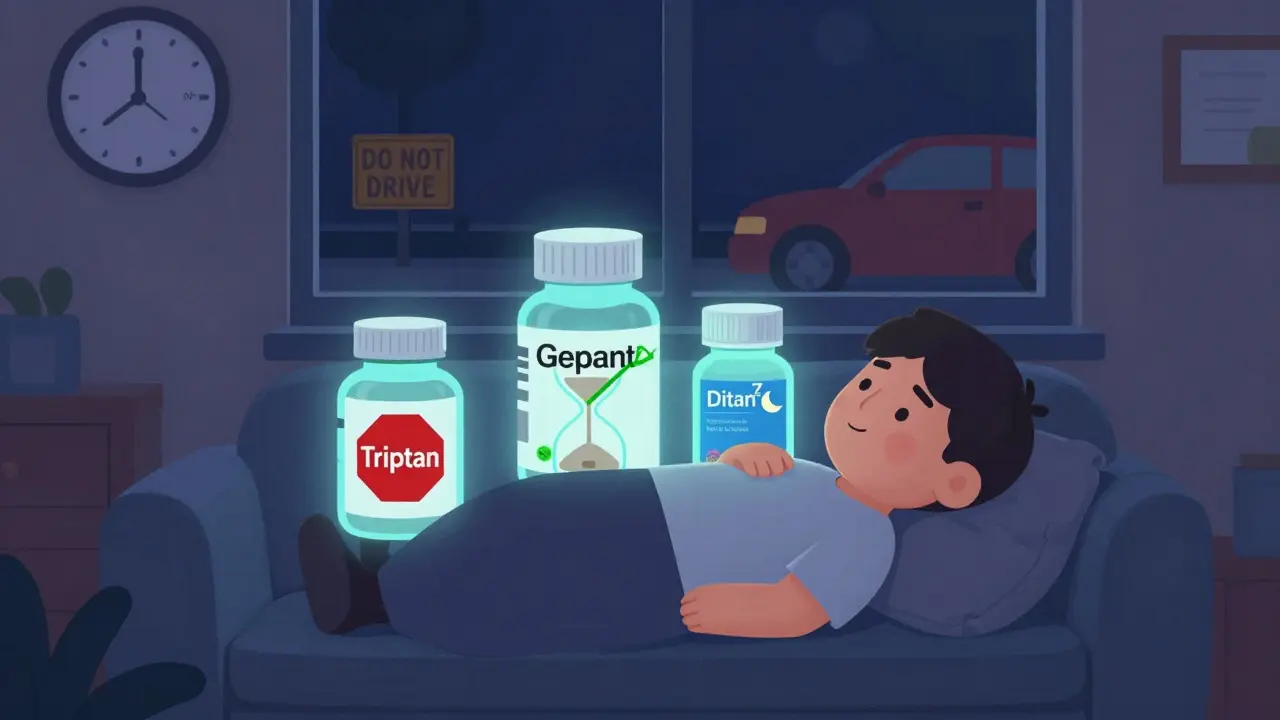
What You Should Do
If you’re on triptans and they’re working without side effects, stick with them. They’re proven, affordable, and fast. If you have heart disease, high blood pressure, or just hate the chest tightness, switch to a gepant. Rimegepant even comes as a dissolvable tablet you can take with food-no water needed. Only consider ditans if you’ve tried everything else and your doctor says it’s safe. And if you do, plan your day around it. No driving. No working. No responsibilities for at least 8 hours.What to Watch Out For
- Don’t take triptans within 24 hours of ergotamine or dihydroergotamine. The combination can cause dangerous blood vessel narrowing.
- Don’t mix rimegepant with ketoconazole, clarithromycin, or grapefruit juice. It can spike drug levels.
- Never drive after taking lasmiditan. The law says you can’t. The science says you shouldn’t.
- Report any chest pain, confusion, or seizures after taking any of these meds. Even if it seems minor.
What’s Coming Next
Zavegepant, a new nasal spray gepant, just finished testing in 2023. It works fast like a triptan but without the heart risk. Approval could come in 2025. Long-term data is still limited. Only rimegepant has two years of safety data. For everyone else, we’re still learning. The bottom line? Migraine treatment is no longer one-size-fits-all. Your safety matters as much as your pain relief. Talk to your doctor about your heart health, your job, your driving habits, and your tolerance for drowsiness. The right med isn’t the one that works fastest-it’s the one you can live with.Are triptans safe if I have high blood pressure?
No. Triptans cause blood vessels to narrow, which can be dangerous if you have uncontrolled high blood pressure, heart disease, or a history of stroke. They’re contraindicated in these cases. Gepants are a safer alternative because they don’t affect blood vessels.
Can I drive after taking a ditan like Reyvow?
No. The FDA requires a strict warning: you must not drive, operate machinery, or engage in any activity requiring full alertness for at least 8 hours after taking lasmiditan. Dizziness, sedation, and impaired coordination are common and can last that long. Even if you feel fine, your reaction time may still be slowed.
Why do gepants take longer to work than triptans?
Triptans act directly on blood vessels in the brain, which quickly reduces pain signals. Gepants block a protein called CGRP that spreads migraine pain, but this process takes longer to interrupt the full cycle. Most people feel relief in 1-2 hours with gepants, compared to 30-60 minutes with triptans. However, gepants often provide longer-lasting relief.
Do gepants cause liver damage?
No. Clinical trials and post-market monitoring show no evidence of liver damage from gepants like ubrogepant or rimegepant. Liver enzymes remain stable in users over time. This is one reason they’re preferred over older migraine drugs like ergotamines, which carried liver toxicity risks.
Is it safe to use these medications more than 10 days a month?
Using any acute migraine medication more than 10 days a month can lead to medication-overuse headaches. This applies to triptans, gepants, and ditans alike. If you’re hitting that mark, talk to your doctor about preventive options-like daily gepants (e.g., atogepant) or CGRP antibodies-instead of relying on rescue pills.
Which migraine medication has the fewest side effects?
Gepants have the lowest rate of side effects overall. In clinical trials, they were nearly as safe as placebo. The most common issue is mild nausea, affecting fewer than 6% of users. Drowsiness and dizziness are rare. For people who want relief without feeling off-balance or unsafe, gepants are currently the best option.
Can I take a ditan and a gepant together?
No. Combining ditans and gepants isn’t recommended. There’s no proven benefit, and the combined risk of dizziness, sedation, or other CNS effects could be dangerous. Stick to one acute treatment per migraine episode. If one doesn’t work, wait and try again later-don’t stack them.
If you’ve tried one of these meds and it didn’t work-or gave you side effects-you’re not alone. Many people cycle through options before finding what fits. Keep a log: note what you took, when, how long it took to work, and how you felt afterward. That’s the best tool your doctor has to find your perfect match.