

When you're managing type 2 diabetes, choosing the right medication isn't just about lowering blood sugar. It’s about finding something that works with your life - not against it. For many people, that means picking between three main oral or injectable drugs: metformin, sulfonylureas, and GLP-1 receptor agonists. Each has different effects, side effects, costs, and long-term impacts. Knowing how they compare can help you make smarter decisions with your doctor.
Metformin: The Long-Standing Starter
Metformin has been the go-to first-line treatment for type 2 diabetes for decades. It’s not flashy, but it’s reliable. First approved in the U.S. in 1995, it works by reducing how much sugar your liver makes and helping your muscles use insulin better. You don’t gain weight on it - in fact, many people lose a few pounds. It also doesn’t cause low blood sugar on its own, which is a big plus.
Most people take it twice a day with meals to cut down on stomach issues like nausea or diarrhea. About 20-30% of users deal with these side effects early on, but they usually get better over time. Extended-release versions help a lot - they’re gentler on the gut and only need one daily dose.
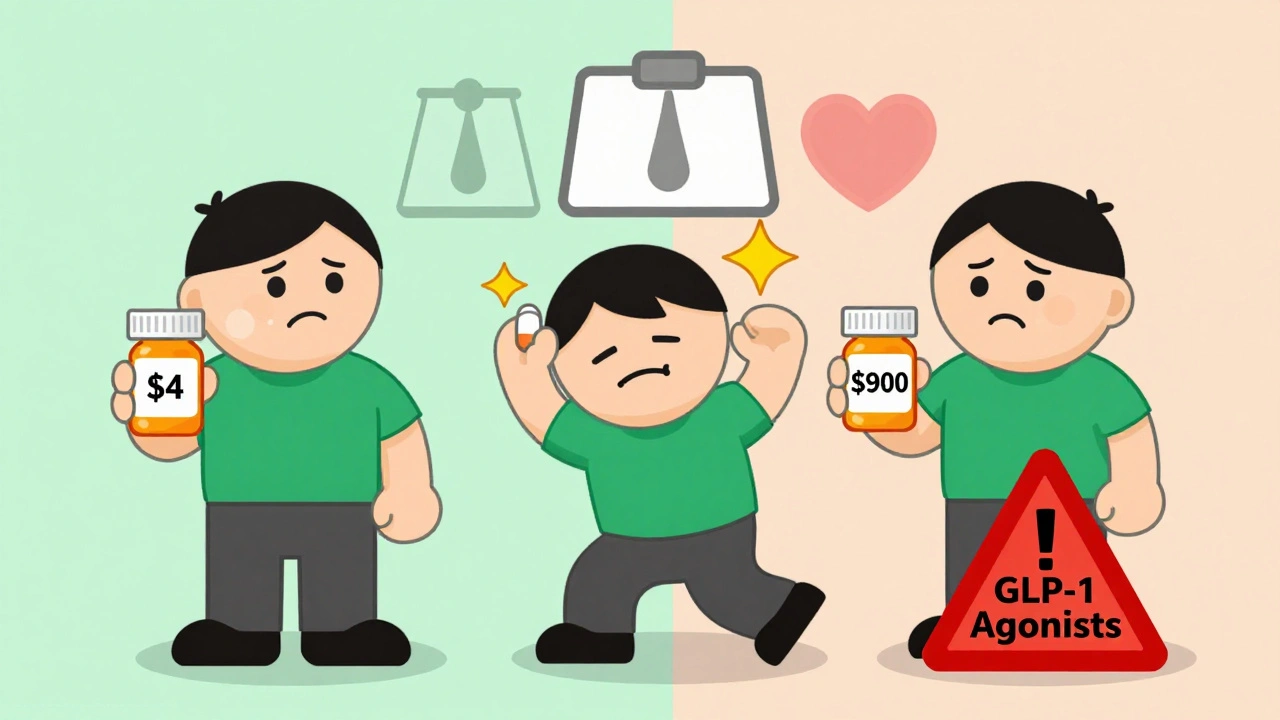
Metformin typically lowers A1C by 1.0% to 2.0%. That’s solid, especially when you consider it costs as little as $4 a month as a generic. It’s also been linked to lower heart disease risk and may even help with PCOS and weight management outside of diabetes.
But it’s not perfect. Some people just can’t tolerate it, no matter the brand or dose. One patient on a diabetes forum said, “I’ve tried every version - immediate, extended, different brands - and I still get constant diarrhea.” For those folks, metformin isn’t an option, even if it’s the textbook first choice.
Sulfonylureas: Old School, High Risk
Sulfonylureas like glipizide and glimepiride were the first oral diabetes drugs ever developed - back in the 1950s. They work by forcing your pancreas to pump out more insulin. That sounds powerful, and it is - they can lower A1C by 1.0% to 1.5%. But there’s a catch: they don’t care if your blood sugar is already low. They keep pushing insulin out anyway.
That’s why hypoglycemia is their biggest problem. About 15-30% of people on sulfonylureas have at least one mild to moderate low-blood-sugar episode every year. Severe episodes - the kind that need emergency help - happen in 2-4% of users annually. One Reddit user shared: “On glipizide for three years, had four ER visits for low blood sugar. I was passing out in parking lots.”
Another downside? Weight gain. Most people gain 2-4 kg (4-9 lbs) on these drugs. That’s the opposite of what most people with type 2 diabetes need. They also don’t protect your heart - some studies suggest they might even raise the risk over time.
Doctors still prescribe them because they’re cheap - $10 to $30 a month - and work fast. But guidelines now warn against using them as first-line therapy. The American College of Physicians says sulfonylureas increase hypoglycemia risk more than any other oral diabetes drug. If you’re older, have kidney issues, or live alone, the risks often outweigh the benefits.
GLP-1 Agonists: The New Power Players
GLP-1 receptor agonists - like semaglutide (Ozempic, Rybelsus), liraglutide (Victoza), and dulaglutide (Trulicity) - are a game-changer. They mimic a natural hormone that helps your body release insulin only when blood sugar is high. That means almost no risk of low blood sugar unless you’re also taking insulin or sulfonylureas.
They also slow digestion, so you feel full longer. That’s why most people lose 3-6 kg (7-13 lbs) on them. Some lose even more. One patient reported dropping from 7.8% A1C to 6.2% and losing 18 pounds in six months - without changing diet or exercise.
They also protect your heart. In major trials, liraglutide cut major heart events by 13%. Semaglutide showed similar results. They’re now recommended for people with heart disease, kidney disease, or heart failure - even if their A1C is already under control.
The catch? Side effects. Nausea, vomiting, and diarrhea affect 20-40% of users, especially when starting or increasing the dose. But most people adjust within 4-12 weeks. Slow dose escalation helps - doctors now recommend stepping up every four weeks instead of faster.
And then there’s the delivery. Most GLP-1s are injections. But in 2019, the FDA approved oral semaglutide (Rybelsus) - the first pill form. It’s not as strong as the shot, but it’s a big step forward for people who hate needles. Adherence is higher too - 78% stick with the pill versus 62% with injections.
How They Stack Up: Side by Side
Here’s how these three classes compare on key factors:
| Feature | Metformin | Sulfonylureas | GLP-1 Agonists |
|---|---|---|---|
| A1C Reduction | 1.0-2.0% | 1.0-1.5% | 0.8-1.5% |
| Weight Effect | Neutral or loss (2-3 kg) | Gain (2-4 kg) | Loss (3-6 kg) |
| Hypoglycemia Risk | Very low | High (15-30% per year) | Very low (unless combined) |
| Cardiovascular Benefit | Mildly protective | Neutral or negative | Strongly protective |
| Typical Cost (Monthly) | $4-$10 | $10-$30 | $650-$950 |
| Administration | Oral, 1-2x/day | Oral, 1-2x/day | Injection or oral pill |
| Common Side Effects | Diarrhea, nausea | Low blood sugar, weight gain | Nausea, vomiting, diarrhea |
Metformin wins on cost and safety. Sulfonylureas win on price and simplicity - but not much else. GLP-1 agonists win on outcomes: better blood sugar control, weight loss, heart protection, and fewer lows. But they’re expensive, and the side effects can be tough at first.
Who Gets What - And Why
Guidelines from the American Diabetes Association say metformin should be the starting point for most people. But that’s changing. If you have heart disease, kidney problems, or need to lose weight, GLP-1 agonists are now recommended as early as the second step - sometimes even first.
Here’s a simple way to think about it:
- If you’re young, healthy, and cost-sensitive - start with metformin.
- If you’ve had low blood sugar episodes, are older, or have trouble remembering to eat - avoid sulfonylureas.
- If you have heart disease, need to lose weight, or can’t tolerate metformin - talk to your doctor about GLP-1 agonists.
And don’t forget: you don’t have to stay on one drug forever. Many people start with metformin, then add a GLP-1 agonist if their A1C doesn’t budge. Others switch from sulfonylureas to GLP-1s after a scary low-blood-sugar event.

Real-World Challenges: Cost and Access
The biggest barrier to GLP-1 agonists isn’t science - it’s money. A month’s supply of Ozempic or Rybelsus can cost $700-$900 without insurance. Metformin? $4. Sulfonylureas? $10-$30.
Some manufacturers offer copay cards that bring the cost down to $0 for eligible patients. But not everyone qualifies. Medicare Part D often has high out-of-pocket costs for GLP-1s. In Australia, PBS subsidies cover some GLP-1s, but only for people with specific risk factors - not everyone.
That creates a huge gap. People with good insurance get the best drugs. Those without - or with high-deductible plans - are stuck with older, riskier options. A 2023 survey found that 60% of patients on GLP-1s said cost was a major stressor, even with assistance programs.
What’s Next?
The future of diabetes meds is moving fast. New triple agonists - like retatrutide - are in late-stage trials. They hit three targets at once: GLP-1, GIP, and glucagon. In early studies, they dropped A1C by 3.3% and led to over 24% body weight loss. That’s bigger than any current drug.
More oral GLP-1s are coming. Better delivery systems. Cheaper biosimilars expected by 2027. Experts predict GLP-1 agonists will become first-line for most people within five years - if prices come down.
For now, the choice comes down to your health goals, your budget, and your tolerance for side effects. There’s no one-size-fits-all. But knowing the trade-offs helps you ask the right questions - and push for the treatment that fits your life, not just your lab numbers.
Can I take metformin and a GLP-1 agonist together?
Yes, combining metformin with a GLP-1 agonist is common and often very effective. Many people start on metformin, then add a GLP-1 if their A1C doesn’t reach target. The two work in different ways - metformin reduces liver sugar, GLP-1s boost insulin only when needed and slow digestion. Together, they often lower A1C by 1.5-2.0% and promote weight loss without increasing low blood sugar risk.
Why do GLP-1 agonists cause nausea?
GLP-1 agonists slow down how fast food leaves your stomach. That’s good for feeling full and controlling blood sugar, but it can cause nausea, bloating, or vomiting - especially when you start or increase the dose. Most people get used to it within 4-12 weeks. Doctors now recommend starting with a low dose and increasing slowly every four weeks to reduce this side effect.
Are sulfonylureas still used today?
Yes, but less often. They’re still prescribed because they’re cheap and work quickly. However, guidelines now discourage them as first-line treatment due to high hypoglycemia risk and weight gain. They’re mostly used today in people who can’t afford newer drugs, or when other options haven’t worked. Many patients switch off them after experiencing low blood sugar episodes.
Is there an oral version of Ozempic?
Yes - it’s called Rybelsus. It’s the same active ingredient as Ozempic (semaglutide), but in pill form. It’s taken once daily on an empty stomach with a sip of water. It’s not as strong as the injection, but it’s a major convenience for people who dislike needles. Adherence is higher with the pill - 78% stick with it compared to 62% with injections.
Can GLP-1 agonists help with weight loss even without diabetes?
Yes. Drugs like semaglutide and liraglutide are now FDA-approved for weight management under brand names like Wegovy and Saxenda. They work by reducing appetite and slowing digestion. Many people without diabetes use them for weight loss - but they’re expensive and not always covered by insurance for that purpose.
What to Do Next
If you’re on metformin and tolerating it well - keep going. If you’re on sulfonylureas and having low blood sugar episodes - talk to your doctor about switching. If you’re struggling with weight or heart risk, ask about GLP-1 agonists.
Don’t accept side effects as normal. If metformin gives you constant diarrhea, ask about extended-release. If you’re gaining weight on a sulfonylurea, ask what else is available. If cost is stopping you from trying a GLP-1, ask about patient assistance programs or biosimilars coming soon.
Your diabetes management should fit your life - not the other way around. The right medication isn’t just the one that lowers your A1C. It’s the one you can stick with, safely and comfortably, for the long haul.






Comments(11)