
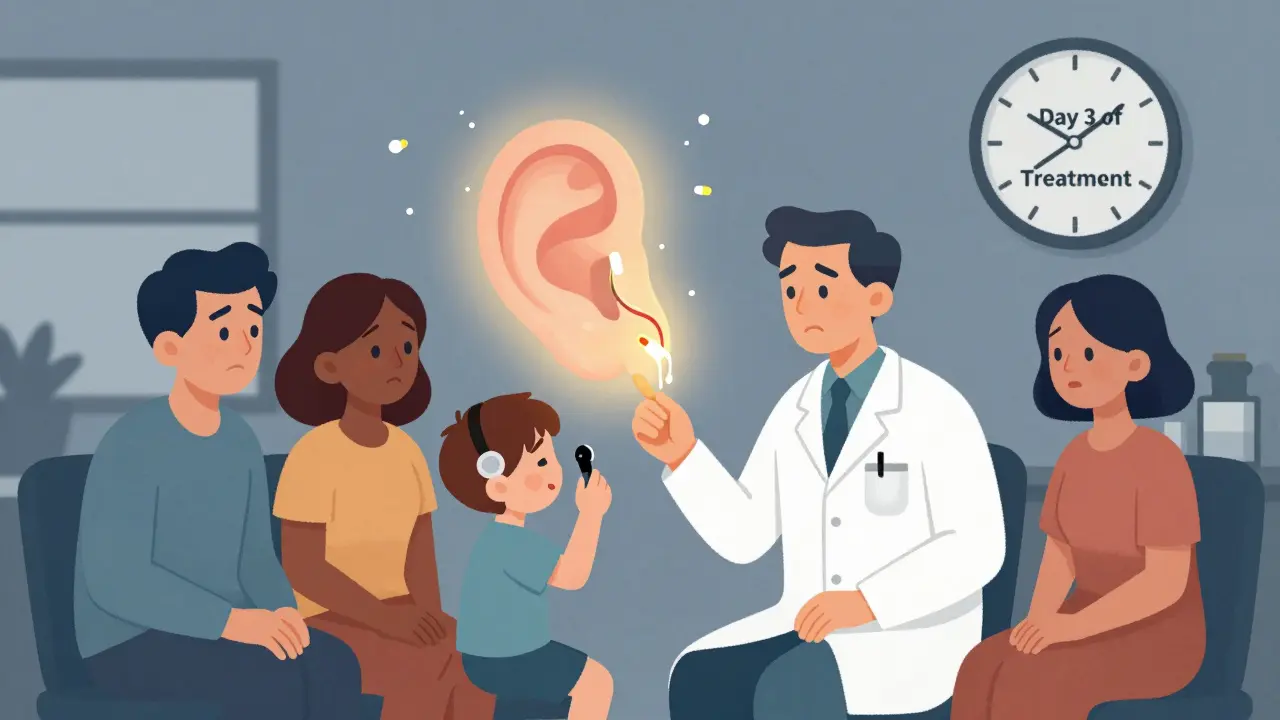
Every year, millions of people take medications that can quietly destroy their hearing. You might not realize it until it’s too late. A child treated for cancer, an elderly person fighting a stubborn infection, or someone on long-term antibiotics could be at risk - not from the disease they’re treating, but from the drug meant to cure it. This is ototoxicity: when common medicines damage the inner ear, leading to permanent hearing loss, ringing in the ears, or balance problems. It’s not rare. It’s not theoretical. It’s happening right now, and most people have no idea.
What Exactly Is Ototoxicity?
Ototoxicity means poison to the ear. These aren’t side effects you can ignore with a quick trip to the pharmacy. They’re structural, irreversible damage to the hair cells inside your cochlea - the tiny sensors that turn sound into electrical signals your brain understands. Once those cells die, they don’t come back. No amount of rest, supplements, or time will fix it.
The first documented case was in 1946, when doctors noticed patients on streptomycin for tuberculosis started losing their hearing. Since then, we’ve identified over 600 medications that can do the same. The damage usually starts at the high frequencies - the sounds you don’t even notice you’re missing until you can’t hear birds chirping, children’s voices, or the letter “s” in conversation. By the time standard hearing tests catch it, the damage is often already advanced.
Top Ototoxic Medications and Their Risks
Not all ototoxic drugs are created equal. Some are unavoidable, others have safer alternatives. Here are the biggest culprits:
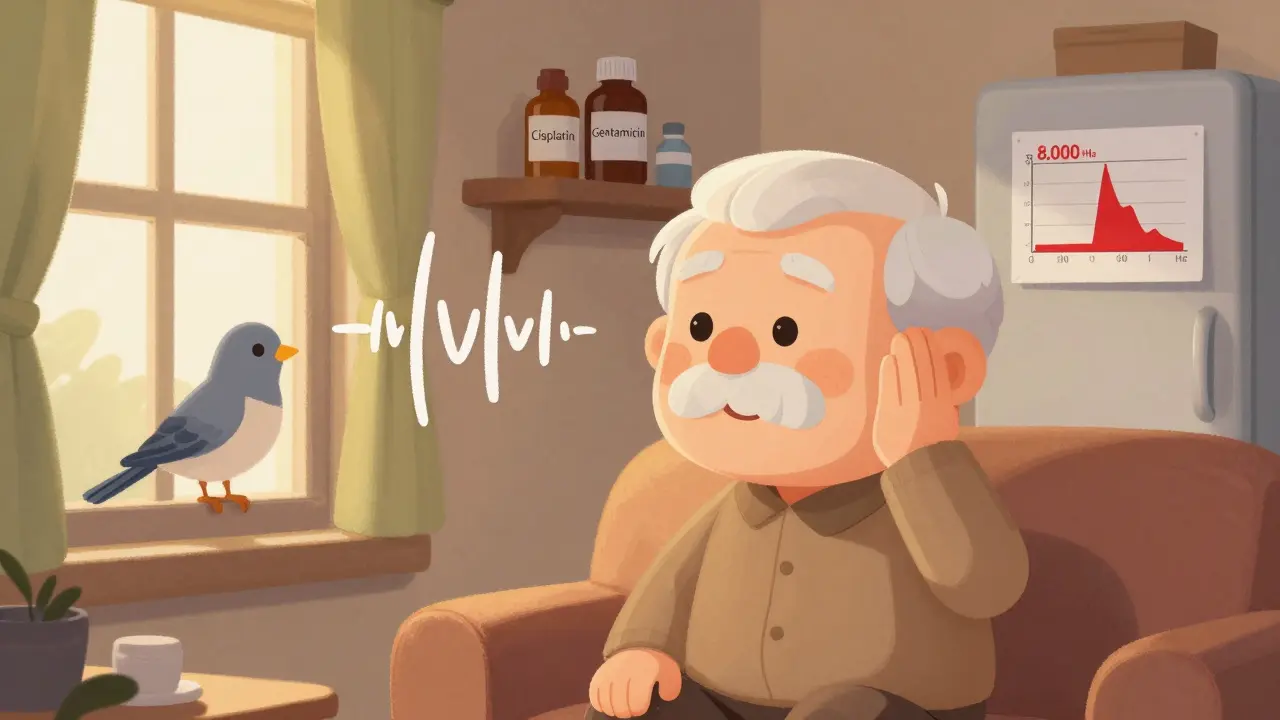
- Aminoglycoside antibiotics - Drugs like gentamicin, tobramycin, and amikacin are used for life-threatening infections like sepsis or drug-resistant TB. Between 20% and 63% of patients on multi-day courses suffer permanent hearing loss. The risk jumps sharply after seven days of treatment. These drugs attack the outer hair cells first, starting at 8,000 Hz and above - frequencies standard hearing tests rarely check.
- Cisplatin chemotherapy - Used for ovarian, lung, testicular, and other cancers, cisplatin affects 30% to 60% of patients. What’s worse, it lingers in the inner ear for months after treatment ends, slowly killing more hair cells. About 18% of patients end up with severe or profound hearing loss. Children are especially vulnerable - up to 35% show delays in speech and language development because their hearing loss wasn’t caught early.
- Other chemotherapy agents - Carboplatin and oxaliplatin are much safer, with ototoxicity rates under 15% and 5%, respectively. In some cases, switching from cisplatin to carboplatin is a viable option, though it may reduce cancer-fighting power.
- High-dose aspirin and NSAIDs - These can cause temporary tinnitus or hearing loss that reverses after stopping the drug. Still, chronic use can lead to lasting damage in sensitive individuals.
- Antidepressants - Tricyclics like amitriptyline and SSRIs like sertraline and fluoxetine have been linked to tinnitus and, in rare cases, hearing loss. The mechanism isn’t fully understood, but patients report ringing starting within days of beginning treatment.
One patient on Reddit described it perfectly: “I lost hearing at 6,000 Hz after my third cisplatin cycle. My oncologist said, ‘It’s not common.’ But the test they used only went up to 4,000 Hz. They missed it.”
How Ototoxicity Happens - The Science Behind the Damage
It’s not just one pathway. Different drugs wreck the ear in different ways:
- Oxidative stress - Cisplatin and aminoglycosides flood the inner ear with free radicals. These unstable molecules tear apart the delicate structures of hair cells, triggering cell death.
- Direct toxicity - Some drugs bind directly to ion channels in hair cells, disrupting the electrical signals needed to hear.
- Reduced blood flow - Certain medications narrow blood vessels feeding the cochlea, starving hair cells of oxygen.
- Neurotransmitter interference - Drugs like some antidepressants may alter how chemical messengers work in the auditory nerve.
The blood-labyrinth barrier, which normally protects the inner ear from toxins, breaks down under prolonged exposure. That’s why cumulative doses matter so much. A single dose of gentamicin might be safe. Ten doses? That’s a different story.
Why Standard Hearing Tests Miss the Early Warning Signs
Most clinics test hearing up to 4,000 Hz. That’s the standard. But ototoxic damage starts at 8,000 Hz and above. By the time hearing loss shows up at 4,000 Hz, you’ve already lost 50-70% of your high-frequency hearing. You might not notice it - until you can’t hear your phone ring, understand speech in noisy rooms, or follow conversations with kids.
Patients often report tinnitus first - a high-pitched ringing that doesn’t go away. For many, it’s the only early clue. Yet, many doctors don’t ask about it. Or worse, they dismiss it as stress or aging.
That’s why baseline testing with extended frequencies - up to 12,000 Hz - is critical. And it’s not optional. If you’re starting cisplatin or aminoglycosides, you need an audiogram before your first dose. Not after. Not when you start feeling weird. Before.
Monitoring Protocols That Save Hearing
Early detection can reduce severe hearing loss by 30-50%. But only if you’re monitoring correctly. Here’s what works:
- Baseline audiometry - Before any ototoxic drug starts, get a full hearing test that includes 8,000 Hz and 12,000 Hz. Most clinics won’t do this unless you ask.
- Regular follow-ups - For cisplatin: test after each cycle. For aminoglycosides: test after every 5-7 days of treatment. The American Academy of Audiology recommends testing every 1-2 weeks during continuous infusion.
- Otoacoustic emissions (OAE) - This test measures the sound your inner ear makes in response to a click. It detects hair cell damage before you lose hearing. OAE testing improves detection by 25% over standard audiograms.
- Vestibular testing - Some ototoxic drugs also damage balance. If you feel dizzy, unsteady, or nauseous, ask for a vestibular evaluation.
Integrated care makes a huge difference. When oncologists, infectious disease doctors, and audiologists talk to each other, severe hearing loss drops by 32%. But only 45% of U.S. cancer centers follow this protocol. If your hospital doesn’t offer it, ask. Push for it. Your hearing is worth it.

Genetic Risk and Personalized Prevention
Not everyone is equally at risk. A small group of people carry a genetic mutation - m.1555A>G or m.1494C>T - in their mitochondrial DNA. These mutations make them 100 times more likely to go deaf from a single dose of gentamicin or streptomycin.
It’s not routine to screen for this. But if you or a close relative have unexplained hearing loss after antibiotics, genetic testing could save future generations. The cost is under $200. The payoff? Avoiding lifelong deafness.
Some experts argue it’s not cost-effective for everyone. But if you’re about to start aminoglycosides and have a family history of hearing loss, this test could be the most important one you ever take.
What’s Being Done - New Hope on the Horizon
There’s progress. In November 2022, the FDA approved sodium thiosulfate (Pedmark) for children with liver cancer. It reduced cisplatin-induced hearing loss by 48%. It’s not a cure-all, but it’s the first drug approved specifically to protect hearing.
Researchers are testing antioxidants like N-acetylcysteine to shield hair cells from oxidative damage. Early trials show promise for aminoglycoside users.
And smartphone apps are coming. One at Oregon Health & Science University lets patients test their hearing at home using headphones. It detects changes at 8,000-12,000 Hz. If you’re on long-term treatment, you could monitor your hearing weekly without leaving your couch.
What You Can Do Right Now
If you’re prescribed any of these drugs:
- Ask your doctor: “Is this medication ototoxic?”
- Request a baseline audiogram before treatment starts - insist on testing up to 12,000 Hz.
- Ask for OAE testing - it’s non-invasive and catches damage earlier.
- Report tinnitus, dizziness, or muffled hearing immediately - don’t wait.
- If you’re a parent of a child on cisplatin, demand regular hearing checks. Language delays are preventable.
Don’t assume your doctor knows. Many don’t. The American Speech-Language-Hearing Association updated its guidelines in March 2023. But guidelines mean nothing if they’re not followed.
Your hearing isn’t replaceable. If you lose it, you can’t get it back. But you can protect it - if you know what to ask for.
Can ototoxic hearing loss be reversed?
No. Once the hair cells in your inner ear are destroyed, they do not regenerate. This makes ototoxic hearing loss permanent. The only way to prevent it is early detection and intervention - such as adjusting medication dosage, switching to a less ototoxic drug, or using protective agents like sodium thiosulfate in specific cases.
Do all antibiotics cause hearing loss?
No. Only certain classes are known to be ototoxic, primarily aminoglycosides like gentamicin, tobramycin, and amikacin. Other antibiotics like penicillin, cephalosporins, and even vancomycin have very low or negligible ototoxic risk. Vancomycin, for example, causes hearing loss in only 5-10% of patients, compared to 20-63% with aminoglycosides.
Why don’t doctors always test for ototoxicity?
Many doctors aren’t trained in audiology, and standard hearing tests only go up to 4,000 Hz - missing the early damage that occurs at 8,000 Hz and above. There’s also a lack of standardized protocols across hospitals. Only 45% of U.S. cancer centers follow formal ototoxicity monitoring guidelines, despite clear clinical recommendations.
Can I still take cisplatin if I’m worried about hearing loss?
Yes - but only with proper monitoring. Cisplatin is highly effective against many cancers. The key isn’t avoiding it, but protecting your hearing. Ask for a baseline audiogram before treatment, regular high-frequency testing during cycles, and consider sodium thiosulfate (Pedmark) if you’re a child or adolescent. Many patients keep their hearing with the right precautions.
Is tinnitus always a sign of ototoxic damage?
Not always, but it’s a major red flag when it starts after taking an ototoxic drug. Tinnitus is often the first symptom of inner ear damage - especially if it’s high-pitched, constant, and doesn’t go away. If it begins during or after treatment with cisplatin, gentamicin, or similar drugs, contact your audiologist immediately. Early action can prevent further damage.






Comments(9)