
Warfarin Dosing Calculator
This calculator estimates your appropriate warfarin dose based on your genetic profile. Understanding your CYP2C9 and VKORC1 variants can help reduce bleeding risk by up to 32%.
Genetic Factors
Dosing Information
Standard Starting Dose: 5-7 mg/day for most patients
Genetic Impact: Your variants determine how your body metabolizes warfarin and how sensitive you are to its effects.
Important: This calculator provides an estimate based on genetics only. Your doctor will consider your age, weight, diet, and other medications to determine your final dose.
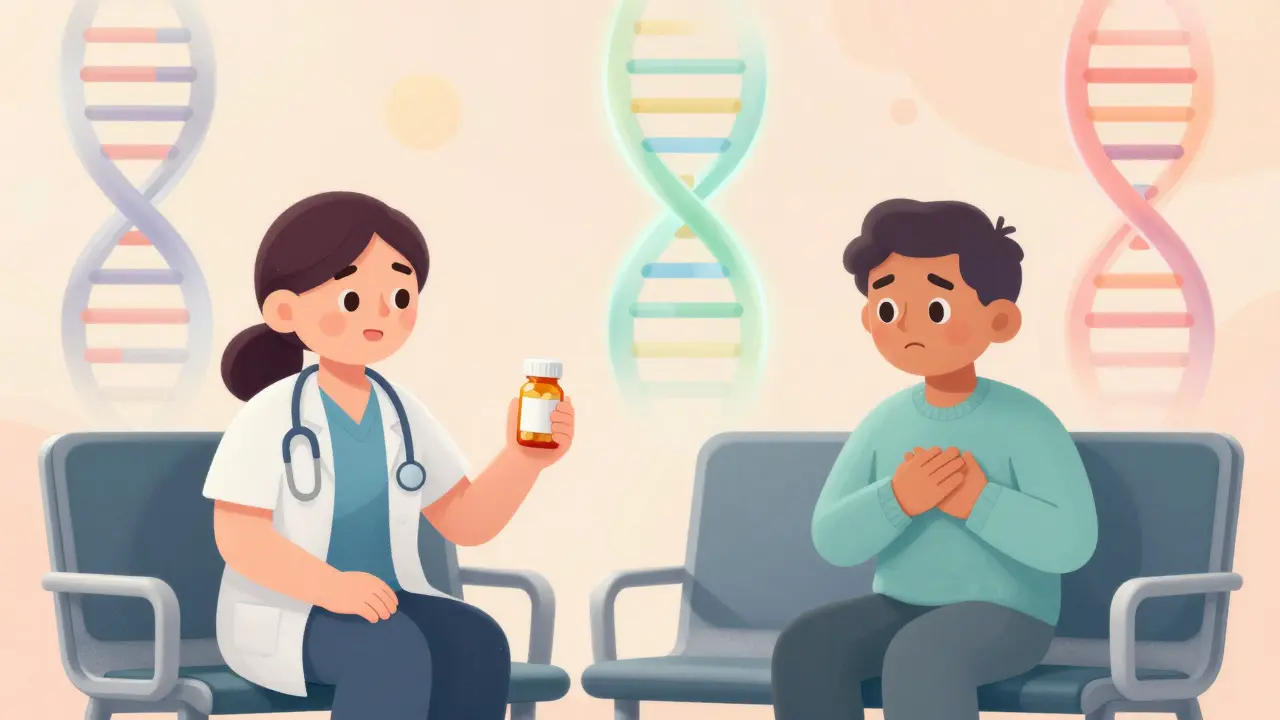
Imagine taking a medication where the dose that saves your life for one person could cause a dangerous bleed in another. That is the reality for millions of people on Warfarin is a vitamin K antagonist anticoagulant first synthesized in 1948 by Karl Paul Link at the University of Wisconsin and approved for medical use in 1954. While this blood thinner has been around for decades, we are finally understanding why it works differently for everyone. The answer lies in your DNA. Specifically, two genes-CYP2C9 is a cytochrome P450 enzyme responsible for metabolizing the more potent S-enantiomer of warfarin and VKORC1 is the target enzyme of warfarin, officially identified in 2004 by Li et al.-play a massive role in how your body handles the drug. If you are starting this medication, understanding your genetic profile could mean the difference between a stable treatment plan and an emergency room visit.
How Warfarin Works in Your Body
To understand why genetics matter, you first need to know what the drug actually does. Warfarin functions by inhibiting vitamin K epoxide reductase complex subunit 1, commonly known as VKORC1. This enzyme is essential for the vitamin K cycle, which activates clotting factors II, VII, IX, and X. Without these factors working properly, your blood clots more slowly. It sounds simple, but the process is delicate. A 2018 study in the journal Blood revealed that warfarin uncouples two specific enzymatic reactions within VKORC1. It stops the reduction of vitamin K epoxide to hydroquinone, effectively halting the production of active clotting proteins.
Because this mechanism is so specific, even small changes in how your body processes the drug can lead to big problems. If your body clears the drug too slowly, your blood becomes too thin, leading to bleeding. If it clears the drug too fast, your blood clots too easily, risking a stroke. This narrow window is why doctors monitor your INR is International Normalized Ratio, a measure of how long it takes your blood to clot regularly. However, standard dosing often misses the mark because it ignores the genetic blueprint that controls these enzymes.
The Two Key Genes: CYP2C9 and VKORC1
Most people think of genes as something you inherit, but in this context, they are instructions for your metabolism. The CYP2C9 gene produces an enzyme that breaks down warfarin. Specifically, it handles the S-enantiomer of the drug, which is five times more potent than the R-enantiomer. If you have variants like CYP2C9*2 or CYP2C9*3, your enzyme activity drops significantly. For instance, CYP2C9*3 carriers have enzyme function reduced to just 5-12% of wild-type function. This means the drug stays in your system much longer, increasing the risk of toxicity.
On the other side of the equation is VKORC1. This gene determines how sensitive your clotting system is to the drug. A specific polymorphism, VKORC1 -1639G>A, reduces the expression of the enzyme by about 40% in people with the AA genotype. If you have this variant, you need much less warfarin to achieve the same effect. Data from a 2017 meta-analysis shows this single gene accounts for 25-30% of the variability in warfarin dose requirements. When you combine low metabolism (CYP2C9) with high sensitivity (VKORC1), the dose needed can drop dramatically.
| Gene Variant | Effect on Function | Typical Dose Adjustment |
|---|---|---|
| VKORC1 -1639 AA | 40% reduced expression | Requires 5-7 mg/week vs 28-42 mg/week |
| CYP2C9*3 | 5-12% enzyme activity | 80% reduced clearance of S-warfarin |
| Wild Type (Normal) | Standard function | Standard starting dose |

Risks of Ignoring Your Genetic Profile
Why does this matter if your doctor can just adjust the dose over time? The danger lies in the first few weeks. This is the most critical period when serious bleeding events are most likely to occur. A landmark randomized trial called EU-PACT, published in The Lancet in 2013, showed that genotype-guided dosing reduces major bleeding events by 32% during the first 90 days. That is a massive reduction in risk. Without testing, patients often go through a trial-and-error phase where their INR swings wildly. Real-world data from 2018 shows that 68% of patients with CYP2C9 variants had at least one INR value above 4 during the first three months. That is compared to only 42% of non-carriers.
Patients often share stories of this rollercoaster online. One user on a health forum noted that after genetic testing revealed a CYP2C9*3 variant, their dose dropped from 5mg to 2.5mg, finally stabilizing their INR after months of instability. Another reported going to the ER with an INR of 6.2 because their doctor started them on a standard dose despite their VKORC1 genotype. These aren't just numbers; they represent hospital stays, anxiety, and physical harm that could have been avoided with a simple blood test.
The Testing Process and Cost
Getting tested is more straightforward than you might think. Standard genetic testing takes about 3-5 business days for results. The cost in the United States ranges from $250 to $500 as of mid-2025, though Medicare covers testing for eligible patients under specific CPT codes. In Australia and other regions with national healthcare, coverage varies, but the clinical value is increasingly recognized. The Clinical Pharmacogenetics Implementation Consortium (CPIC) has issued guidelines recommending this testing for patients requiring long-term anticoagulation. They categorize patients into low, intermediate, and high dose groups based on their genotype combinations.
Implementation is still a challenge. Only about 38% of primary care physicians correctly identify the impact of CYP2C9*3 on warfarin metabolism. However, hospitals like Vanderbilt University Medical Center have successfully integrated this into electronic health records. Their data showed that genotype-guided dosing reduced the time to reach a therapeutic INR by 1.8 days. This efficiency saves patients time and reduces the burden of frequent blood draws.

Warfarin vs. Direct Oral Anticoagulants
You might wonder if you should just switch to a newer drug. Direct oral anticoagulants (DOACs) like apixaban and rivaroxaban have become popular because they don't require INR monitoring and have fewer drug interactions. Warfarin use among newly diagnosed atrial fibrillation patients has indeed declined from 68% to 42% between 2010 and 2018. However, warfarin remains the preferred choice for patients with mechanical heart valves and severe renal impairment. Unlike DOACs, warfarin has a specific reversal agent (vitamin K) which can be crucial in emergency situations.
Even with the rise of DOACs, warfarin is not going away. A 2025 projection estimates that 60% of new warfarin initiations will include pharmacogenetic testing by 2030. As test costs drop below $100 by 2027, this will become standard practice. For the millions of people who still need warfarin, knowing your genetics is the safest way to start therapy. It transforms a guessing game into a precision treatment plan.
FAQ: Common Questions About Warfarin Genetics
Do I need genetic testing before starting warfarin?
Current guidelines from CPIC recommend testing for CYP2C9 and VKORC1 prior to initiation for patients needing long-term therapy. While not mandatory everywhere, evidence shows it reduces bleeding risk and stabilizes INR faster.
How much does the genetic test cost?
In the US, costs range from $250 to $500 as of 2025. Medicare covers eligible patients. In other countries, coverage depends on local health policies and insurance plans.
Can genetics change my dose significantly?
Yes. Patients with specific VKORC1 genotypes may need 5-7 mg per week, while others need 28-42 mg per week. This is a 60-70% difference in weekly dosage requirements.
Does warfarin interact with other medications?
Warfarin interacts with many drugs. Genetic testing helps predict metabolism speed, but you must still inform your doctor of all supplements and prescriptions to avoid interactions.
Is warfarin better than DOACs for everyone?
No. DOACs are often preferred for atrial fibrillation. Warfarin is essential for mechanical heart valves and severe kidney issues. Your doctor will decide based on your specific medical history.
How long does it take to get test results?
Standard turnaround time is approximately 3-5 business days. This allows for dosing adjustments before or shortly after starting the medication.
What if I already have bleeding issues?
If you have experienced bleeding, testing is even more critical. It helps identify if your metabolism is too slow, which is a common cause of supratherapeutic INR levels.
Can my dose change after the initial test?
Yes. Genetics set the baseline, but age, weight, diet, and other medications can still alter your needs over time. Regular INR monitoring remains necessary.
Is genetic testing covered by insurance?
Coverage varies. Medicare covers it for eligible patients. Private insurance often requires prior authorization. Many patients report frustration with coverage limitations.
Does age affect warfarin dosing?
Yes. Age is part of the dosing algorithm alongside genetics. Older adults often require lower doses due to slower metabolism and reduced liver function.
Understanding your genetic makeup is no longer just science fiction; it is a practical tool for safety. With the Warfarin Genotype Implementation Network (WaGIN) launching in 2025, we are moving toward a future where every patient gets the right dose from day one. If you are on warfarin, ask your doctor about CYP2C9 and VKORC1 testing. It could be the most important decision you make for your heart health.





Comments(10)