
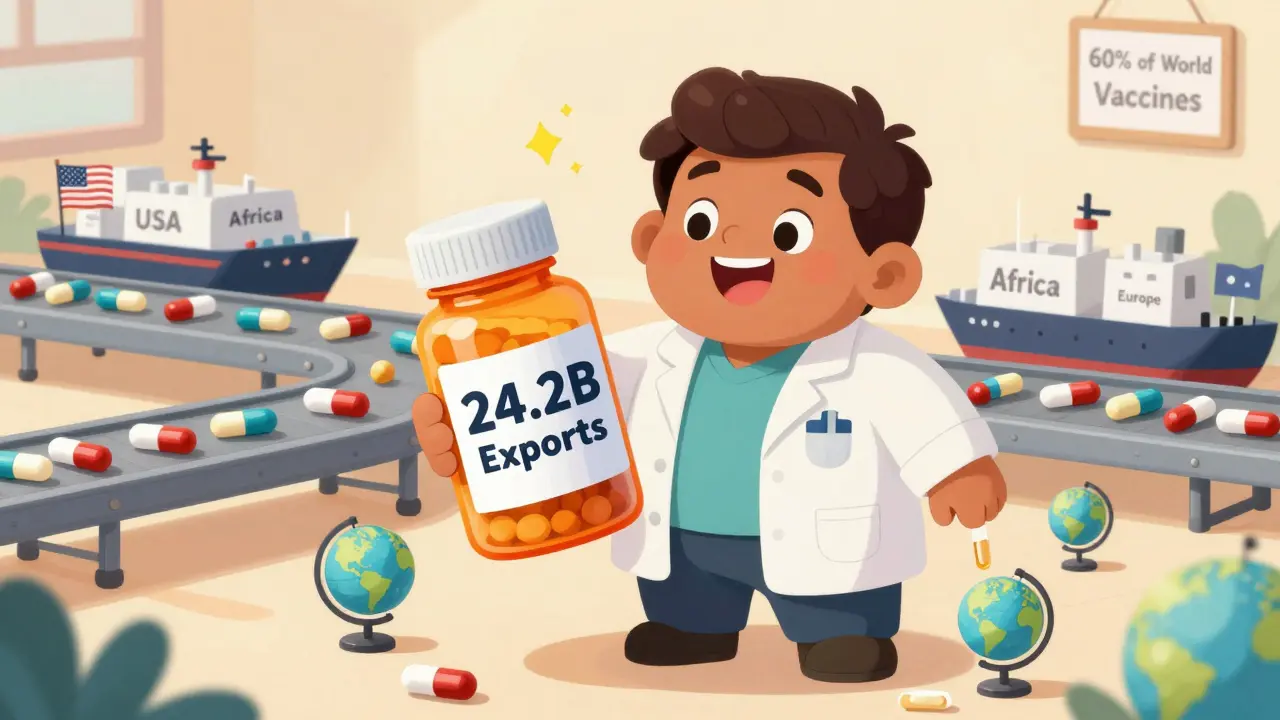
The world runs on cheap medicine-and most of it comes from Asia. If you take a generic pill for high blood pressure, antibiotics, or diabetes, there’s a very good chance it was made in India or China. But behind that simple fact is a complex, high-stakes game of manufacturing, regulation, and global supply chains. India and China don’t just make generics-they control them. And now, countries like Vietnam and Cambodia are stepping in to grab a piece of the pie. This isn’t just about cost. It’s about who controls the medicine you rely on.
India: The Pharmacy of the World, But Not Without Weak Spots
India earned its nickname by doing one thing better than anyone else: making massive volumes of low-cost generic drugs. In 2024, it exported $24.2 billion worth of pharmaceuticals, with 87% of that being generics. It supplies over 60% of the world’s vaccines and 40% of the generic drugs used in the U.S. That’s not a small number-it’s the backbone of affordable healthcare across continents. But here’s the catch: India’s strength is volume, not value. Its $61.36 billion domestic market is built on simple pills and injections. About 75% of its production is conventional generics, and only 10% is specialty drugs. It’s the king of small-molecule generics, especially in areas like oncology, where it holds a 35% global market share. But when it comes to innovation, it lags. Only 1.2% of its exports are novel drugs. Most of its high-tech medicines? They’re still imported. The biggest vulnerability? Active Pharmaceutical Ingredients (APIs). India imports 68% of its APIs from China. That means even though India makes the final pills, the raw chemical building blocks come from across the border. For years, India tried to fix this with its ‘Pharma Vision 2020’ plan. It didn’t work. Domestic API production only covers 18% of needs. Now, with the new ‘Pharma 2047’ initiative, India is spending $13.4 billion to build 12 new API parks and cut that dependency to 30% by 2030. But can they catch up? The timeline is tight, and the competition is fierce.China: The Hidden Powerhouse Behind Every Generic Pill
China doesn’t just supply India-it supplies the world. It controls 70% of the global market for Active Pharmaceutical Ingredients. That means nearly every generic drug you take, no matter where it’s packaged, likely started as a chemical made in Jiangsu or Zhejiang. China’s pharmaceutical market hit $80.4 billion in 2024, making it the second-largest in the world by value, behind only the U.S. What’s changed? China stopped being just a cheap factory. It moved up the value chain. Today, 25% of its market is traditional Chinese medicine, 10% is biologics, and 5% is innovative drugs. That’s a big shift from 2010, when most of its output was low-grade APIs. Since 2020, 45% of new pharma facilities in China have been built for biologics and biosimilars-high-tech, high-margin products that can sell for thousands of dollars per dose. The government poured $150 billion into R&D under its 14th Five-Year Plan, with 40% going to biologics. But quality remains a problem. In 2024, the U.S. FDA issued 142 warning letters to Chinese manufacturers-more than double the number for India. That’s not because Chinese factories are worse. It’s because they’re under more scrutiny. The FDA has cut approval times from 24 months in 2018 to just 9 months in 2024, meaning more inspections, more pressure, and more failures. Still, Chinese suppliers are often 20% cheaper than Indian ones. Many U.S. pharmacies now use both-40-60% from India, 25-35% from China-to avoid being stuck if one source fails.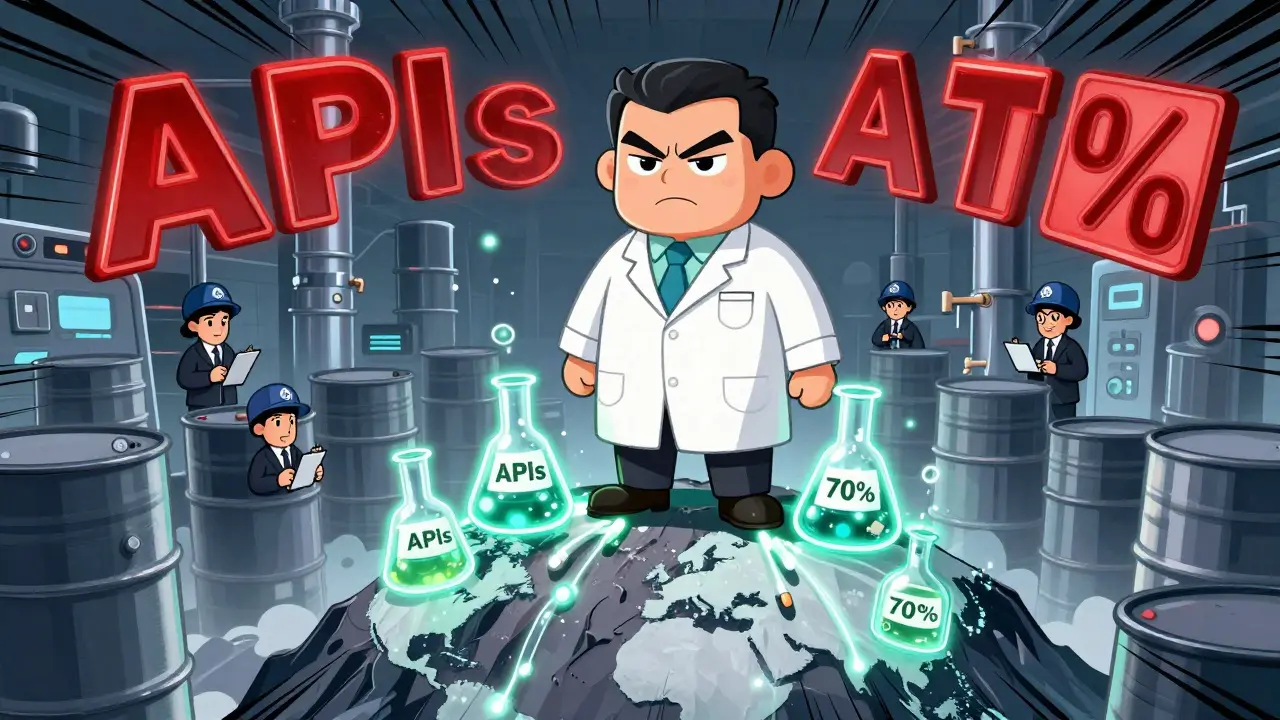
Emerging Economies: The New Wildcards in the Game
While India and China fight for dominance, smaller players are carving out niches. Vietnam, for example, grew its pharmaceutical exports by 24.7% in 2024 to $2.8 billion. How? By focusing on one thing: antibiotic intermediates. It’s not making finished pills-it’s making the chemical steps in between. That’s smart. It avoids direct competition with giants and plays to its strengths: lower labor costs and ASEAN trade deals. Cambodia is doing something even more unexpected. It’s not making drugs at all. It’s assembling medical devices-glucometers, IV drips, syringes. Its medical device sector hit $1.2 billion in 2024, growing at 18% annually. Why? Because it’s cheap, politically stable, and part of ASEAN. Western companies don’t want to rely solely on China. They’re looking for alternatives. Cambodia is one. These countries aren’t replacing India or China. They’re becoming safety valves. When supply chains get disrupted, when FDA inspections spike, when tariffs rise-these smaller economies step in. They’re not big enough to lead, but they’re just right to fill the gaps.Why Quality and Speed Don’t Always Go Together
If you’re a hospital or pharmacy buying generics, you’re caught between two realities. India gives you better communication, faster turnaround, and more flexibility. If you need a custom formulation, Indian manufacturers can often deliver in 14 days. Chinese suppliers? Minimum 30 days. U.S. pharmacy chains report a 60% drop in customer service issues when working with Indian firms. Trustpilot ratings reflect this: Indian suppliers average 4.1/5, Chinese 3.8/5. But then there’s price. Chinese API suppliers undercut Indian ones by 20%. For a company buying millions of doses, that’s millions of dollars saved. The problem? You pay for it in risk. A German healthcare company told G2 in April 2025 that after 142 FDA warnings to Chinese manufacturers, they had to dual-source everything. That increased their supply chain costs by 18%. India’s weakness? Inconsistent regulation. With 17 different state and federal agencies to navigate, approval delays are common. Forty-seven percent of procurement officers report significant delays due to regional regulatory differences. China? Just eight national agencies-and they’re centralized. Faster, cleaner, but less flexible.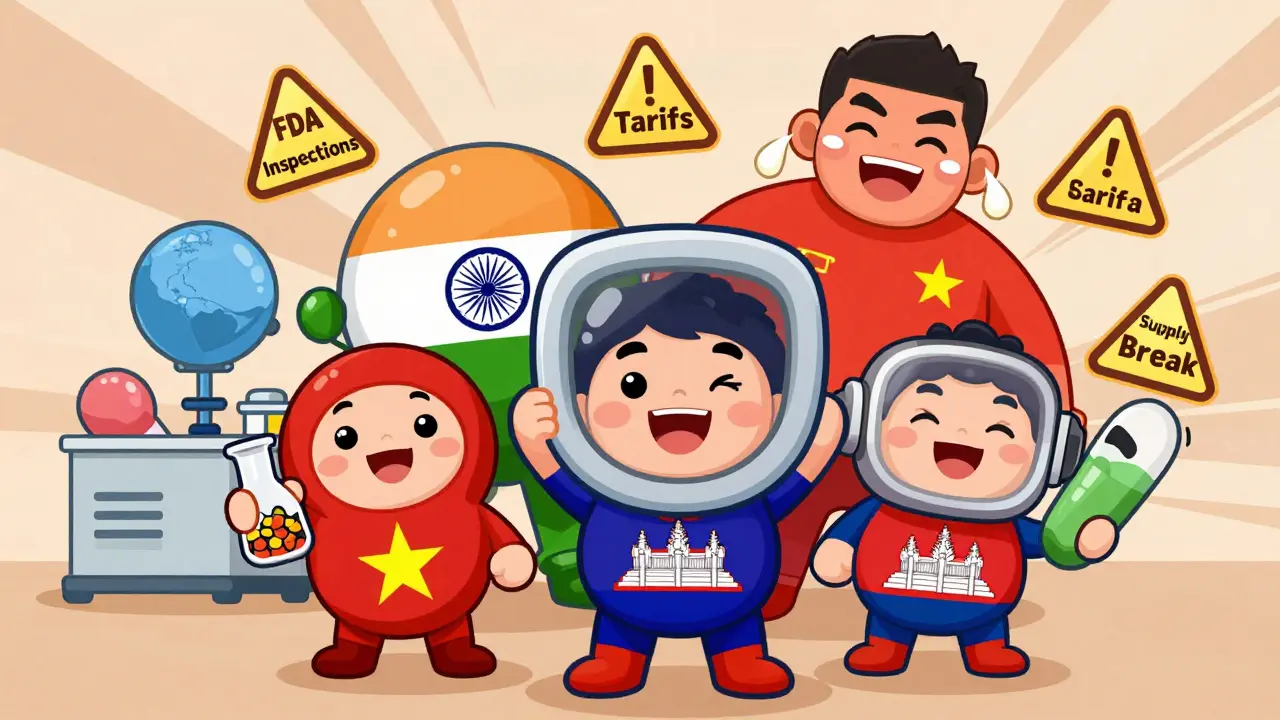




Comments(14)