
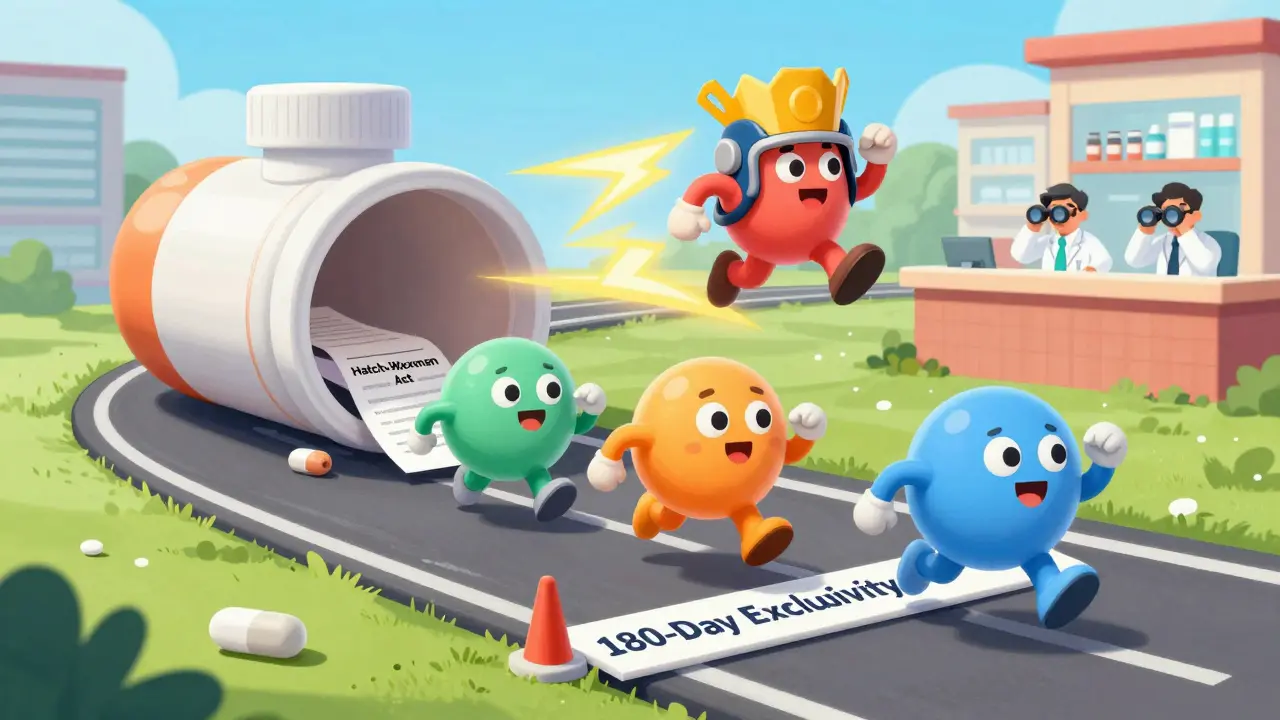
When a brand-name drug loses its patent, the race to be the first generic version on the market isn’t just about speed-it’s about locking in up to 90% of the entire generic sales pie. The company that wins this race doesn’t just get a head start. They get a multi-year advantage that most competitors can’t catch, even with identical products. This isn’t luck. It’s a system built into U.S. drug law, and it’s why some generic manufacturers make billions while others struggle to break even.
Why Being First Matters More Than You Think
The First-mover advantage is the lasting market dominance achieved by the first generic manufacturer to launch a drug after its patent expires. This isn’t theoretical. In real-world terms, the first generic company to file a challenge under the Hatch-Waxman Act gets 180 days of exclusive rights to sell the generic version. During that time, no other generic can legally enter. That’s not a small window-it’s a golden opportunity.But here’s what most people miss: the real advantage doesn’t end after 180 days. Even after other generics flood the market, the first entrant keeps a huge chunk of sales. Why? Because pharmacies, doctors, and patients don’t switch easily. Once a pharmacy stocks one generic version of a drug, they stick with it. Why? Because managing inventory is expensive. Stocking multiple versions of the same pill means more warehouse space, more labeling, more risk of mix-ups. So they pick one-and the first one to arrive usually wins.
Doctors follow suit. If a patient is stable on a generic version, the doctor won’t switch them unless there’s a clear reason-like a price drop or a shortage. And patients? They’re not shopping around for pills. If their prescription fills without issue, they don’t ask for a different brand. That inertia lasts for years.
The 180-Day Rule and How It Works
The Hatch-Waxman Act of 1984 was designed to balance two things: letting brand-name drugmakers recoup their R&D costs and letting generics compete fairly. One of its most powerful tools is the 180-day exclusivity period for the first generic applicant who successfully challenges a patent.This isn’t automatic. To qualify, a generic company must file what’s called an Abbreviated New Drug Application (ANDA) and prove the brand drug’s patent is invalid or won’t be infringed. It’s a legal gamble. If they lose, they get nothing. But if they win, they get a monopoly on sales for half a year.
During those 180 days, the first generic can charge a price close to the brand drug’s-sometimes 70-80% lower, but still far above what later generics will sell for. That’s when they make the bulk of their profit. By the time the second generic arrives, prices start dropping fast. By the third or fourth, the drug is often selling for pennies on the dollar.
And here’s the kicker: the 180-day clock doesn’t start until the first generic actually launches. Some companies delay launch to avoid legal battles or to coordinate with the brand company. That’s called a “pay-for-delay” deal-and it’s now under heavy scrutiny by the Federal Trade Commission. Since 2023, enforcement actions have pushed these deals to decline, meaning more first-movers are entering the market faster than ever.
Why Some First Movers Win Big-and Others Lose
Not all first-mover advantages are created equal. A small generic company with a great legal team might win the race but still lose money. Why? Because the advantage isn’t just about timing-it’s about scale, experience, and preparation.According to McKinsey & Company, first movers that are large pharmaceutical companies capture, on average, more than 10 percentage points more market share than smaller competitors. Why? They have the infrastructure. They’ve already built relationships with distributors. They’ve got FDA-approved manufacturing lines. They’ve handled complex supply chains for years.
Smaller companies? They often lack the resources to ramp up production fast enough. Or they don’t have the regulatory expertise to handle complex drug forms like injectables or inhalers. That’s why the biggest first-mover wins happen in simple oral tablets-and why complex generics like insulin pens or asthma inhalers now offer the strongest advantage. Fewer companies can make them, so the first one to crack it gets a near-monopoly.
Even the source of the active ingredient matters. Companies that secure long-term deals with API (active pharmaceutical ingredient) suppliers get cost savings of 12-15% compared to those who buy on the spot market. That margin difference can mean the difference between profit and loss when prices crash after six months.
How Authorized Generics Kill the First-Mover Advantage
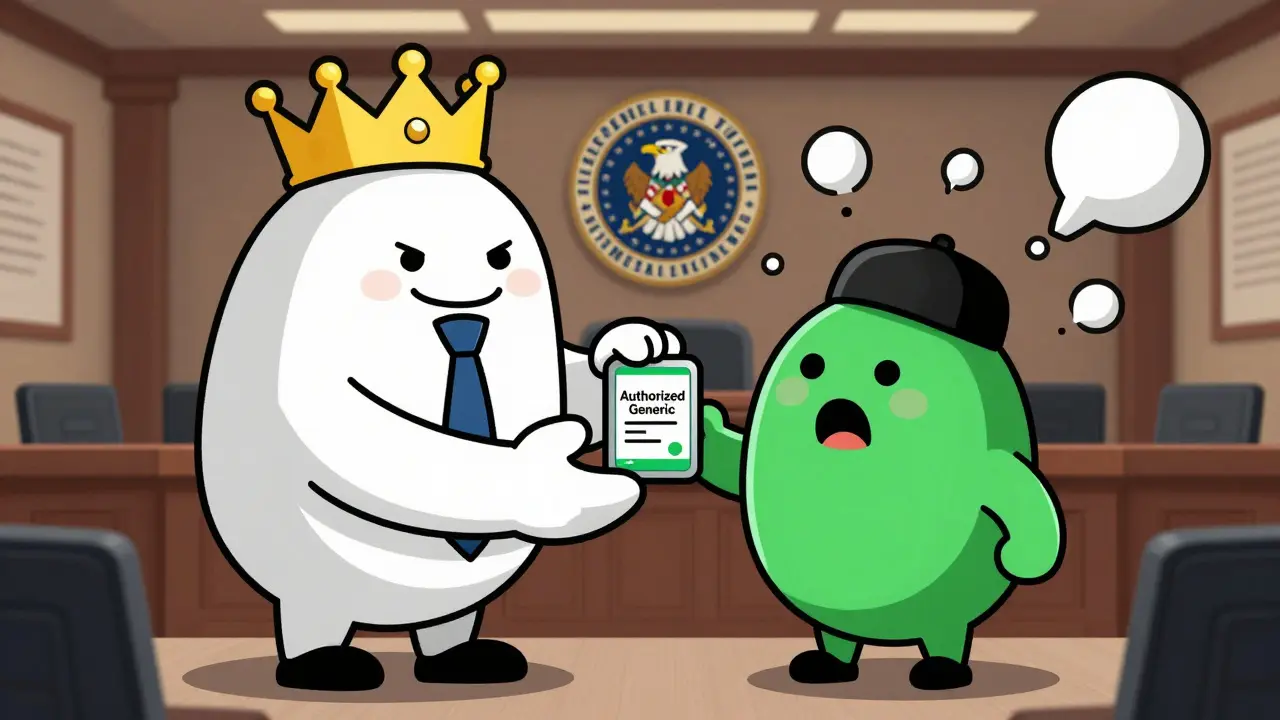
There’s one brutal twist in this game: the brand-name company can launch its own generic version during the first mover’s 180-day exclusivity period. This is called an Authorized Generic (AG). It’s legal. It’s common. And it’s devastating.When an AG hits the market, the first generic isn’t just competing with other generics-they’re competing with the original brand, now sold under a cheaper label. The result? Retail prices drop 4-8%. Wholesale prices drop 7-14%. The first mover’s profit margins evaporate.
The Federal Trade Commission found that AGs reduce first-filer revenue by up to 30% in some cases. That’s why smart generic companies now plan for AGs from day one. They build backup supplier networks. They negotiate volume discounts. They sometimes even partner with the brand company to get early access to the AG themselves.
One major generic manufacturer in Australia told analysts they now file ANDAs with two separate API suppliers lined up-just in case the first one gets locked into an AG deal. That’s the level of planning required to survive.
Therapeutic Area Matters More Than You Realize
Not all drugs are equal when it comes to first-mover advantage. The advantage is strongest in areas where patients take the drug long-term and switching is risky.For example, injectables for autoimmune diseases or cancer treatments? First movers capture 15-20 percentage points more market share than later entrants. Why? Because these drugs are complex. Nurses administer them. Hospitals stock them. Changing the version means retraining staff, updating protocols, and risking errors. No one wants that.
Compare that to a simple blood pressure pill. Hundreds of generics exist. Doctors prescribe by price. Patients switch freely. Here, the first-mover advantage is often just 6-8 percentage points-and it fades within a year.
Even geography matters. Domestic manufacturers in the U.S. achieve 22% higher market saturation than overseas ones. Why? Faster shipping, fewer supply chain risks, and stronger FDA audit relationships. A generic made in India might be cheaper, but if it takes six weeks to arrive and gets flagged by customs, pharmacies won’t risk it.
What Happens After the First Mover?
The first generic usually captures 70-80% of the generic market during its exclusivity window. After the second entrant arrives, that drops to 50-60%. By the time five or more generics are on the market, the first mover still holds 30-40% of sales.Meanwhile, the second generic might get 15-20%. The third? 8-12%. After that, it’s scraps.
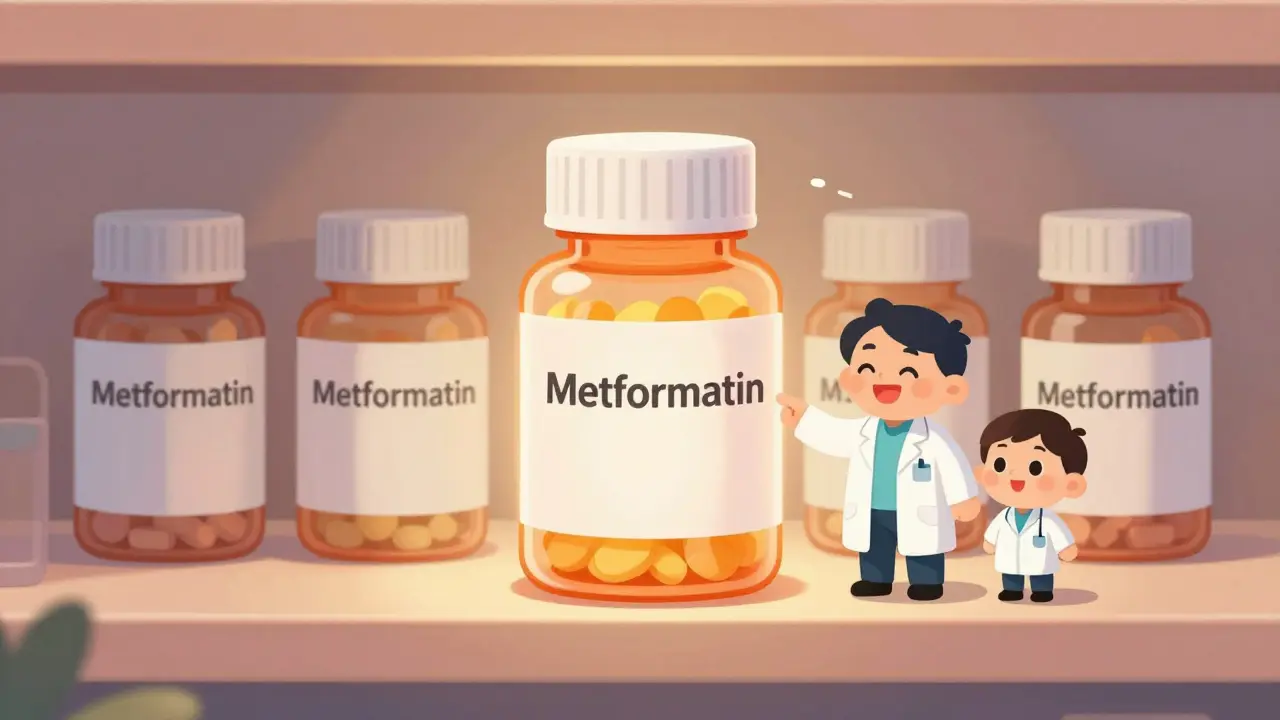
This isn’t just about price. It’s about trust. Pharmacies don’t want to stock five versions of metformin. They pick the one that’s reliable, consistently available, and already in their system. The first one to get there? That’s the one they keep.
And here’s the long-term truth: even after five years, the first-mover advantage doesn’t vanish. It just settles into a steady state. The brand drug is long gone. Prices are low. But the first generic? It’s still the default choice for millions of patients.
The Future of First-Mover Advantage
The FDA’s new GDUFA III rules are speeding up generic reviews, which could mean more competition. But they’re also raising the bar on data quality and manufacturing standards. That favors big players with deep pockets.Meanwhile, complex generics-like nasal sprays, transdermal patches, and long-acting injectables-are growing fast. These aren’t easy to copy. Only a handful of companies can make them. That means the first-mover advantage here is even stronger, with market share leads of 15-20 points.
One thing won’t change: human behavior. Patients don’t want to switch. Pharmacists don’t want to retrain. Doctors don’t want to risk errors. As long as that’s true, the first generic to market will keep winning.
It’s not about being the cheapest. It’s about being the first-and staying the most convenient.



Comments(10)