
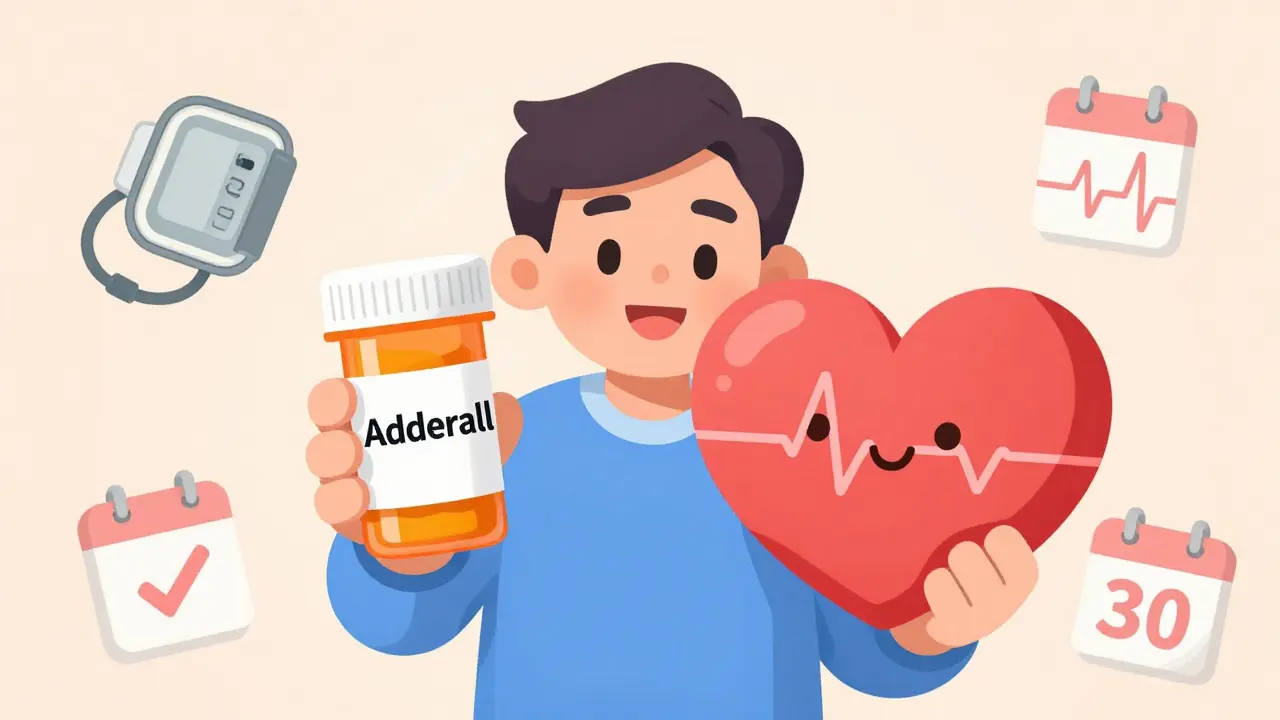
Stimulant Cardiac Risk Assessment Tool
Personal Risk Assessment
This tool helps you assess your potential cardiac risk when taking stimulant medications. It's not a substitute for professional medical advice, but can help you prepare for discussions with your doctor.
For millions of people, stimulant medications like Adderall and Ritalin are life-changing. They help focus, reduce impulsivity, and make daily tasks manageable-especially for those with ADHD. But behind the improved grades, better jobs, and calmer households, there’s a quiet concern: stimulants and the heart. Could these drugs be quietly messing with your heart rhythm? And if so, what can you do about it?
How Stimulants Affect Your Heart
Stimulants work by boosting dopamine and norepinephrine in the brain. That’s good for focus. But those same chemicals also hit your heart. They make it beat faster and push blood through your vessels with more force. For most healthy people, this is a small, temporary change-maybe a 5-beat increase in heart rate, a few mmHg rise in blood pressure. Nothing alarming.
But for some, it’s enough to trigger something dangerous: cardiac arrhythmias. These are irregular heartbeats-too fast, too slow, or erratic. They can feel like fluttering, pounding, or a skipped beat. In rare cases, they can lead to sudden cardiac events.
Prescription stimulants like methylphenidate and amphetamines don’t usually cause arrhythmias in young, healthy people. But the risk jumps in older adults. A 2021 study found that adults over 66 had a three times higher risk of ventricular arrhythmias within 30 days of starting stimulants. That risk dropped after a few months, suggesting the body adapts-or the most vulnerable are weeded out early.
Illicit stimulants like cocaine and methamphetamine are a different story. They don’t just speed up the heart-they disrupt the heart’s electrical wiring. Cocaine blocks sodium and potassium channels, lengthening the QT interval on an ECG. Methamphetamine does the same, plus it damages heart muscle over time. Users are 2.5 to 4.5 times more likely to have dangerous arrhythmias than non-users.
Who’s at Real Risk?
Not everyone needs to worry. But some people should be extra cautious.
- Those with a personal or family history of sudden cardiac death before age 50
- People with known heart conditions-hypertrophic cardiomyopathy, long QT syndrome, or prior arrhythmias
- Anyone with unexplained fainting, chest pain, or palpitations
- Adults over 60 starting stimulants for the first time
- Those with high blood pressure that’s not controlled
Here’s the thing: most people with ADHD don’t have these red flags. But if you do, skipping a heart check isn’t worth the risk. The American Heart Association doesn’t require an ECG for everyone before starting stimulants-but they do say it’s smart to get one if you have any of these warning signs.
And don’t assume kids are safe. While serious events in children are rare, a 2011 study of over 1.2 million young people found no significant increase in heart problems. But that doesn’t mean zero risk. It means the odds are low-but not zero.
What Doctors Actually Do
In real-world clinics, most doctors follow a simple but effective checklist:
- Ask about personal and family heart history-especially sudden deaths, fainting spells, or diagnosed heart conditions.
- Check for symptoms: chest pain, dizziness, racing heart, or shortness of breath during activity.
- Take your blood pressure and pulse. If it’s already high, stimulants might make it worse.
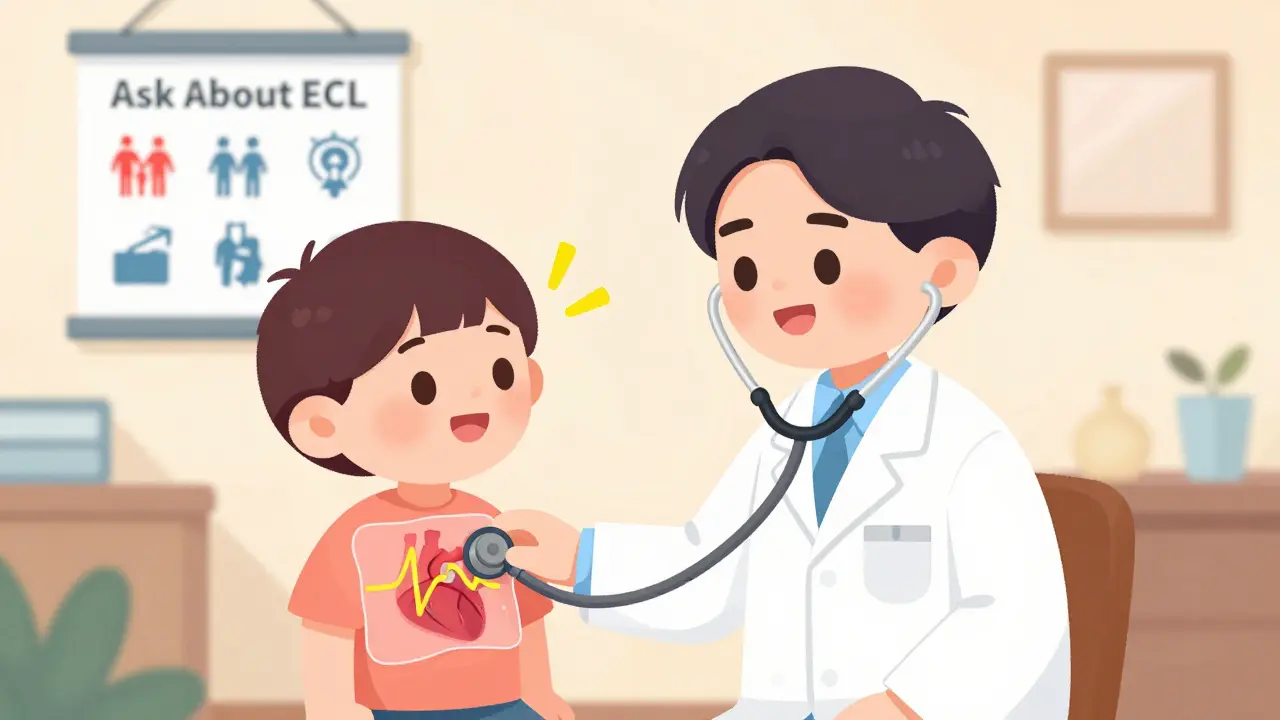
- Listen to your heart. A murmur or irregular rhythm could mean something’s off.
- For high-risk patients, order an ECG before starting the medication.
After starting the drug, most doctors check blood pressure and heart rate within 1 to 3 months, then every 6 to 12 months. If your numbers climb above the 95th percentile, they’ll pause the medication. If your ECG shows a QT interval longer than 0.46 seconds, they’ll stop it.
And if you have a known heart condition? You’re likely referred to a cardiologist. Many pediatricians and psychiatrists now spend 15-20% more time on initial ADHD visits just to cover cardiac risk. That’s not overkill-it’s standard care.
Alternatives to Stimulants
If your heart is a concern, you don’t have to give up treatment. There are non-stimulant options.
- Atomoxetine (Strattera): A selective norepinephrine reuptake inhibitor. It doesn’t raise heart rate or blood pressure like stimulants. Response rate? About 50-60%. Slower to work-takes 4 to 8 weeks-but safer for the heart.
- Guanfacine (Intuniv) and Clonidine (Kapvay): Originally blood pressure meds, they help with focus and impulse control by calming the nervous system. They’re often used in kids or people with anxiety. Side effects? Drowsiness, dry mouth, low blood pressure. But no arrhythmia risk.
These aren’t magic bullets. They’re less effective than stimulants. But for someone with a history of arrhythmias, a 50% improvement is better than a 0% chance of staying alive.
Some patients combine these with behavioral therapy. Others use them as a bridge-starting with a non-stimulant while they get their heart checked, then switching later if safe.
The Bigger Picture: Risk vs. Benefit
Here’s where people get confused. One study says stimulants triple arrhythmia risk. Another says there’s no link. Which one’s right?
Both. It depends on who you are.
The JAMA meta-analysis looked at millions of people across all ages. It found no overall increase in heart disease. That’s true for healthy young adults. But the 2021 study that found a tripled risk? It focused on older adults-people with aging hearts, maybe undiagnosed heart disease. That’s a different group.
The same goes for the March 2024 ACC study showing long-term heart muscle changes in young adults. The absolute risk was still low-17% higher after one year, 57% after eight. But that’s still something to track.
The FDA, American Heart Association, and American Academy of Pediatrics all agree: the benefits of treating ADHD outweigh the risks-for most people. But that’s not a blanket green light. It’s a call for smart, individualized care.
Think of it like driving. Most people can drive safely. But if you have a history of seizures, you don’t just hop in the car. You get checked. You take precautions. Same here.

What You Should Do Now
If you’re on stimulants:
- Know your heart history. Ask your parents or siblings if anyone had sudden death, fainting, or heart disease before 50.
- Track your pulse and blood pressure at home. Write it down. Bring it to your next appointment.
- If you feel your heart racing, fluttering, or skipping beats-don’t ignore it. Tell your doctor.
- Don’t stop your medication cold. Talk to your prescriber first.
If you’re thinking about starting stimulants:
- Ask for a full cardiac history review. Don’t let them skip it because you’re young.
- Request an ECG if you have any risk factors-even if your doctor says it’s not required.
- Ask about non-stimulant options. They’re not second-rate-they’re second-line for a reason.
If you’re a parent:
- Don’t assume your child is fine just because they’re young.
- Ask the doctor: ‘Has anyone in our family had sudden death or heart rhythm problems?’
- Ask: ‘Will you check my child’s heart before starting medication?’
What’s Coming Next
Researchers are looking at genetic markers. Some people may have a natural sensitivity to stimulants because of their DNA-like variations in adrenergic receptor genes. In the next few years, a simple blood test might tell you if you’re at higher risk.
The American College of Cardiology is finalizing new guidelines for ADHD patients, expected late 2025. These will likely push for more personalized risk scoring-not just age or symptoms, but a mix of genetics, family history, and ECG patterns.
For now, the message is clear: stimulants aren’t dangerous for most. But they’re not risk-free. The key isn’t avoiding them-it’s knowing your body, asking the right questions, and choosing the safest path forward.
Do stimulants cause heart attacks?
Stimulants don’t directly cause heart attacks in most people. But they can trigger arrhythmias that, in rare cases, lead to cardiac arrest-especially in those with undiagnosed heart conditions. The absolute risk is low, but it’s real for high-risk individuals.
Is it safe to take Adderall if I have high blood pressure?
Not without careful management. Adderall can raise blood pressure. If your blood pressure is already high, your doctor may delay starting it, lower the dose, or switch you to a non-stimulant like Strattera. Uncontrolled high blood pressure plus stimulants increases your risk of stroke and arrhythmias.
Can I get an ECG before starting ADHD meds?
Yes, and you should if you have any heart-related symptoms, family history of sudden death, or known heart conditions. Even if your doctor says it’s not required, you have the right to request one. Many clinics now offer it as a standard precaution for adults over 40 or anyone with risk factors.
How do non-stimulant ADHD meds compare in effectiveness?
Stimulants work for 70-80% of people. Non-stimulants like Strattera, Intuniv, and Kapvay work for about 50-60%. They’re slower-taking weeks to show results-and may cause drowsiness or low blood pressure. But they’re much safer for the heart and are often the first choice for people with arrhythmias or high blood pressure.
Can I switch from Adderall to a non-stimulant safely?
Yes, but it should be done under medical supervision. Stopping stimulants suddenly can cause withdrawal symptoms like fatigue, depression, or increased appetite. Your doctor will likely taper your dose while slowly introducing the new medication to avoid crashes and ensure symptom control.
Are illicit stimulants like cocaine more dangerous than prescription ones?
Far more dangerous. Cocaine and methamphetamine don’t just affect the brain-they directly poison the heart’s electrical system. They block key ion channels, prolong the QT interval, and cause structural damage over time. Users are 2.5 to 4.5 times more likely to suffer life-threatening arrhythmias than non-users. Prescription stimulants, when used as directed, carry a much lower risk.


Comments(13)