
What Is Hypothyroidism?
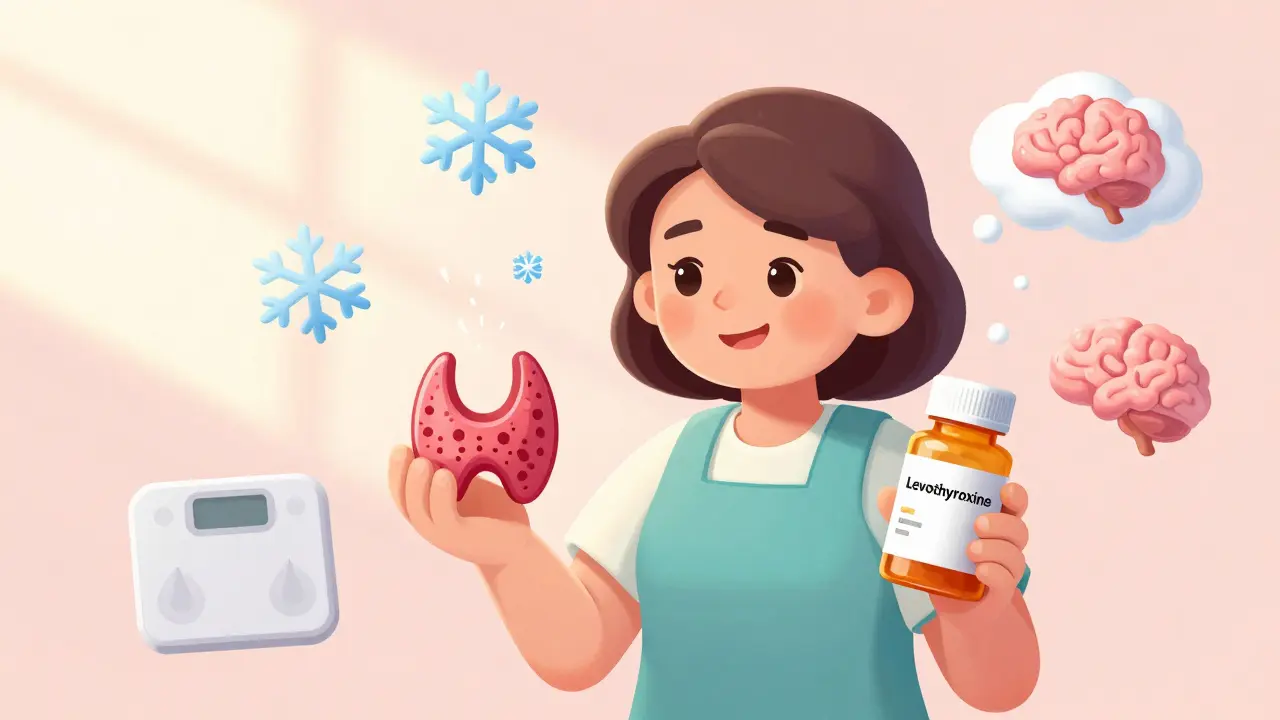
Hypothyroidism is a condition where the thyroid gland doesn’t make enough thyroid hormones to keep your body running smoothly. This isn’t just feeling tired-it’s a metabolic slowdown that affects your heart, brain, skin, digestion, and even your mood. About 1 in 20 adults in Australia have it, and it’s far more common in women, especially after 60. By age 80, up to 1 in 5 women may be affected.
The most common cause? Hashimoto’s thyroiditis-an autoimmune disease where your immune system attacks your thyroid. It’s responsible for 90% of cases in places like Australia and the U.S. Other causes include thyroid surgery, radioactive iodine treatment for hyperthyroidism, or radiation therapy for head and neck cancers. Some women develop it after giving birth, called postpartum thyroiditis.
How Do You Know If You Have It?
Symptoms don’t always show up at once. They creep in slowly, so many people think they’re just getting older or stressed. But if you’ve had unexplained fatigue for months, gained 5-10 kg without changing your diet, or feel colder than everyone else in the room, it might be your thyroid.
- 95% of people with hypothyroidism feel constantly tired
- 85% struggle with cold intolerance
- 75% notice weight gain, even with no change in eating habits
- 60% deal with constipation
- 50% get dry skin, brittle hair, or hair loss
- 40% report brain fog-trouble focusing or remembering things
- 30% experience depression or low mood
Physical signs include puffy eyes, a hoarse voice, and slow reflexes. Your doctor might notice these during a check-up. But the real clue? Blood tests. A high TSH (thyroid-stimulating hormone) level with low free T4 (thyroxine) is the classic sign of primary hypothyroidism.
What Is Subclinical Hypothyroidism?
Some people have a TSH level between 4.5 and 10 mIU/L but normal T4. This is called subclinical hypothyroidism. It affects 4-10% of the population. Not everyone needs treatment right away, but it should be monitored. About 2-5% of these people will develop full-blown hypothyroidism each year. If you have symptoms or high thyroid antibodies (like TPO), your doctor may start treatment early.
How Is It Diagnosed?
Diagnosis starts with a simple blood test. First, they check your TSH. If it’s above 4.5 mIU/L, they’ll follow up with a free T4 test. If TSH is high and T4 is low, you have hypothyroidism. In rare cases, the problem isn’t your thyroid-it’s your pituitary gland. That’s called central hypothyroidism. Here, TSH is low or normal, but T4 is still low. It’s much less common, making up only 5% of cases.
Doctors also test for thyroid antibodies. If TPO antibodies are high, it’s almost certainly Hashimoto’s. The accuracy of modern TSH tests is over 98%, so false results are rare.
Levothyroxine: The Gold Standard Treatment
Levothyroxine is a synthetic version of the T4 hormone your thyroid should be making. It’s the only treatment recommended by the American Thyroid Association and Endocrine Society for nearly all cases of hypothyroidism. It’s safe, effective, and inexpensive. Generic versions cost between $4 and $30 a month in the U.S., and prices in Australia are similar.
The starting dose depends on your age, weight, and health. For a healthy adult under 50, doctors usually begin with 1.6 mcg per kilogram of body weight. That’s about 100-150 mcg daily for most people. If you’re over 50, or have heart problems, they’ll start lower-often 25-50 mcg-and increase slowly.
Why the slow start? Because your heart has to adjust. Too much thyroid hormone too fast can trigger palpitations or even a heart attack in older or high-risk patients.
How to Take Levothyroxine Right
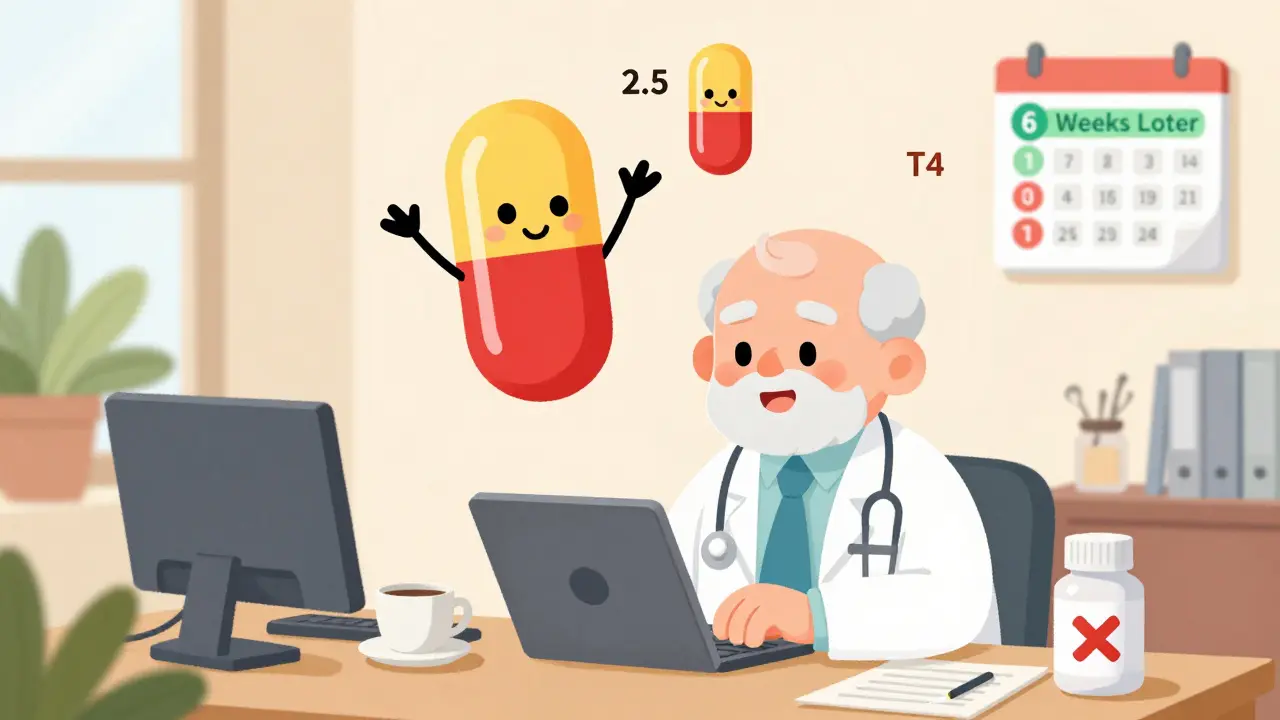
Levothyroxine works best when taken on an empty stomach. Take it 30-60 minutes before breakfast, with a full glass of water. Don’t take it with coffee, calcium supplements, iron, or antacids-they block absorption. Coffee cuts absorption by 30%. Calcium reduces it by 35%. If you take supplements, space them at least 4 hours apart.
Also, don’t switch brands without checking with your doctor. While generics are FDA-approved, small differences in fillers can affect how your body absorbs the drug. If you feel different after switching, ask for a TSH test.
How Long Until You Feel Better?
Don’t expect instant results. It takes 2-3 weeks for your body to adjust, and 6-8 weeks to reach full effect. That’s why doctors wait 6-8 weeks after a dose change before retesting TSH.
Most people notice improved energy, less brain fog, and better digestion within 3-6 months. One study found 85% of patients had significant symptom relief once their TSH was in the right range. But 25% still feel off-even with "normal" TSH. That’s when your doctor may adjust your dose slightly or check for other issues like vitamin D or iron deficiency.
What If Your TSH Is Normal But You Still Feel Bad?
This is more common than you think. About 1 in 4 patients report ongoing symptoms despite "normal" lab results. Possible reasons:
- Wrong dose-even small changes matter
- Medication timing issues (taking it with food or coffee)
- Low iron, vitamin B12, or vitamin D
- Stress or sleep problems masking thyroid symptoms
Your doctor may try a small dose increase, or check for other hormone imbalances. Some patients benefit from switching to a different brand, or even adding a tiny amount of T3 (liothyronine), but studies show this helps only a small minority. The American Thyroid Association doesn’t recommend routine combination therapy.
Special Cases: Pregnancy, Elderly, and Kids
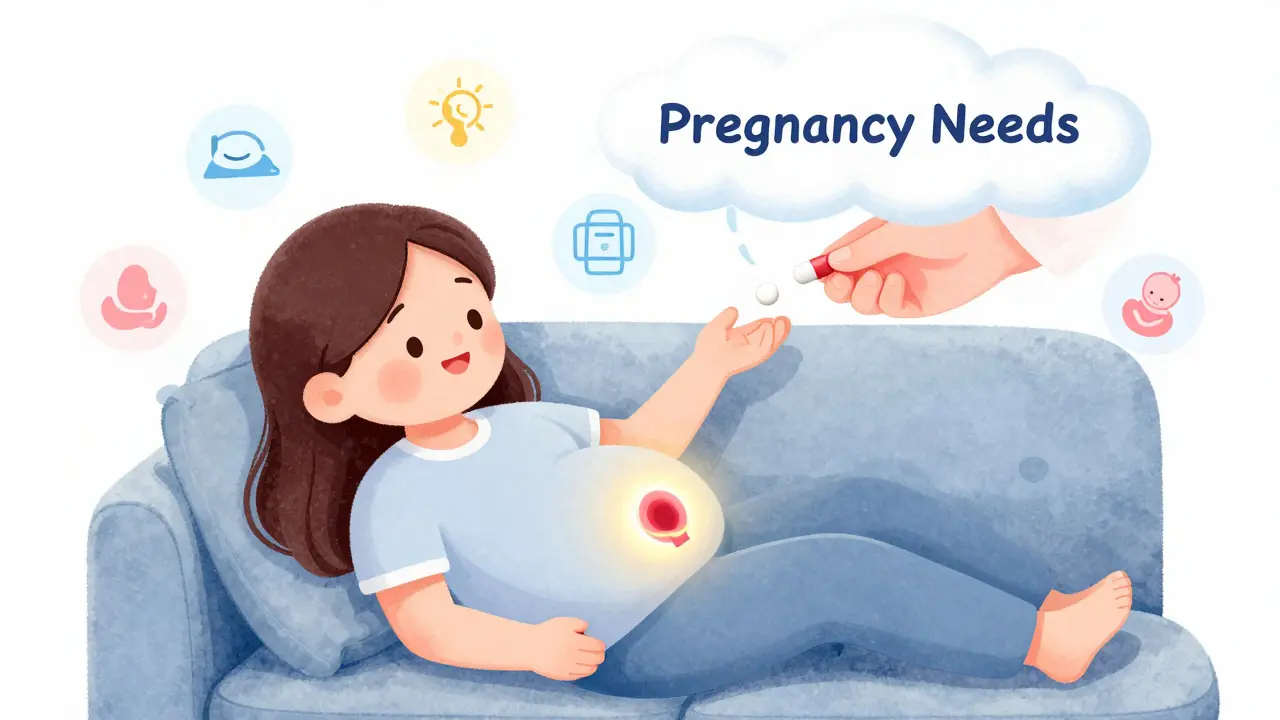
Pregnant women need more levothyroxine-often 25-50% more-because their bodies use more thyroid hormone to support the baby. TSH targets are stricter: under 2.5 mIU/L in the first trimester, under 3.0 in the second, and under 3.5 in the third. Untreated hypothyroidism during pregnancy raises the risk of miscarriage, preterm birth, and developmental delays in the child.
For older adults, especially over 85, the goal isn’t to get TSH to zero. It’s to avoid over-treatment. A TSH between 4 and 6 mIU/L is often safer than pushing it down to 1. Over-treatment in the elderly increases the risk of atrial fibrillation and bone loss.
Children with hypothyroidism need careful dosing based on weight and age. Left untreated, it can stunt growth and damage brain development. Newborn screening catches most cases early.
Risks of Under- and Over-Treatment
Under-treatment (TSH >10 mIU/L) is surprisingly common-up to 20% of patients. It’s often due to missed doses, poor absorption, or not getting tested regularly. The risks? High cholesterol, heart disease, nerve damage, and in extreme cases, myxedema coma-a life-threatening drop in body temperature, heart rate, and consciousness. Mortality rates for myxedema coma are 20-50%, even with treatment.
Over-treatment (TSH <0.1 mIU/L) affects 10-15% of patients. Symptoms include rapid heartbeat, anxiety, weight loss, and bone thinning. In older adults, it can trigger heart rhythm problems. That’s why regular blood tests are non-negotiable.
Long-Term Outlook
With proper treatment, life expectancy returns to normal. Untreated hypothyroidism can shorten life by 5-10 years due to heart disease. But if you take your levothyroxine daily, get tested once a year (or as advised), and manage other health issues, you can live just as long and as well as anyone else.
Many patients say their quality of life improves dramatically. They can sleep better, think clearer, move without fatigue, and enjoy life again. The key? Consistency. Take your pill the same time every day. Don’t skip doses. Get your blood tested. Talk to your doctor if something feels off.
What’s New in Treatment?
Research is moving toward more personalized care. Scientists are studying genetic markers that predict who’s likely to develop Hashimoto’s. Time-release levothyroxine formulations are in phase 3 trials-they could help people who struggle with timing or absorption. And new tests are being developed to measure how well thyroid hormone is working in your tissues, not just your blood.
But for now, levothyroxine remains the gold standard. Over 98% of endocrinologists agree it will still be the first-line treatment in 2030.
Support and Resources
You’re not alone. The American Thyroid Association offers free patient guides. Thyroid Change, a global advocacy group, supports over 50,000 people with hypothyroidism. In Australia, the Australian Thyroid Foundation provides local resources and connects patients with specialists.
Keep a symptom journal. Note your energy, mood, weight, and sleep. Bring it to your appointments. It helps your doctor see patterns that blood tests alone can’t show.





Comments(10)