
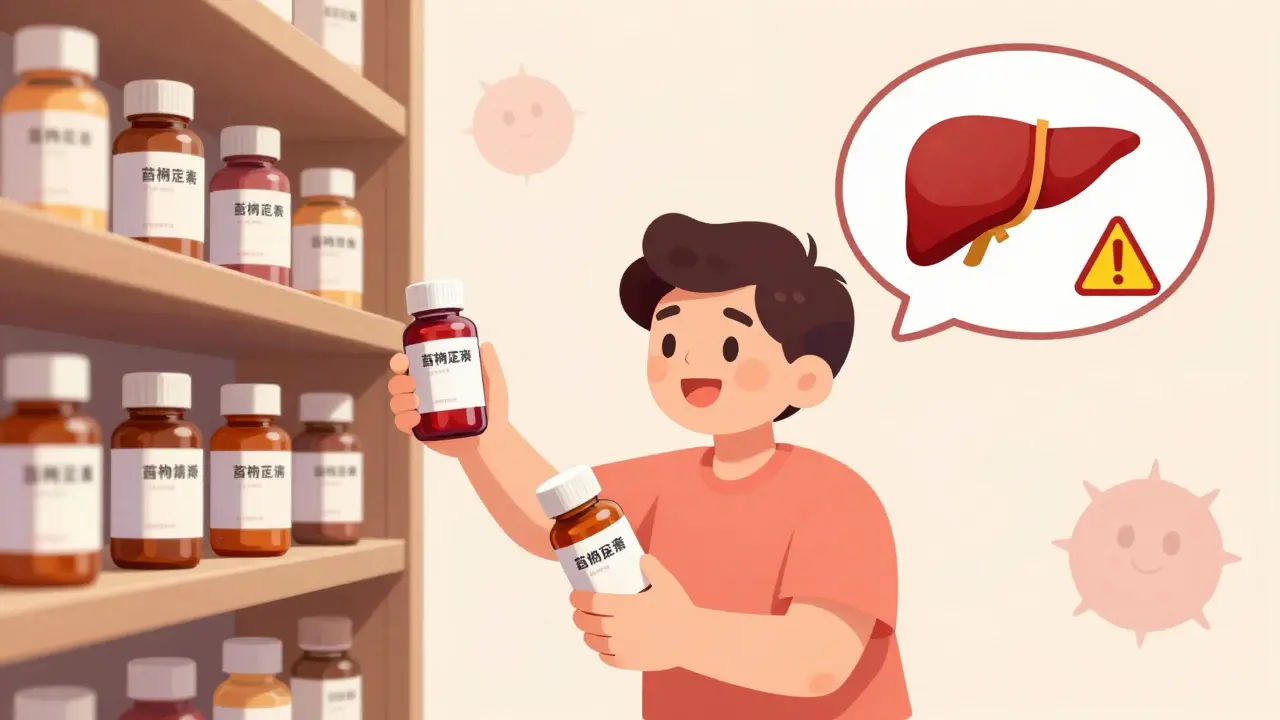
Myth: Over-the-counter meds are completely safe
You grab a bottle of acetaminophen from the shelf like it’s candy. No prescription needed. So it must be harmless, right? Wrong. Acetaminophen - the active ingredient in Tylenol and hundreds of other pain relievers - causes about 56,000 emergency room visits each year in the U.S. alone. Why? Because people think, "I just took a couple extra pills to get relief." But the FDA’s safe daily limit is 3,000 mg - that’s just six extra-strength tablets. Go over that, and you’re risking liver failure. In fact, acetaminophen overdose is the leading cause of acute liver failure in America. It doesn’t happen overnight. It builds up. You take one for your headache, another for your back pain, a third for your period, and a fourth because you’re still not sleeping. All add up. And your liver doesn’t warn you until it’s too late.
Myth: More pills = better results
If one ibuprofen helps your headache, then two or three must help even more. That’s the logic. But here’s what actually happens: taking more than 1,200 mg of ibuprofen in a day - that’s six regular tablets - increases your risk of internal bleeding by 4.5 times, according to a JAMA Internal Medicine study. Your stomach lining isn’t made to handle that kind of punishment. And it’s not just your gut. Too much ibuprofen can also damage your kidneys over time. The dose on the bottle isn’t a suggestion. It’s the result of decades of clinical trials. Taking more doesn’t make it work faster or stronger. It just makes it more dangerous.
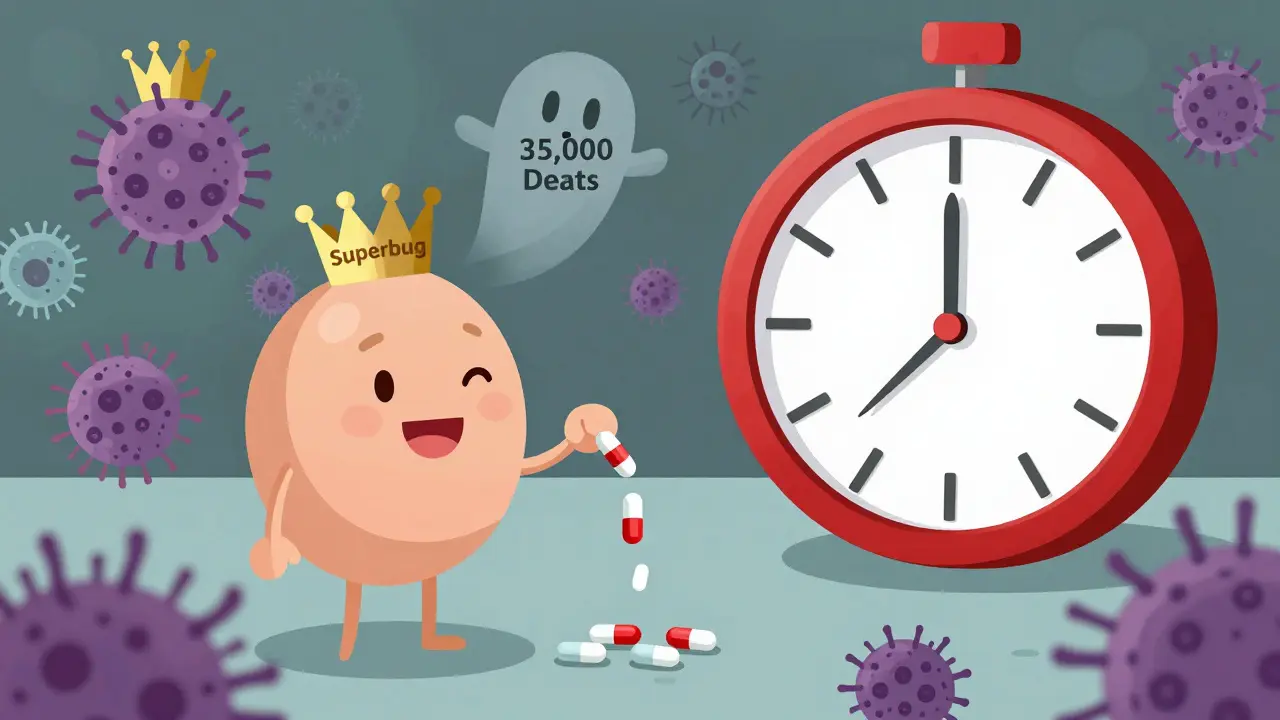
Myth: Stop taking antibiotics when you feel better
You’ve been on antibiotics for three days. Your sore throat is gone. Your fever broke. So you toss the rest of the pills. You’re not alone - 30% of people do this. But here’s the problem: you didn’t kill all the bacteria. You only killed the weak ones. The tough ones? They survived. And now they’re stronger. That’s how antibiotic-resistant superbugs form. These aren’t science fiction. They’re real. In the U.S. alone, they cause 35,000 deaths every year. Antibiotics aren’t like painkillers. You don’t stop when you feel better. You finish the whole course - even if you’re 100% better on day four. That’s the only way to make sure the infection doesn’t come back worse.
Myth: Natural or herbal = always safe
"It’s natural, so it can’t hurt," people say. But St. John’s Wort - a popular herb for mild depression - cuts the effectiveness of birth control pills by up to 33%. That’s not a small risk. That’s a pregnancy risk. Ginkgo biloba? It thins your blood. If you’re on warfarin (a blood thinner), mixing the two raises your chance of dangerous bleeding by 50%. Even something as simple as grapefruit juice can wreck how your body processes common heart and cholesterol meds. Natural doesn’t mean harmless. It means unregulated. Herbal products don’t go through the same safety tests as prescription drugs. And they can interact with your meds in ways no one warned you about.
Myth: A little alcohol with my meds is fine
You have a glass of wine with dinner. You’re on a painkiller. So what? Big mistake. Mixing alcohol with opioids like oxycodone or hydrocodone increases the risk of breathing stopping - respiratory depression - by 800%. That’s not a typo. Eight hundred percent. Even a small amount of alcohol with these drugs can shut down your breathing system. And it’s not just opioids. Alcohol with sedatives, sleep aids, or even some antidepressants can make you dizzy, faint, or fall. Your liver has to process both. When it’s overwhelmed, your body doesn’t know what to do. The result? Emergency rooms filled with people who thought "just one drink" was harmless.
Fact: Generic drugs work just as well as brand names
"Generic is cheaper, so it must be weaker," is a common belief. But that’s not true. The FDA requires generic drugs to have the same active ingredient, strength, dosage form, and route of administration as the brand-name version. They must be 80-125% bioequivalent - meaning your body absorbs them the same way. The only differences are in the inactive ingredients: fillers, colors, or shapes. Those don’t affect how the drug works. In fact, 9 out of 10 prescriptions filled in the U.S. are generics. Hospitals use them. Medicare uses them. And they save patients billions each year. If your doctor prescribes a generic, you’re not getting a second-rate drug. You’re getting the same medicine at a fraction of the cost.
Fact: Always bring all your meds to your doctor or pharmacist
Do you have a drawer full of bottles? Old prescriptions? Supplements? Vitamins? Herbal teas? Bring them all. This is called a "brown bag review." Pharmacists at Coal Grove Pharmacy found that patients who did this had 63% fewer medication errors - like double-dosing or dangerous interactions. You might think, "I only take the big pills," but those little gummies or capsules? They matter too. One patient brought in a bottle of melatonin, a fish oil, and a turmeric supplement. Turns out, the fish oil and turmeric were both thinning his blood - and he was already on warfarin. No one knew until he brought the bag. A simple review prevented a hospital trip.
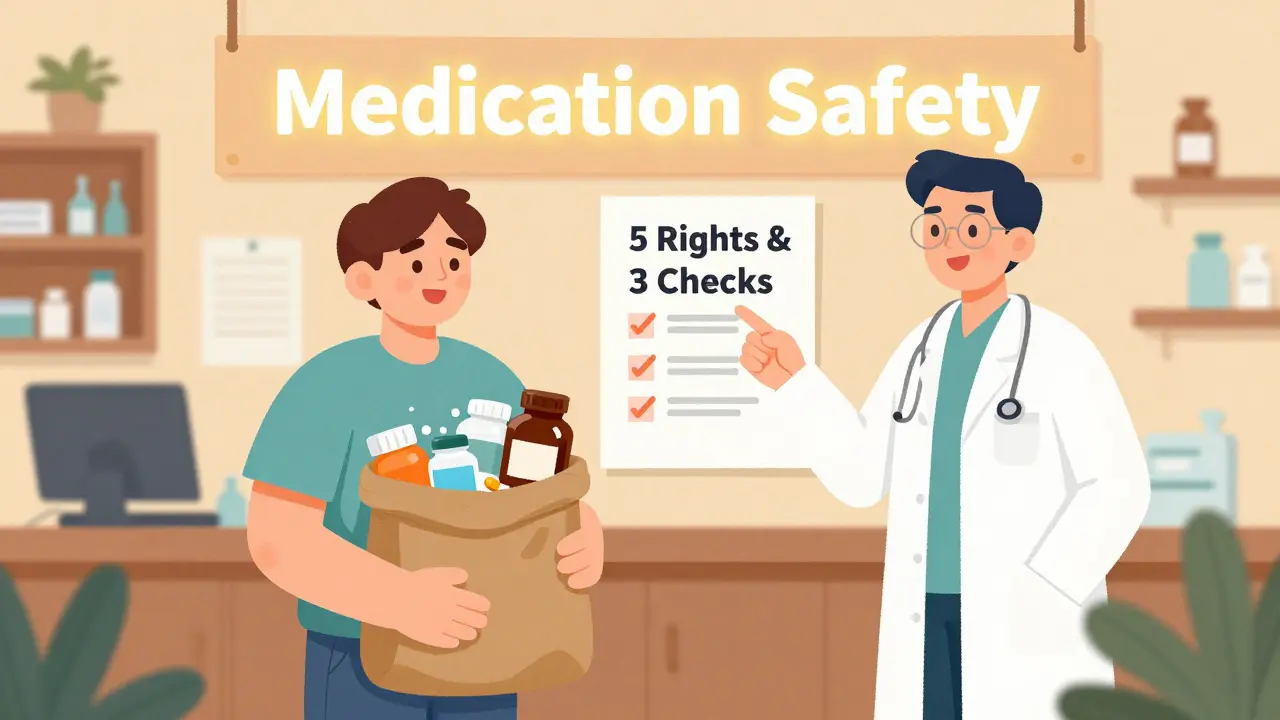
Fact: Use the "5 Rights" and the "3 Checks"
Before you take any pill, ask yourself: Is it the right patient (me)? The right drug? The right dose? The right route (swallowed, injected, etc.)? And the right time? That’s the "5 Rights." Now add the "3 Checks":
- Check the label on the bottle against your prescription or medication list.
- Check the label again when you open the bottle.
- Check one last time right before you swallow it.
This simple habit reduced medication errors by 41% in a Michigan hospital system. It takes 10 seconds. But it saves lives.
Fact: Ask them to teach it back to you
Doctors and pharmacists tell you how to take your meds. But do you really understand? The "Teach-Back Method" works like this: after they explain, they ask you to repeat it in your own words. "So, what will you do when you get home?" In a study of 1,200 patients, this simple question boosted understanding from 42% to 89%. If your provider doesn’t ask you to explain it back, ask them to. You’re not being difficult. You’re being smart. If you can’t explain it clearly, you’re at risk of making a mistake.
Fact: Medication synchronization saves time and mistakes
Do you ever run out of one med because it’s due on a different day than the others? You’re not alone. ExactCare Pharmacy tried something simple: they synced all prescriptions to be refilled on the same day each month. For 5,000 Medicare patients, adherence jumped from 52% to 81%. That means fewer missed doses, fewer ER visits, and less stress. If your pharmacy offers this, sign up. It’s free. And it’s one of the easiest ways to stay on track.
Fact: Technology helps - but doesn’t replace human advice
Apps like Medisafe send you reminders. Amazon Pharmacy lets you ask a real pharmacist questions. These tools cut dosing errors by 37% and answer over a million questions a year. But they’re not magic. They don’t catch interactions between your supplements and your heart meds. They don’t know if you’ve started a new drug since your last refill. That’s why you still need to talk to a pharmacist - in person or over the phone - at least once a year. Don’t let an app replace a person who knows your history.
Fact: The FDA is making labels clearer - but you still need to read them
In 2024, the FDA started requiring stronger warnings on acetaminophen packaging. Now you’ll see bold text like "DO NOT EXCEED 3,000 MG PER DAY" and "RISK OF LIVER DAMAGE." That’s good. But it’s not enough. You still have to look. You still have to count. You still have to ask if you’re unsure. No label change will stop you from taking five pills if you don’t know what the number means.
What you can do today
- Grab every pill, patch, capsule, and supplement you take - even the ones you only use sometimes.
- Bring them to your next doctor or pharmacist visit. No judgment. Just honesty.
- Ask: "Could any of these interact?" and "Am I taking too much of anything?"
- Set a phone reminder to check your meds every month.
- When you get a new prescription, ask: "What’s the most important thing I need to know?"
Medication safety isn’t about being perfect. It’s about being aware. You don’t need to memorize every warning. You just need to ask the right questions - and listen to the answers.






Comments(14)