

More than 10% of people in the U.S. say they’re allergic to penicillin. But here’s the truth: 9 out of 10 of them aren’t. That’s not a typo. If you’ve been told you’re allergic to penicillin, there’s a very good chance you can safely take it-or one of its close relatives-without risk. Yet most people never find out. They live with a label that could be costing them better treatment, longer hospital stays, and even higher chances of dangerous infections.
Why Most Penicillin Allergies Are Wrong
Penicillin was discovered in 1928, and for decades, it was the miracle drug that saved millions. But as it became widely used, so did reports of reactions. People got rashes. They felt sick. They were told, “You’re allergic.” And that label stuck-for life. The problem? Many of those reactions weren’t allergies at all. Nausea, diarrhea, headaches, or a mild skin rash that faded after a few days? Those are side effects, not immune responses. True penicillin allergies involve your immune system mistakenly treating the drug as a threat. That’s rare. Only about 1% of the population has a real IgE-mediated penicillin allergy, according to the CDC. Yet nearly 10% believe they have one. Why does this matter? Because if you’re labeled allergic, doctors avoid penicillin and its family of antibiotics (called beta-lactams). Instead, they give you broader-spectrum drugs like vancomycin or clindamycin. These are stronger, more expensive, and more likely to cause other problems-like Clostridioides difficile infections, which cause severe diarrhea and can be life-threatening. Studies show patients with a penicillin allergy label have a 50% higher chance of getting MRSA and a 35% higher chance of C. diff.What a Real Penicillin Allergy Looks Like
Not all reactions are the same. There are two main types: immediate and delayed. Immediate reactions happen within an hour. These are the dangerous ones. They’re caused by IgE antibodies and can lead to anaphylaxis-a full-body allergic shock. Symptoms include:- Sudden swelling of the lips, tongue, or throat
- Wheezing or trouble breathing
- Rapid drop in blood pressure
- Dizziness, fainting, or loss of consciousness
How to Find Out If You’re Really Allergic
If you were told you’re allergic to penicillin but never had a serious reaction, you might be a candidate for testing. The process is simple, safe, and proven. First comes skin testing. A small amount of penicillin (both major and minor components) is placed on your skin, then lightly pricked. If you’re allergic, a red, itchy bump will appear within 15 to 20 minutes. If that test is negative, you move to the next step: an oral challenge. This means swallowing a small dose of amoxicillin-usually 250 mg-while being monitored for at least an hour. Nurses check your vital signs. You’re watched for any signs of rash, swelling, or breathing trouble. If nothing happens, you’re cleared. No more allergy label. Studies show that after this two-step process, 95% of people who thought they were allergic are cleared. Their risk of future anaphylaxis drops to the same level as someone who’s never taken penicillin.
Who Should Get Tested
Not everyone needs testing. But if any of these sound familiar, you should consider it:- You had a rash as a child, but you don’t remember any breathing trouble or swelling.
- You were told you’re allergic, but you’ve never been tested.
- You’ve avoided penicillin for 10+ years and never taken it since.
- You’re scheduled for surgery and need antibiotics to prevent infection.
- You’ve been prescribed a different antibiotic because of your “allergy,” and it made you sick.
What Happens After You’re Cleared
Once you pass the test, your allergy label is removed. But that’s only half the battle. You need to make sure your medical records reflect it. Ask your doctor to update your chart. Tell your pharmacist. If you wear a medical alert bracelet, get it changed. If you’re in a hospital, make sure the electronic system shows “Penicillin Allergy: Negative” or “De-labeled.” Why? Because in an emergency, someone might assume you’re still allergic. And if you need penicillin for pneumonia, a tooth infection, or a surgical procedure, you deserve the best, safest antibiotic-not a second-choice drug with more side effects.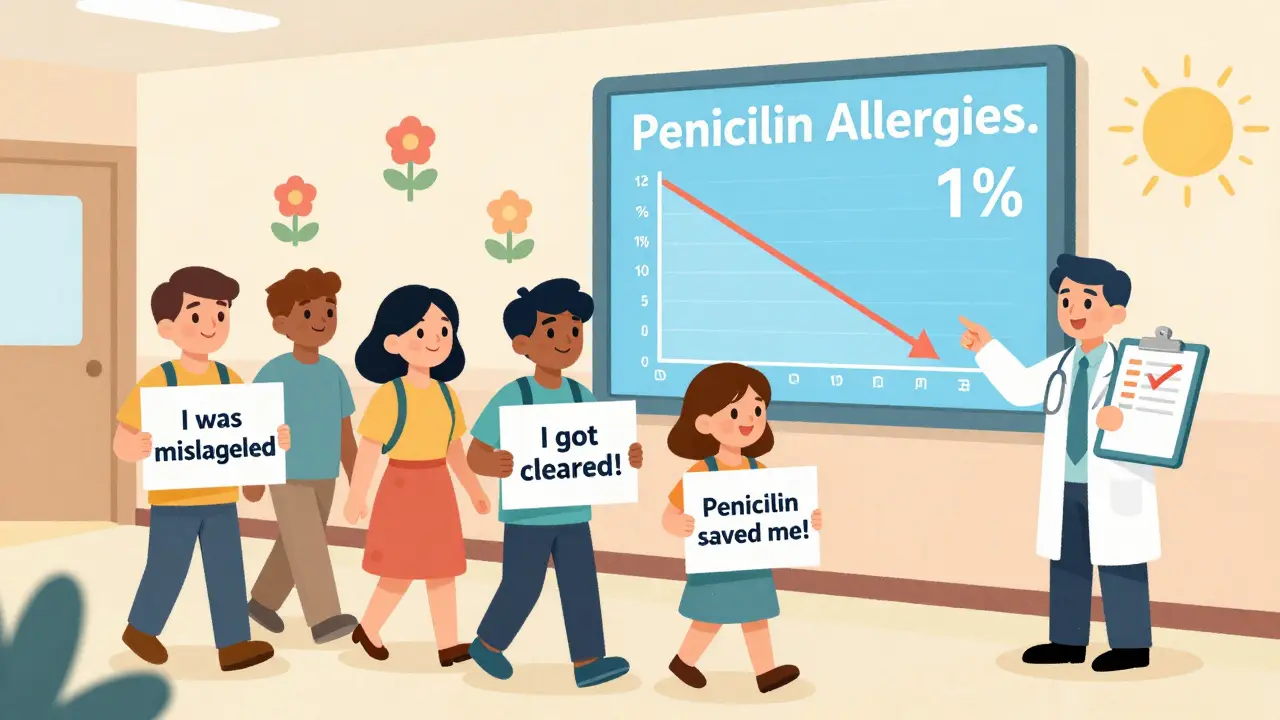
What to Do If You’re Still Allergic
If testing confirms you’re truly allergic, you still have options. Not all antibiotics are the same. Third- and fourth-generation cephalosporins (like ceftriaxone) and carbapenems (like meropenem) are safe for most people with penicillin allergies-unless you’ve had a severe IgE-mediated reaction. If you’re facing surgery, your doctor might choose cefazolin, a first-generation cephalosporin. Studies show that after allergy testing, the use of cefazolin in joint replacement patients increases by over 80%. That means fewer infections, shorter hospital stays, and lower costs. For people who can’t take any beta-lactams, alternatives like clindamycin or vancomycin are used-but only when necessary. The goal is always to use the narrowest, safest antibiotic possible.The Bigger Picture: Why This Matters for Everyone
This isn’t just about you. It’s about the whole healthcare system. Mislabeling penicillin allergies leads to overuse of broad-spectrum antibiotics. That’s a major driver of antimicrobial resistance-the silent pandemic that could make simple infections deadly again. The CDC estimates that fixing penicillin misdiagnoses could save the U.S. healthcare system $1.2 billion a year. In hospitals, programs that systematically test and de-label patients have removed incorrect allergy labels from 80 to 90% of eligible people. That’s not just good for patients-it’s good for public health. And here’s the kicker: You don’t need to wait for a hospital program. If you think you might have been mislabeled, ask your doctor. Ask your pharmacist. Bring up the topic. Testing is available in most major cities and many clinics.What to Do Next
If you’ve ever been told you’re allergic to penicillin:- Look at your medical records. What exactly was the reaction? Was it a rash? Nausea? Trouble breathing?
- Ask your doctor: “Could I have been mislabeled?”
- If your reaction was mild or happened more than 5 years ago, ask about skin testing and an oral challenge.
- If you’ve had a severe reaction, ask for a referral to an allergist.
- If you’re cleared, make sure your records are updated-and tell your family.
Can I outgrow a penicillin allergy?
Yes, many people do. About 80% of those with a true IgE-mediated penicillin allergy lose their sensitivity after 10 years without exposure. Delayed reactions like rashes usually fade within 1 to 2 years. That’s why it’s never too late to get tested-even if you were told you were allergic decades ago.
Is a penicillin allergy test painful?
The skin test feels like a tiny scratch-similar to a pinprick. It’s not painful. The oral challenge involves swallowing a small pill, like taking a vitamin. You’ll be monitored for an hour, but most people feel nothing. The whole process is designed to be safe and comfortable.
Can I take cephalosporins if I’m allergic to penicillin?
For most people, yes. Third- and fourth-generation cephalosporins like ceftriaxone and cefdinir are safe for those without a history of IgE-mediated reactions. Even first-generation ones like cefazolin are often safe after allergy testing. Only those with a confirmed anaphylaxis reaction need to avoid all beta-lactams.
What if I have no symptoms but still avoid penicillin?
If you’ve never had a reaction but avoid penicillin because your parent or sibling is allergic, you’re likely not allergic. Allergies aren’t inherited that way. Unless you’ve had a real reaction, there’s no reason to avoid it. Testing can confirm you’re safe.
Can I get tested during pregnancy?
Yes. If you’re pregnant and need antibiotics for an infection like strep throat or a urinary tract infection, and you’ve been told you’re allergic, testing is safe and recommended. Penicillin is the first-line treatment for many pregnancy-related infections. Getting cleared means you get the safest, most effective treatment for you and your baby.





Comments(14)