
Serotonin Syndrome Risk Checker
Check Your Medication Safety
Risk Assessment
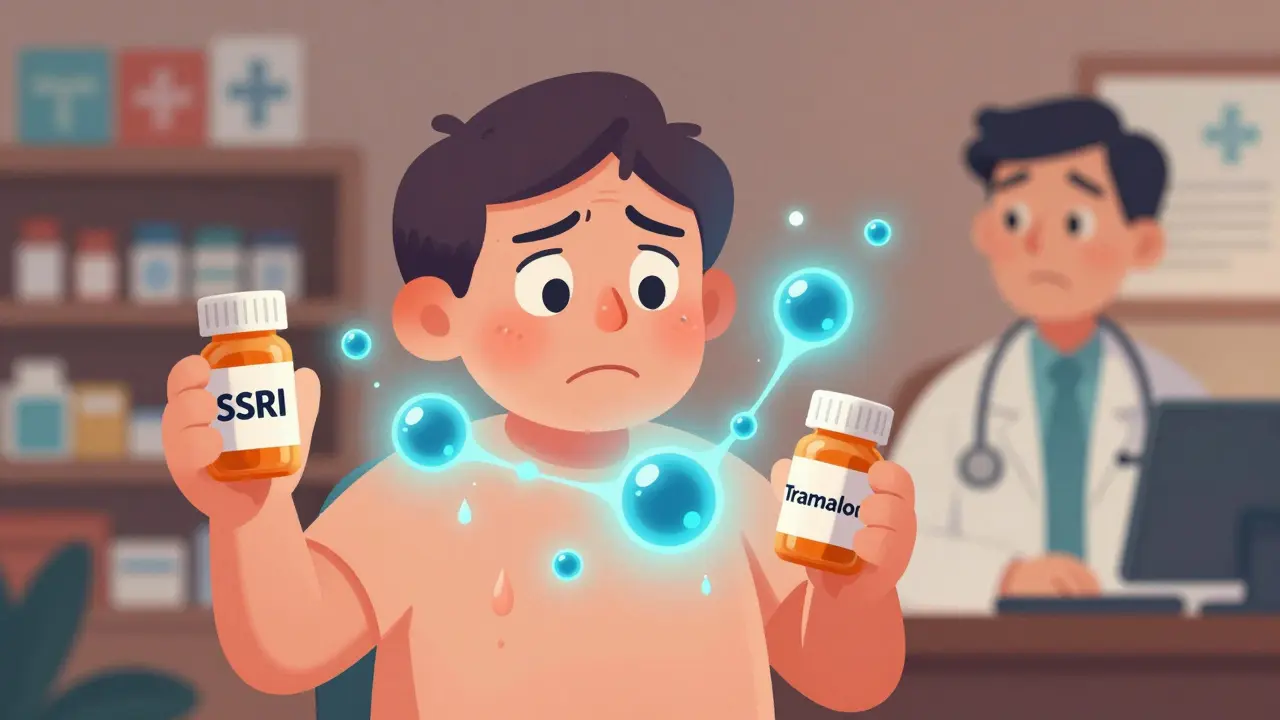
Combining SSRIs and opioids might seem harmless if you’re managing depression and chronic pain - but it can trigger a dangerous, even deadly, reaction called serotonin syndrome. This isn’t rare. It’s happening in hospitals, pharmacies, and homes right now. And most people don’t see it coming until it’s too late.
What Exactly Is Serotonin Syndrome?
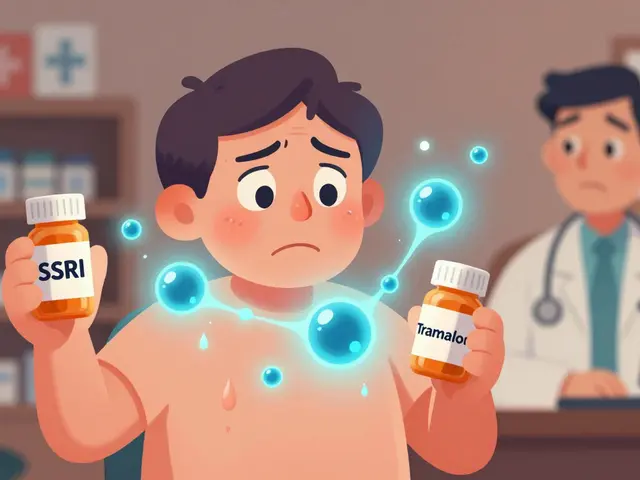
Serotonin syndrome isn’t an allergy. It’s not a side effect you can just "get used to." It’s a toxic overload of serotonin - the brain chemical that controls mood, movement, and body temperature. When too much serotonin builds up, your nerves go into overdrive. Your muscles twitch uncontrollably. Your heart races. Your temperature spikes. In severe cases, you can seize, go into shock, or die. It doesn’t take a massive overdose. Sometimes, just adding one new pill - like tramadol for back pain - to your existing SSRI (like sertraline for anxiety) is enough. Symptoms can show up within hours. The first signs? Shivering you can’t stop, sweating out of nowhere, a rapid heartbeat, or sudden muscle stiffness. These aren’t "just side effects." They’re warning signals.Not All Opioids Are Created Equal
If you’re on an SSRI and need pain relief, not all opioids are equally risky. Some are safe. Others are ticking time bombs. High-risk opioids include:- Tramadol - the most common culprit. It doesn’t just relieve pain; it blocks serotonin reabsorption, like an SSRI does. Combine it with fluoxetine or escitalopram, and you’re doubling down on serotonin. Studies show this combo increases serotonin syndrome risk by over 4 times compared to safer opioids.
- Methadone - often used for chronic pain or addiction treatment. It also inhibits serotonin reuptake. Even at standard doses, it’s dangerous with SSRIs.
- Pethidine (meperidine) - rarely used now, but still found in some hospitals. Extremely high risk. Avoid it completely if you’re on an SSRI.
- Morphine - doesn’t interfere with serotonin. The go-to for many doctors when SSRIs are involved.
- Oxycodone - no significant serotonin effect. Widely used and generally safe with SSRIs.
- Buprenorphine - used for pain and opioid dependence. Minimal serotonin interaction.
- Hydromorphone - another low-risk option.
Why Tramadol Is the Silent Killer
Tramadol is everywhere. It’s cheap. It’s prescribed for mild to moderate pain. Many patients think it’s "just a mild opioid." But here’s the problem: it acts like an SSRI. It blocks the serotonin transporter (SERT), meaning serotonin stays in your brain longer. Add that to an SSRI like fluoxetine, and serotonin levels skyrocket. The FDA reported over 800 cases of serotonin syndrome linked to opioid-SSRI combos between 2018 and 2022. Tramadol was involved in nearly 37% of them. One 68-year-old woman in a major study developed serotonin syndrome just 12 hours after starting tramadol while on sertraline. Her temperature hit 40.2°C. Her blood pressure soared. She had spontaneous muscle spasms. She survived - but only because her doctor recognized the signs fast. Worse, many doctors still don’t know. A 2020 study found that over 40% of serotonin syndrome cases involving opioids and antidepressants were misdiagnosed as neuroleptic malignant syndrome or anticholinergic toxicity. That delay can be fatal.Fluoxetine Is the Longest-Lasting Threat
Not all SSRIs are the same. Fluoxetine (Prozac) sticks around in your body for weeks. Its active metabolite, norfluoxetine, lasts up to 16 days. That means if you stop fluoxetine, you’re still at risk for serotonin syndrome for over a month - even if you start a new opioid. That’s why experts recommend waiting at least five weeks before switching from fluoxetine to any opioid. With sertraline or citalopram, a 1-2 week gap is usually enough. But with fluoxetine? Don’t cut corners.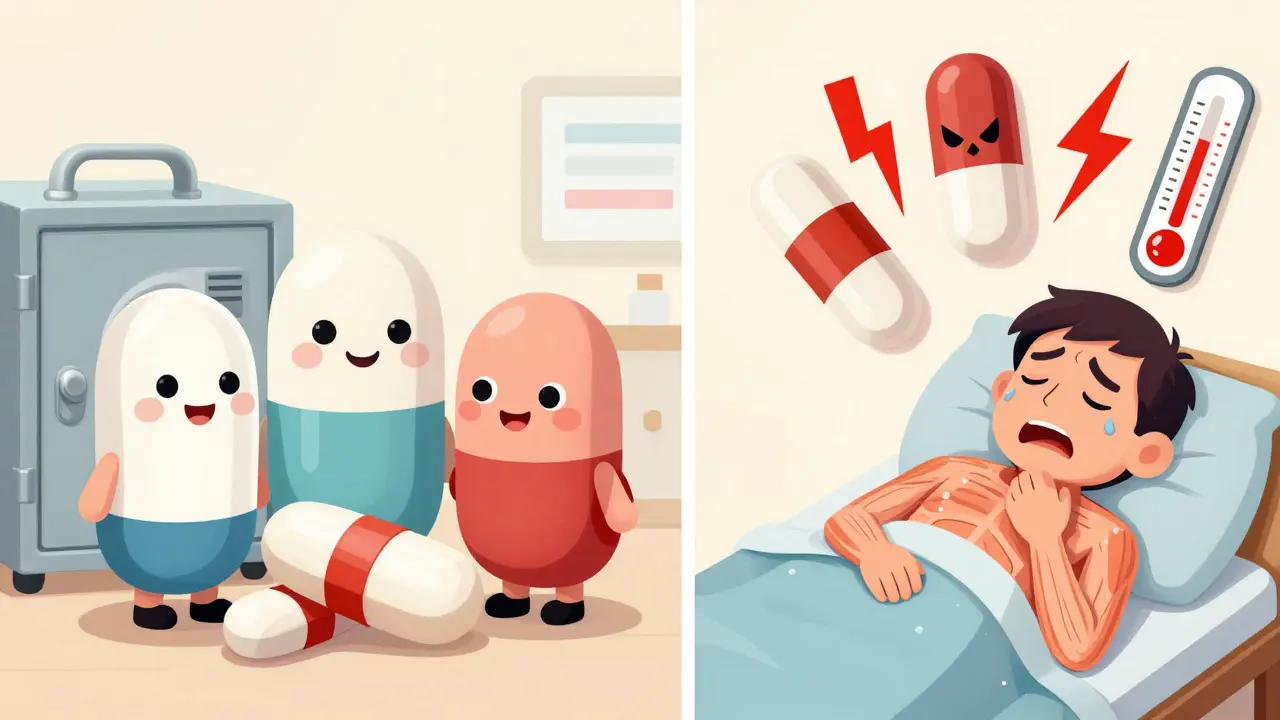
What About Codeine or Fentanyl?
You might think codeine is safe because it’s "weak." But a 2018 case report showed serotonin syndrome triggered by codeine in someone taking paroxetine. That’s a wake-up call. Even "low-risk" drugs can cause problems if you have genetic factors - like being a poor metabolizer of CYP2D6, which affects how your body breaks down codeine and tramadol. Fentanyl is another curveball. Lab tests say it doesn’t block serotonin reuptake. But over 120 real-world case reports link it to serotonin syndrome. Why? It may directly stimulate serotonin receptors in the brain. So, don’t assume safety just because a drug "shouldn’t" cause it.Who’s Most at Risk?
Certain people are far more vulnerable:- People over 65 - they take 31% more medications on average.
- Those with kidney or liver disease - their bodies can’t clear drugs efficiently.
- Patients with CYP2D6 gene variants - they metabolize tramadol and codeine poorly, leading to toxic buildup.
- Anyone recently starting or increasing a dose of an SSRI or opioid.
How to Prevent Serotonin Syndrome
Prevention isn’t complicated. It’s about knowing the risks and asking the right questions. 1. Tell every doctor you see - every time - that you’re on an SSRI. This includes dentists, ER doctors, and pain specialists. Many don’t ask. 2. Ask: "Is there a safer painkiller I can use instead of tramadol or methadone?" If your doctor says "it’s fine," ask for the evidence. Show them the data. 3. If you must use a high-risk opioid, start at half the usual dose. Monitor yourself closely for 72 hours. Watch for shivering, confusion, fast heartbeat, or muscle stiffness. 4. Never stop or start an SSRI without talking to your prescriber. Even switching from one SSRI to another can trigger serotonin syndrome if done too quickly. 5. Use electronic health record alerts. Hospitals like Kaiser Permanente cut dangerous SSRI-opioid prescriptions by 87% after adding automated warnings. Ask if your clinic has similar systems.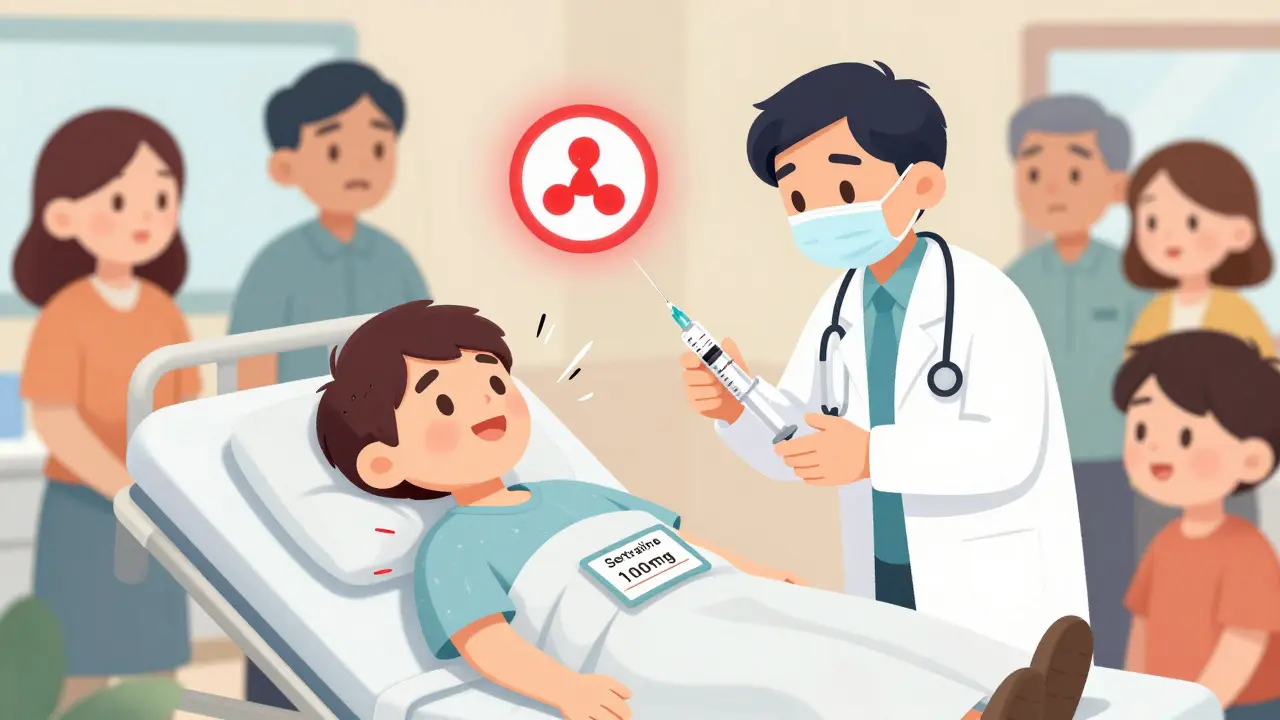
What to Do If You Suspect Serotonin Syndrome
If you or someone you know has:- Uncontrollable shivering or muscle spasms
- High fever (above 38.5°C)
- Rapid heart rate or high blood pressure
- Agitation, confusion, or hallucinations
- Stop the offending drugs.
- Give benzodiazepines (like lorazepam) to calm agitation and reduce muscle activity.
- Use cyproheptadine - a serotonin blocker - if symptoms are moderate to severe. Dose: 12 mg first, then 2 mg every 2 hours as needed.
- Cool the body with fans, ice packs, or IV fluids if temperature is above 40°C.
What’s Changing in 2026?
New tools are coming. Epic’s electronic health record system will roll out in 2024 a tool that checks for 17 genetic and drug interactions linked to serotonin syndrome. The FDA is testing real-time monitoring systems to flag high-risk prescriptions before they’re filled. Researchers are also hunting for blood biomarkers that could detect serotonin syndrome before symptoms appear. But until then, the best defense is awareness. You can’t rely on your doctor to know every interaction. You need to know your own meds.Final Checklist: Your Serotonin Syndrome Safety Plan
- ✅ List all your medications - including over-the-counter and supplements.
- ✅ Know if you’re on an SSRI, SNRI, or MAOI.
- ✅ If you need pain relief, ask: "Is tramadol, methadone, or pethidine necessary?"
- ✅ If yes, ask for morphine, oxycodone, or buprenorphine instead.
- ✅ If switching SSRIs, wait at least 5 weeks after fluoxetine, 1-2 weeks for others.
- ✅ Know the early warning signs: shivering, sweating, fast heart rate, muscle twitching.
- ✅ Carry a medication card in your wallet with your SSRI and dose.





Comments(11)