
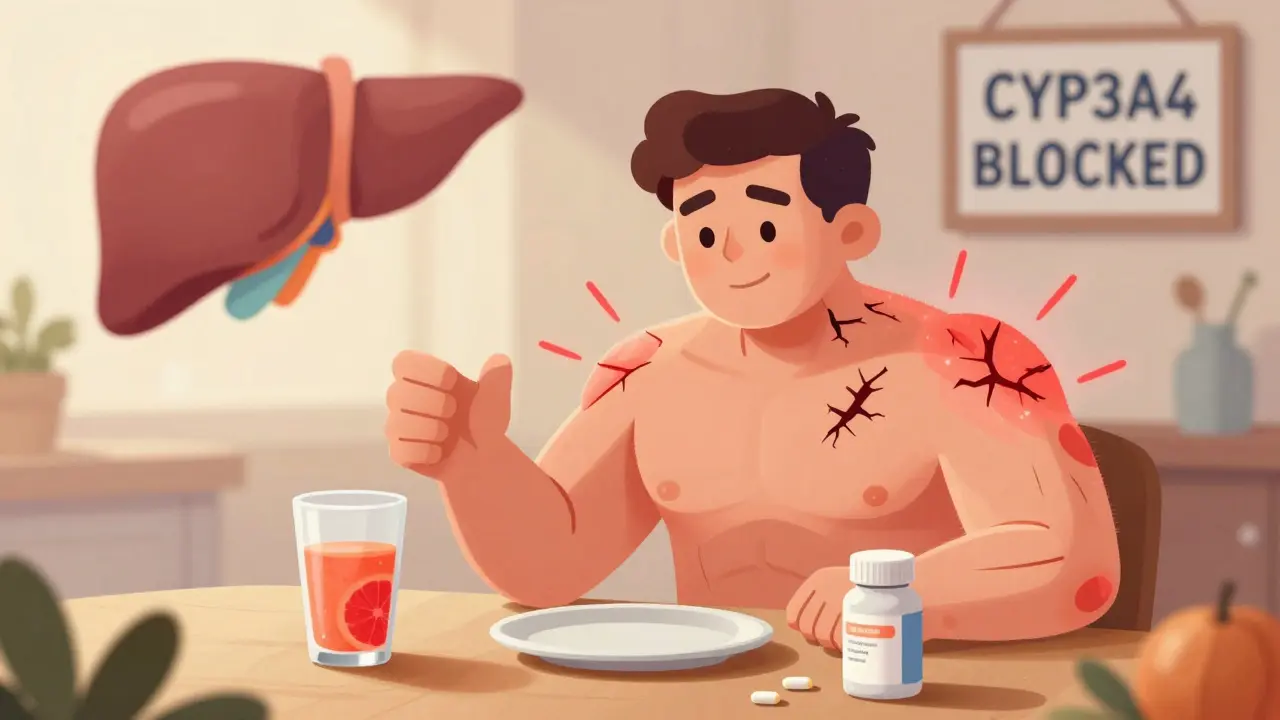
Every year, thousands of people end up in the hospital not because their medication didn’t work, but because something they ate, drank, or took as a supplement made it work too well-or not at all. It’s not rare. It’s not exotic. It’s happening right now to someone you know. A man taking statins for cholesterol sips grapefruit juice with breakfast and wakes up with muscle pain so severe he can’t stand. A woman on blood thinners eats a big salad for lunch and ends up in the ER with internal bleeding. A senior taking St. John’s wort for low mood stops responding to their antidepressant-and doesn’t realize why. These aren’t accidents. They’re predictable, preventable, and often invisible.
Why Your Morning Smoothie Could Be Dangerous
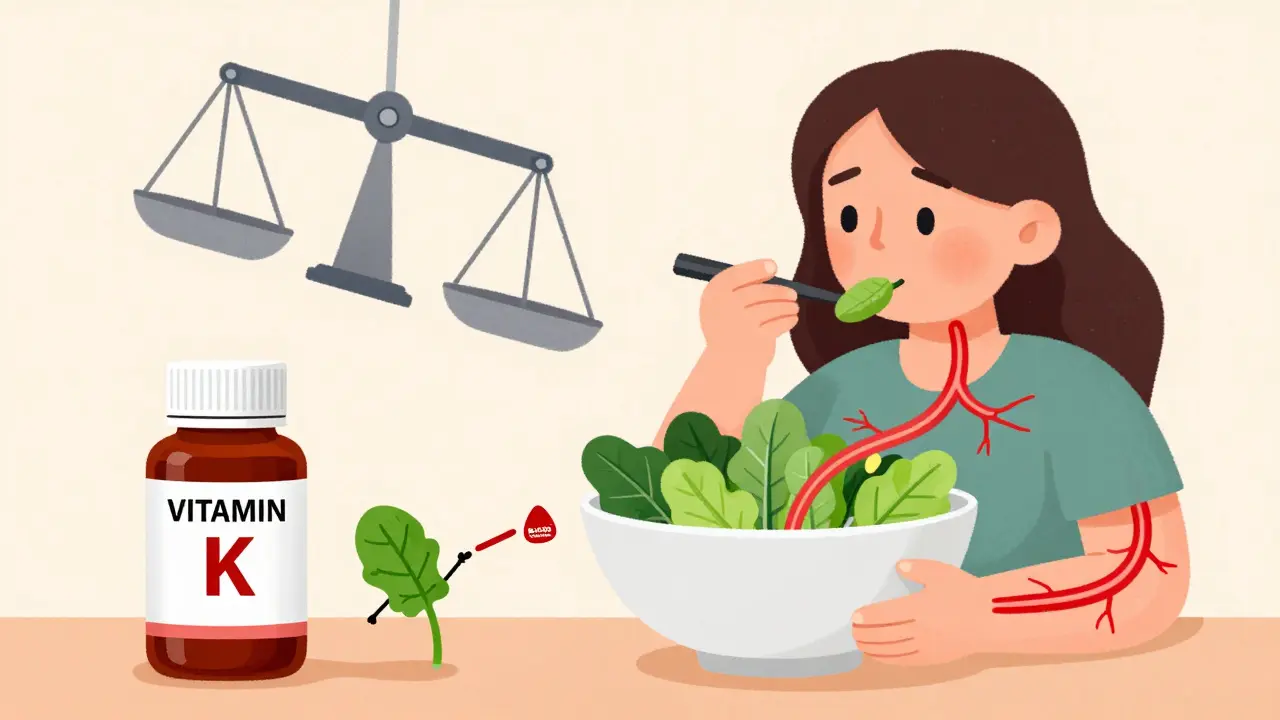
It’s easy to think of food as harmless. But some foods don’t just feed you-they interfere with your pills. Grapefruit is the most famous offender. It doesn’t just interact with one drug. It messes with over 85 medications, including common ones like simvastatin, atorvastatin, and some blood pressure pills. The reason? Furanocoumarins in grapefruit shut down an enzyme in your gut called CYP3A4. This enzyme normally breaks down drugs so they don’t build up to dangerous levels. When it’s blocked, your body absorbs way more of the drug than intended. One glass of grapefruit juice can raise simvastatin levels by up to 15 times. That’s not a typo. That’s enough to trigger rhabdomyolysis-a condition where muscle tissue breaks down and can lead to kidney failure.It’s not just grapefruit. Pomegranate, Seville oranges, and even some types of apple juice have similar effects. And it’s not just about absorption. Vitamin K in leafy greens like spinach, kale, and broccoli directly fights the effect of warfarin, a blood thinner. If you normally eat a small salad and suddenly switch to a big bowl every day, your INR (a measure of blood clotting) can drop by 30-40% in under 24 hours. That means your blood thickens. Clots form. Stroke risk goes up. The fix isn’t to stop eating greens-it’s to keep your intake consistent. The National Academy of Medicine recommends 90mcg daily for women and 120mcg for men. Stick to that number, and your doctor can adjust your warfarin dose safely.
Supplements Are Not Always Safe
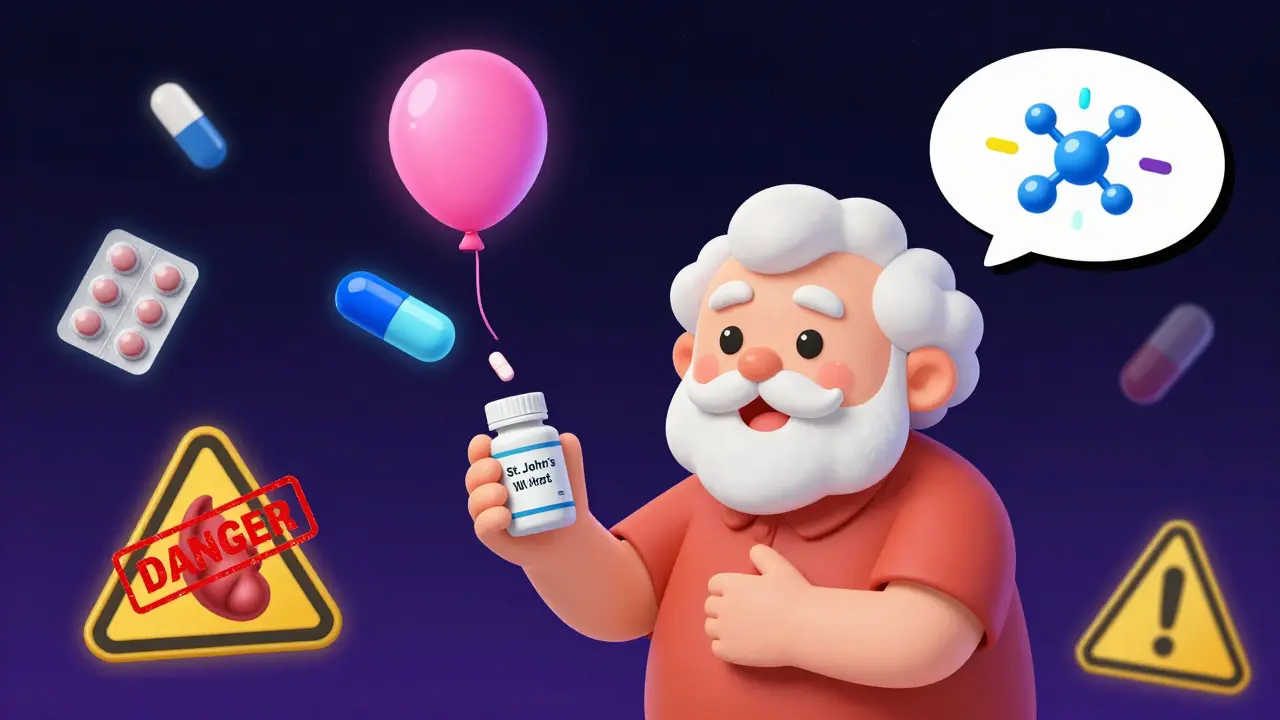
Many people assume supplements are natural, so they must be safe. That’s a dangerous myth. St. John’s wort is one of the most common and risky supplements out there. It’s used for mild depression, but it’s also one of the most powerful enzyme inducers known. It turns on CYP3A4 and other liver enzymes, making your body break down drugs faster. The result? Medications like birth control pills, antidepressants, HIV drugs, and even cyclosporine (used after organ transplants) become ineffective. A 2000 study showed that St. John’s wort cut cyclosporine levels by 50-70% in just two weeks. That’s not a side effect-that’s a treatment failure. And in transplant patients, that can mean organ rejection.Garlic supplements and ginkgo biloba are another silent threat. Both thin the blood. If you’re already on aspirin, warfarin, or clopidogrel, adding these supplements can push your bleeding risk into dangerous territory. One study found ginkgo increased bleeding time by 30-50%. Another tracked 32 cases of serious bleeding linked to garlic and blood thinners. Even fish oil, often thought of as harmless, can add to this effect. The American Heart Association warns that combining these with anticoagulants can lead to uncontrolled bleeding-sometimes during surgery, sometimes after a fall, sometimes without warning.
Red yeast rice is another trap. It’s sold as a “natural” way to lower cholesterol. But it contains monacolin K-the same active ingredient as the prescription statin lovastatin. Taking it alongside a prescribed statin is like doubling your dose. That raises your risk of muscle damage (myopathy) by 2.3 times, according to a 2017 study. And unlike prescription statins, red yeast rice isn’t regulated for dosage or purity. One batch might be safe. The next might be lethal.
How Your Body Processes Drugs (And Why It Matters)
Understanding drug interactions isn’t about memorizing lists. It’s about knowing how your body handles medicine. There are two main ways interactions happen: pharmacodynamic and pharmacokinetic.Pharmacodynamic interactions are about effects. Two substances act on the same system in your body-either adding up or canceling out. For example, taking a sleep aid with alcohol doesn’t just make you drowsy. It can slow your breathing to dangerous levels. Mixing SSRIs with St. John’s wort can trigger serotonin syndrome-a rare but life-threatening condition where your body produces too much serotonin. Symptoms include high fever, stiff muscles, rapid heartbeat, confusion, and seizures. It needs emergency care.
Pharmacokinetic interactions are about absorption and breakdown. Most drugs are processed by the liver using enzymes in the CYP450 family, especially CYP3A4 and CYP2D6. Anything that blocks or speeds up these enzymes changes how much drug stays in your blood. Grapefruit blocks CYP3A4. St. John’s wort speeds it up. Some antibiotics, like clarithromycin, block it. Even some antifungal drugs can do the same. The result? A drug that should last 12 hours might last 24-or vanish in 4.
What You Can Do Right Now
The good news? You don’t need to be a pharmacist to protect yourself. Here’s what works:- Keep a full list of everything you take: prescription drugs, over-the-counter meds, vitamins, minerals, herbal supplements, and even occasional painkillers. Include dosages and how often you take them.
- Bring that list to every appointment-even if you think it’s “not important.” Doctors rarely ask about supplements. You have to tell them.
- Ask your pharmacist every time you pick up a new prescription. Pharmacists are trained to catch interactions. In fact, studies show pharmacist-led reviews reduce adverse events by over 20%.
- Use free tools like MedlinePlus’s drug interaction checker or the LiverTox database from the NIH. Type in your meds and supplements. See what pops up.
- Don’t start a new supplement without checking with your doctor or pharmacist. Even if it’s “natural,” it’s still a drug in your body.
And here’s one more thing: consistency matters. If you’re on warfarin, eat your spinach the same amount every day. If you take statins, avoid grapefruit entirely. Don’t try to “balance” it out. Your body doesn’t work that way.
Why This Isn’t Just Your Problem
This isn’t just about personal safety. It’s a public health crisis. The FDA estimates that 40% of American adults take supplements. And 23% of serious supplement-related hospitalizations involve drug interactions. In Australia, where I live, the numbers are similar. The Institute of Medicine estimated that preventable drug reactions cause 1.5 million injuries each year in the U.S. alone. The cost? Around $177 billion annually. That’s not just money-it’s lives lost, careers derailed, families shattered.And here’s the kicker: 70% of people don’t tell their doctors they’re taking supplements. Why? Because they don’t think it’s relevant. Because they think their doctor doesn’t care. Because they assume supplements are “safe.” But if you’re taking medication, your supplement is part of your treatment plan. It’s not optional.
What’s Changing-and What Still Needs to Change
There’s progress. Clinical systems like Epic now flag dangerous interactions before a doctor prescribes. Pharmacist-led medication reviews are becoming standard in hospitals. The FDA is pushing for better labeling on supplements. The National Center for Complementary and Integrative Health is funding new research on interactions with echinacea, black cohosh, and saw palmetto.But the system still fails. Only 29% of supplement labels warn about interactions. Prescription labels do. Why? Because supplements aren’t regulated like drugs. They’re treated like food. But they act like medicine. And that gap kills.
Artificial intelligence is helping. IBM Watson Health’s pilot program analyzed 10 million clinical notes and predicted new interactions with 87% accuracy. That’s powerful. But it won’t help if patients don’t report what they’re taking.
What to Do If You Think You’ve Had an Interaction
If you feel strange after starting a new supplement or changing your diet-especially if you’re on medication-don’t wait. Look for these signs:- Sudden muscle pain, weakness, or dark urine (possible statin reaction)
- Unexplained bruising, bleeding gums, or blood in stool (possible blood thinner reaction)
- Sudden confusion, fever, or rigid muscles (possible serotonin syndrome)
- Feeling like your medication stopped working (possible enzyme induction)
Call your doctor. Or go to urgent care. Don’t assume it’s “just a side effect.” It might be your body telling you something dangerous is happening.
Can I still drink grapefruit juice if I take medication?
No-not if you’re taking statins like simvastatin or atorvastatin, certain blood pressure drugs, or some immunosuppressants. Grapefruit juice blocks an enzyme that breaks down these drugs, causing dangerous buildup in your blood. Even one glass can have effects that last over 24 hours. If you’re unsure, check your medication label or ask your pharmacist. There are safe alternatives like orange juice (not grapefruit) or water.
Are herbal supplements safer than prescription drugs?
No. Herbal supplements are not regulated for safety, purity, or dosage like prescription drugs. St. John’s wort, for example, can reduce the effectiveness of birth control pills, antidepressants, and transplant medications. Garlic and ginkgo can cause dangerous bleeding when combined with blood thinners. Just because something is “natural” doesn’t mean it’s safe. Many herbs have potent, drug-like effects.
I take vitamins every day. Are they safe with my meds?
Not always. Vitamin K can make blood thinners like warfarin less effective. Calcium and iron can block absorption of thyroid medication and antibiotics. Magnesium can interfere with some antibiotics and osteoporosis drugs. Even common multivitamins can cause problems. Always tell your doctor what vitamins you take-even if you think they’re harmless.
Why don’t supplement labels warn about drug interactions?
Because under current U.S. law, supplements are regulated as food, not drugs. That means manufacturers aren’t required to prove safety or test for interactions before selling them. Only 29% of supplement labels include interaction warnings-compared to 100% of prescription labels. This gap leaves people at risk. Advocates are pushing for change, but for now, you need to be your own advocate.
Can my pharmacist help me avoid interactions?
Yes-more than you think. Pharmacists are trained to spot interactions between drugs, supplements, and food. A 2022 study showed that pharmacist-led medication reviews reduce adverse drug events by 22%. When you pick up a new prescription, ask them to review everything you take. Bring your list. They’ll tell you what’s safe and what’s risky.
I’ve been taking the same supplements for years. Should I be worried?
Yes-if you’ve started a new medication since then. Interactions can develop over time. A supplement that was fine with your old meds might be dangerous with your new ones. Even if you haven’t changed anything, your body’s ability to process drugs can change with age, liver health, or other conditions. Review your list with your doctor or pharmacist at least once a year.
If you’re on medication, your health isn’t just about what you take-it’s about what you don’t take with it. A banana, a cup of tea, a capsule labeled “natural”-each can change your outcome. Don’t guess. Don’t assume. Ask. Keep your list. Talk to your pharmacist. Your life might depend on it.



Comments(9)