
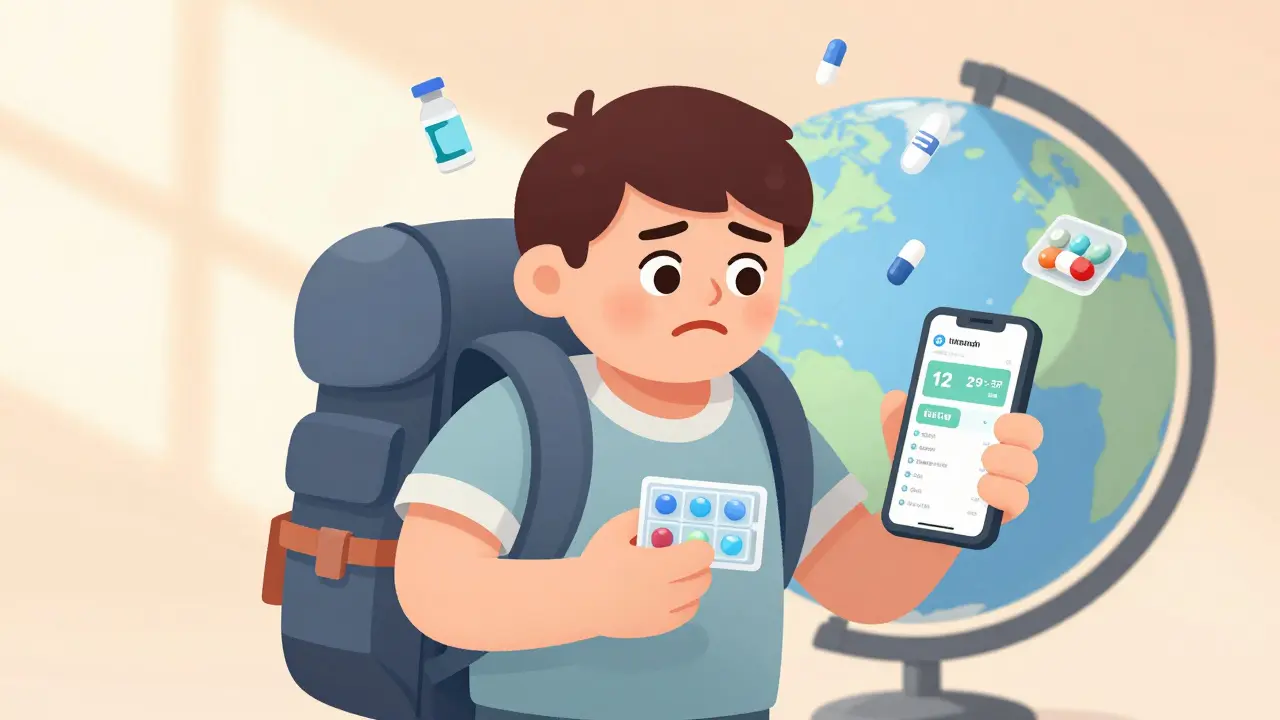
Missing a dose of your medication because you’re jet-lagged or confused by the time change isn’t just inconvenient-it can be dangerous. Whether you’re on insulin, blood thinners, seizure meds, or birth control, your body doesn’t care if you’re in Tokyo, Paris, or a hotel in Bali. When you cross time zones, your medication schedule doesn’t automatically adjust. And if you don’t plan for it, you risk side effects, therapeutic failure, or even hospitalization.
Here’s the hard truth: medication adherence drops by nearly 30% during international travel, according to the American Pharmacists Association. But it doesn’t have to be that way. With the right strategy, you can stay on track no matter how many time zones you cross.
Know Your Medication’s Flexibility Window
Not all meds are created equal. Some can be taken an hour early or late with no problem. Others? Miss by 30 minutes, and you could trigger a seizure, spike your blood sugar, or throw off your hormone levels.
The University of California San Francisco found that most medications can be safely taken within a four-hour window-two hours before or after your usual time. That’s a big buffer for most people. But this doesn’t apply to everything.
For example:
- Insulin: Basal insulin can shift gradually, but meal-time insulin must match your eating schedule. Going off by more than an hour can spike or crash your glucose.
- Anti-seizure drugs: Johns Hopkins research shows that missing a dose by more than two hours increases breakthrough seizure risk by 3.7 times.
- Oral contraceptives: If you’re more than 12 hours late, you lose protection. Backup contraception is non-negotiable.
- Anticoagulants (like warfarin): Your INR levels can swing with diet and schedule changes. Don’t skip your post-travel lab test.
- HIV antiretrovirals: These need near-perfect timing. Even a few hours off can lead to resistance.
Bottom line: Know your med’s window. If you’re not sure, check with your pharmacist or doctor before you leave.
Plan Ahead-At Least 4 Weeks Before You Go
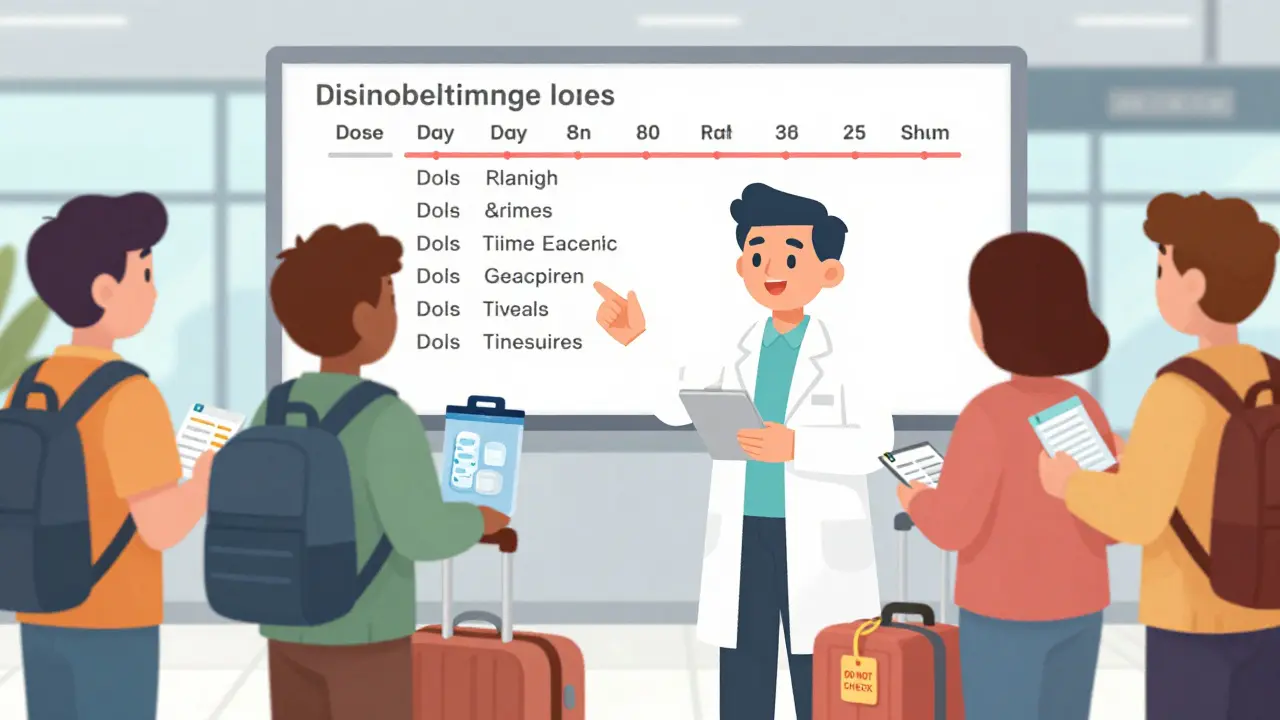
Waiting until the night before your flight to think about your meds is a recipe for disaster. The American Pharmacists Association recommends scheduling a consultation 4 to 6 weeks before international travel.
During this visit, bring:
- Your full medication list (brand and generic names)
- Dosage, frequency, and purpose of each
- Your travel itinerary (flight times, layovers, destination time zone)
- Any recent lab results (like INR for warfarin users)
Your provider can then tell you:
- Whether to adjust your schedule before, during, or after travel
- If you need extra refills
- Whether you need a doctor’s letter for controlled substances
Why 4 weeks? Because some countries require permits for common medications. Japan bans certain ADHD drugs. The UAE restricts codeine. South Korea requires advance approval for antidepressants. If you show up without documentation, you could lose your meds at customs-or worse, get arrested.
Pack Smart-Never Check Your Meds
63% of medication-related travel emergencies happen because people packed their pills in checked luggage. Lost bags. Delayed flights. Stolen luggage. All of these can wipe out your entire supply.
The Transportation Security Administration lets you carry medications in any quantity in your carry-on, even if they’re over 3.4 ounces. You just need to tell TSA agents at the start of screening.
Here’s what to do:
- Keep all meds in your carry-on-no exceptions.
- Use original containers with pharmacy labels. If you’re using a pill organizer, bring the original bottles as backup.
- For insulin or other refrigerated meds, use an insulated pouch with ice packs. Insulin exposed to temperatures above 86°F (30°C) for more than 24 hours can lose up to 27% of its potency.
- Carry a printed copy of your medication list in your wallet or purse, separate from your meds. If your bag gets lost, you still have the info to get replacements.
Adjust Your Schedule-The Right Way
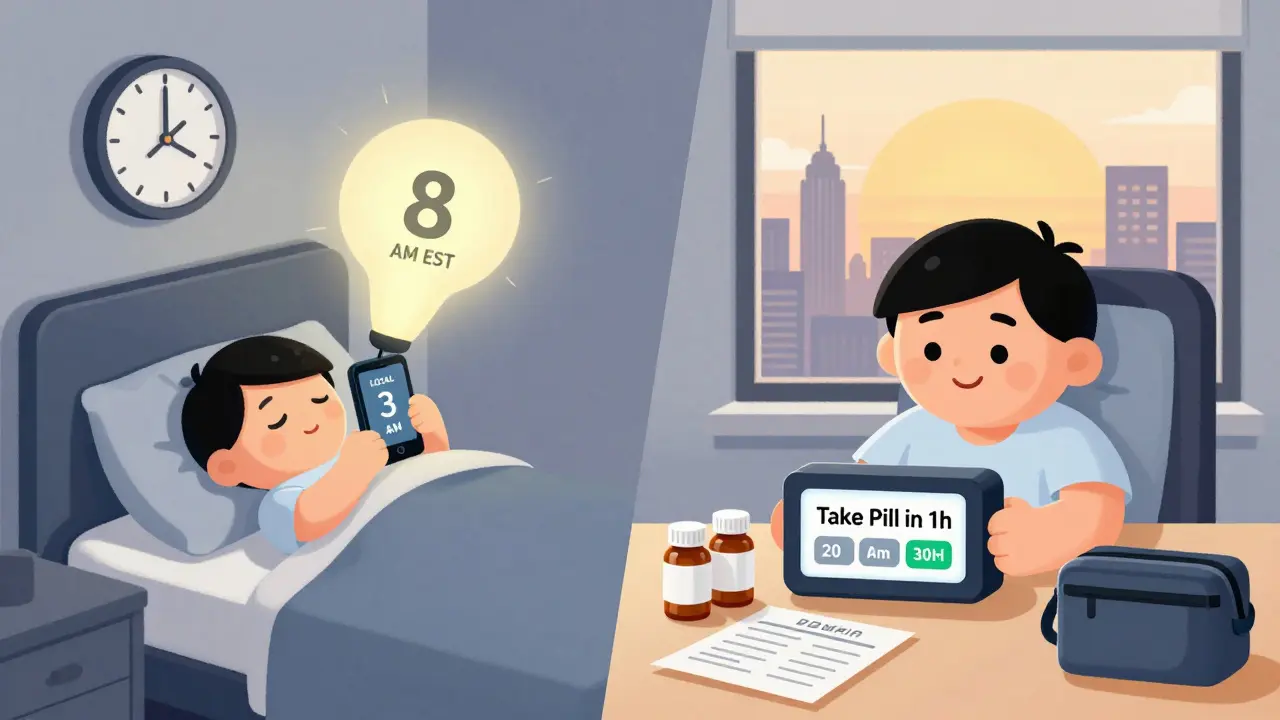
Here’s the real trick: Don’t try to match your home time zone while you’re traveling. That’s why your phone alarm keeps going off at 3 a.m. local time.
Instead, follow this proven method:
- For time zones under 3 hours apart: Stick to your home schedule. No adjustment needed.
- For 3-6 hours difference: Take your first dose at your destination time. Then continue on local time. For example, if you usually take a pill at 8 a.m. EST and fly to Chicago (1 hour behind), take your next dose at 7 a.m. Chicago time.
- For 6+ hours difference: Use a gradual shift. Start adjusting your dose time 2-3 days before departure. Move it one hour per day toward your destination time. This works well for chronic meds like blood pressure or thyroid pills.
- For time-sensitive meds (insulin, seizure meds, contraceptives): Follow your provider’s custom plan. Don’t guess.
A NimbleRx study found that travelers who used countdown timers instead of timezone-based alarms improved adherence by 32%. Why? Because a timer says “Take pill in 2 hours,” not “Take pill at 8 a.m.” It removes the confusion of time zones entirely.
Use Digital Tools-But Not Just Any App
Smartphone alarms are terrible for travel. They don’t auto-adjust. You’ll wake up at 4 a.m. thinking you’re still on EST.
Use a medication reminder app that automatically switches time zones. Apps like Medisafe, MyTherapy, or Dosecast detect your location and shift reminders accordingly. According to NimbleRx’s 2024 study, users of these apps had 47% fewer missed doses than those using regular phone alarms.
Pro tip: Set two alarms-one for the actual dose, one as a backup 30 minutes later. That’s what 89% of high-adherence travelers do.
What If You Miss a Dose?
It happens. You oversleep. You’re stuck in a long security line. Your flight’s delayed. Don’t panic. But don’t double up, either.
Here’s what to do based on your med type:
- Most meds: If you miss by less than two hours, take it. If it’s more than two hours until your next dose, take it now. If it’s less than two hours, skip it. Never double.
- Antibiotics: Skip the missed dose. Don’t double. Inconsistent dosing increases antibiotic resistance risk by 18%.
- HIV meds: Take the missed dose as soon as you remember-even if it’s right before your next one. Maintaining blood levels is critical.
- Birth control: If you’re more than 12 hours late, take it now and use backup contraception (condoms) for the next 7 days.
- Insulin: If you miss a basal dose, call your provider. For meal-time insulin, adjust based on your carb intake. Never guess.
Mayo Clinic data shows that doubling a dose to make up for a missed one increases adverse events by 4.2 times. That’s not worth the risk.
Prepare for the Unexpected
Travel delays happen. Flights get canceled. Borders close. You need a buffer.
The CDC and American Medical Association both recommend carrying at least 7 extra days’ worth of medication. For international trips, especially to remote areas, carry 14 days extra.
Why? Because pharmacies abroad may not carry your brand. Or they may not accept your prescription. Or they may be out of stock. Having extra means you won’t be stranded.
Also, bring a doctor’s letter if you’re carrying:
- Controlled substances (opioids, benzodiazepines, stimulants)
- High-dose medications
- Any drug banned or restricted in your destination country
Japan, South Korea, the UAE, and several others have strict rules. Without a letter, your meds could be confiscated. Or worse.
Final Checklist Before You Leave
Here’s your no-fluff, must-do list:
- Consult your doctor or pharmacist 4-6 weeks before departure
- Get a written medication list with brand/generic names, doses, and purposes
- Carry 7-14 extra days of meds in your carry-on
- Use original containers + printed labels
- For refrigerated meds: Insulated pouch + ice packs
- Download a time-zone-adjusting medication app
- Set two alarms per dose
- Carry a doctor’s letter for controlled substances
- Research your destination’s medication laws (WHO and CDC have lists)
- Keep a printed copy of your med list in your wallet
Traveling doesn’t mean giving up your health. With a little planning, you can stick to your schedule, avoid emergencies, and enjoy your trip without worry.
Can I carry my medications in my carry-on if they’re over 3.4 ounces?
Yes. The Transportation Security Administration allows medications of any quantity in carry-on luggage, as long as they’re for personal use. You must declare them to TSA agents at the start of screening. Keep them in original containers with pharmacy labels for easier verification.
What should I do if I miss a dose of my insulin while traveling?
Don’t double up. For basal insulin, contact your provider for guidance. For meal-time insulin, adjust based on your current blood sugar and carb intake. If you’re unsure, skip the dose and monitor your glucose closely. Never guess-insulin errors can lead to dangerous highs or lows.
Do I need a doctor’s note to travel with my prescription meds?
It depends. If you’re carrying controlled substances (like opioids, stimulants, or benzodiazepines) or traveling to countries like Japan, South Korea, or the UAE, yes. A doctor’s letter explaining your medical need is required. Even if not required, carrying one prevents delays or confiscation at customs.
Can I switch my pill schedule before I leave to make travel easier?
Yes, for most non-time-sensitive medications. Gradually shift your dosing time by one hour per day, 2-3 days before departure. This helps your body adjust. But for insulin, seizure meds, or birth control, always consult your provider first-some meds require precise timing.
What’s the biggest mistake travelers make with their meds?
Packing meds in checked luggage. Lost bags, delayed flights, and theft are common. 63% of medication-related travel emergencies happen because people didn’t keep their pills with them. Always carry your meds in your carry-on.



Comments(15)