

When you’re pregnant, your skin changes. You might break out, get itchy rashes, develop dark patches on your face, or deal with dryness that won’t quit. You want to treat it - but you’re terrified of harming your baby. The good news? Most topical creams and medications are safe during pregnancy because they barely get into your bloodstream. The bad news? Not all of them are. Some can cross the placenta, even in tiny amounts, and cause real risks.
Why Topical Treatments Are Usually Safer
Topical medications - things you rub on your skin - don’t work the same way as pills or injections. When you swallow a pill, it goes straight into your blood and travels everywhere, including to your baby. But when you apply cream, only a small fraction gets absorbed. Studies show absorption rates for most topical drugs range from 1% to 10%, depending on the area you apply it to and how thickly you spread it. That’s why dermatologists and OB-GYNs often recommend topical treatments first for pregnant women. But here’s the catch: where you apply it matters. Skin on your face, neck, armpits, and groin absorbs more than skin on your arms or legs. So even a low-risk cream can become riskier if you use it on large areas of thin skin or for long periods.Acne Treatments: What’s Okay, What’s Not
Acne flares up in pregnancy because of hormones. You might be tempted to grab your old retinoid cream - but don’t. Topical tretinoin, adapalene, and tazarotene are all retinoids, and they’re linked to birth defects in rare case reports. The American College of Obstetricians and Gynecologists (ACOG) says to avoid them entirely during pregnancy, even if you’ve only used them for a few days before realizing you’re pregnant. The risk is low, but it’s not zero. Safe alternatives? Benzoyl peroxide and topical antibiotics like clindamycin and erythromycin. Benzoyl peroxide is a Category C drug - meaning animal studies showed some risk, but no human studies prove harm. It’s also poorly absorbed through the skin. Clindamycin absorbs about 4-5% through the skin, but studies show no increase in birth defects. Both are recommended by the American Academy of Dermatology as first-line treatments. Azelaic acid is another great option. It’s a Category B drug, meaning animal studies showed no harm, and human data supports its safety. Many pregnant women use it for acne and melasma (the dark patches on the face known as “the mask of pregnancy”). One user on WhatToExpect.com reported it cleared her melasma with no side effects.Corticosteroids: Use With Care
If you have eczema, psoriasis, or contact dermatitis, hydrocortisone cream is often the go-to. Low-potency hydrocortisone (1%) is considered safe in pregnancy. It’s been used for decades with no clear link to birth defects. But don’t assume all steroid creams are the same. Potent steroids like clobetasol or betamethasone are a different story. They’re absorbed more easily, especially on thin skin, and long-term use has been tied to lower birth weights in rare cases. The Journal of Drugs in Dermatology recommends using only mild or moderate steroids, and only for the shortest time possible. If you need a stronger one, talk to your doctor. They might suggest a short course with close monitoring. Also, avoid applying steroid creams to large areas of skin or under occlusion (like plastic wrap). That increases absorption dramatically.Antifungal Creams: Yeast Infections and Ringworm
Vaginal yeast infections are super common in pregnancy. You might also get fungal infections on your skin - athlete’s foot, jock itch, or ringworm. The good news? Most topical antifungals are safe. Clotrimazole, miconazole, and nystatin are first-line choices. They’re not absorbed much, and decades of use show no increased risk of birth defects. The European Academy of Dermatology and Venereology lists them as safe throughout pregnancy. Avoid econazole during the first trimester. It’s been linked to a few rare cases of fetal abnormalities in animal studies. But even then, the risk is low. Still, better safe than sorry - stick with clotrimazole or miconazole.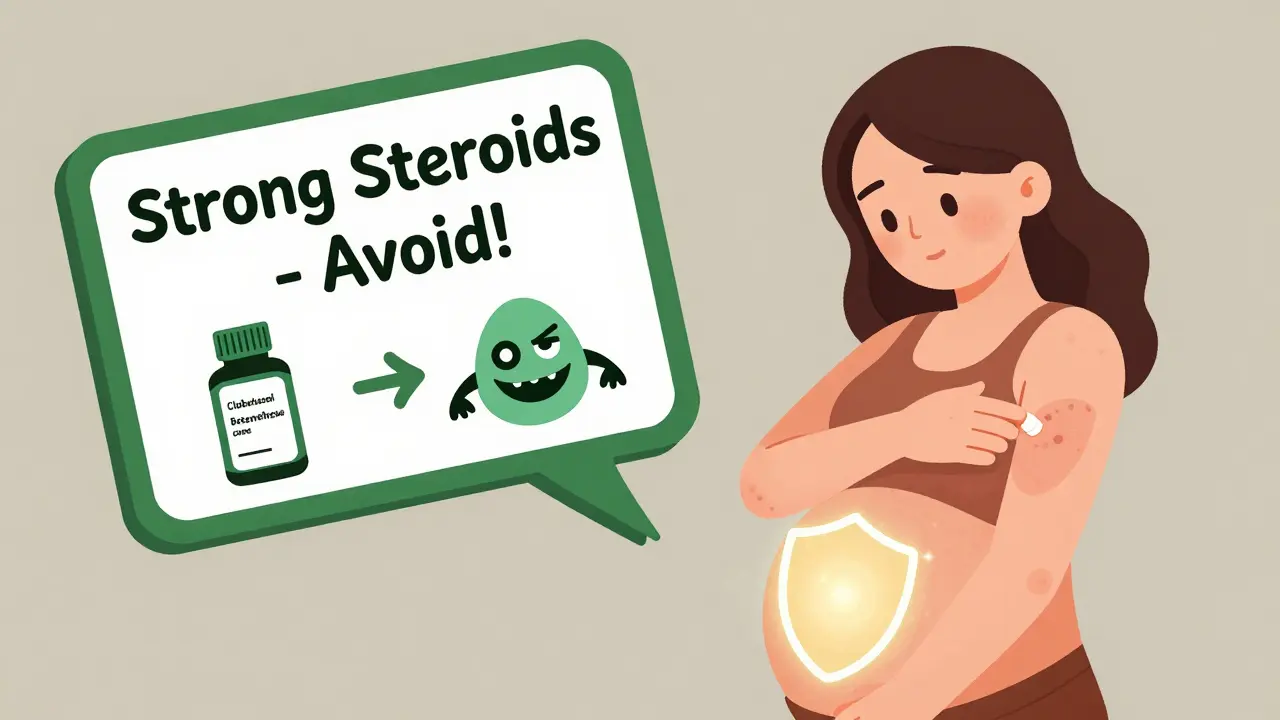
NSAIDs: The Hidden Risk
You might think topical ibuprofen or diclofenac gel is safe because it’s “just on the skin.” But here’s the problem: even small amounts absorbed through the skin can affect your baby’s heart. After 30 weeks, NSAIDs - whether oral or topical - can cause the ductus arteriosus (a blood vessel in the baby’s heart) to close too early. This can lead to serious heart problems and even stillbirth. The American Academy of Family Physicians warns that topical NSAIDs carry the same risk as oral ones, just slower. So avoid them after 30 weeks. If you need pain relief for a sore back or joint, try acetaminophen instead - it’s the safest option during pregnancy.Antiviral Creams: Cold Sores and Herpes
If you get cold sores, acyclovir cream is your friend. It’s a Category B drug, and studies show almost no absorption through the skin. The European Academy of Dermatology and Venereology says it’s safe to use anytime during pregnancy. Same goes for penciclovir. Avoid podofilox and podophyllin resin. These are used for genital warts and are highly toxic. Even topical use has been linked to birth defects. If you have warts, talk to your doctor about safe removal options.Moisturizers, Sunscreens, and OTC Skincare
Most everyday products are fine. Look for fragrance-free, gentle moisturizers. Ceramide-based creams help repair your skin barrier, which is especially helpful if you’re dealing with dryness or eczema. Sunscreens? Absolutely use them. Pregnancy makes your skin more sensitive to UV light, and melasma can get worse with sun exposure. Mineral sunscreens with zinc oxide or titanium dioxide are ideal. They sit on top of the skin and don’t get absorbed. Chemical sunscreens like oxybenzone are absorbed slightly, but studies haven’t shown harm. Still, if you’re worried, stick with mineral options. Avoid products with salicylic acid in high concentrations (over 2%) or applied over large areas. While low-dose topical salicylic acid (like in acne toners) is likely safe, high doses can act like aspirin, which carries risks in late pregnancy.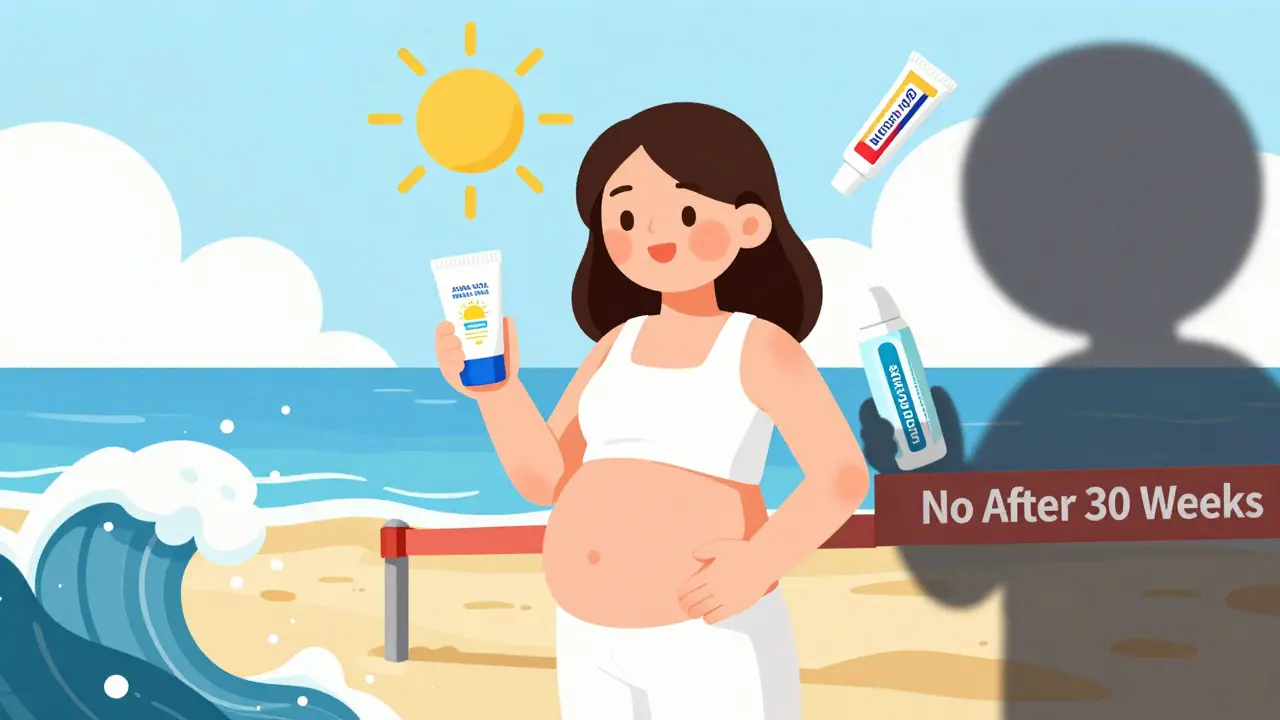
What to Do If You Accidentally Used Something Unsafe
You applied tretinoin before you knew you were pregnant. You used a strong steroid cream for a week. You thought hydrocortisone was fine - but used it on your whole belly for two months. Don’t panic. Most of the time, the risk is very low. One study in the Journal of Perinatology followed women who used topical tretinoin in early pregnancy. Only 1 in 1,000 had a baby with a birth defect - which is the same rate as the general population. That suggests the cream didn’t cause the problem. Still, call your doctor or midwife. They can refer you to the InfantRisk Center, which handles over 1,200 pregnancy medication questions every month. They’ll help you weigh the real risk versus the fear.When to See a Specialist
If you have severe eczema, psoriasis, or acne that isn’t responding to over-the-counter treatments, don’t wait. See a dermatologist who works with pregnant patients. Many OB-GYNs will refer you - 82% of them consult dermatologists for skin issues in pregnancy, according to ACOG. Your dermatologist can prescribe pregnancy-safe alternatives you won’t find on the shelf. For example, some doctors use low-dose oral antibiotics like azithromycin for severe acne - and those are considered safe in pregnancy. Others use light therapy, which has no known risks.What’s Missing From the Labels
Here’s the frustrating part: most cream bottles don’t tell you if they’re safe during pregnancy. In 2022, only 37% of topical dermatology products included clear pregnancy safety info on their labels. The FDA replaced the old A, B, C, D, X categories in 2015 with more detailed narratives - but many companies haven’t updated their packaging yet. That’s why you need to rely on trusted sources: ACOG, the American Academy of Dermatology, and the InfantRisk Center. Don’t trust random Reddit threads or Instagram influencers. Even well-meaning advice can be wrong.Bottom Line: What’s Safe to Use Now
- Safe: Benzoyl peroxide, clindamycin, erythromycin, azelaic acid, hydrocortisone (1%), clotrimazole, miconazole, nystatin, acyclovir, zinc oxide sunscreen, ceramide moisturizers
- Avoid: Retinoids (tretinoin, adapalene, tazarotene), topical NSAIDs after 30 weeks, econazole (first trimester), podofilox, high-dose salicylic acid, potent steroids (clobetasol, betamethasone) without medical supervision
- Use with caution: Low-dose salicylic acid, chemical sunscreens, any product used over large areas or for long periods
Most of the time, you can treat your skin safely while pregnant. The key is knowing what to avoid, where to apply, and when to ask for help. You’re not alone - millions of women have managed skin issues during pregnancy without harm to their babies. Stay informed, stay calm, and don’t let fear stop you from feeling comfortable in your own skin.
Is hydrocortisone cream safe during pregnancy?
Yes, low-potency hydrocortisone cream (1%) is generally safe during pregnancy. It’s minimally absorbed through the skin and has been used safely for decades. Avoid using it on large areas, thin skin (like the face or groin), or for more than a week without talking to your doctor. Stronger steroid creams (like clobetasol) should be avoided unless prescribed and closely monitored.
Can I use acne cream while pregnant?
Some acne creams are safe, others aren’t. Avoid retinoids like tretinoin, adapalene, and tazarotene - they’re linked to birth defects. Safe options include benzoyl peroxide, clindamycin, and azelaic acid. These have low absorption and no proven risk. Always check with your doctor before starting any new product.
Is topical NSAID gel safe in pregnancy?
No, not after 30 weeks. Even though topical NSAIDs like diclofenac gel don’t enter your bloodstream as much as pills, they still carry the same risk: premature closure of a critical blood vessel in your baby’s heart. Avoid them completely after 30 weeks. Before then, use only if absolutely necessary and for the shortest time possible. Acetaminophen is safer for pain relief.
Can I use sunscreen during pregnancy?
Yes, and you should. Pregnancy increases your risk of melasma (dark patches), and UV exposure makes it worse. Mineral sunscreens with zinc oxide or titanium dioxide are the best choice because they sit on top of the skin and don’t absorb. Chemical sunscreens like oxybenzone are absorbed slightly, but no studies show harm. If you’re concerned, stick with mineral formulas.
What if I used retinoid cream before I knew I was pregnant?
Don’t panic. The risk of birth defects from short-term, early pregnancy use of topical retinoids is extremely low - studies show it’s about the same as the general population risk. But call your doctor or midwife. They can refer you to a specialist or the InfantRisk Center, which tracks medication exposure in pregnancy. Most women who used retinoids before knowing they were pregnant go on to have healthy babies.
Are antifungal creams safe for yeast infections during pregnancy?
Yes. Clotrimazole, miconazole, and nystatin are first-line treatments for vaginal yeast infections and are considered safe throughout pregnancy. Avoid econazole in the first trimester. These creams are absorbed minimally and have decades of safe use. If over-the-counter options don’t work, your doctor can prescribe a safe oral antifungal like fluconazole.
If you’re unsure about any product, check with your OB-GYN or a dermatologist who specializes in pregnancy. You don’t have to suffer in silence - safe options exist. And when in doubt, less is more: stick to simple, fragrance-free products, use them sparingly, and always ask before trying something new.






Comments(14)